
Last updated September 10, 2026
Full 25-point door and opener safety check with every visit - springs, cables, rollers, tracks, and your LiftMaster or Chamberlain opener included
You get a price before we start. It does not change when the truck arrives.
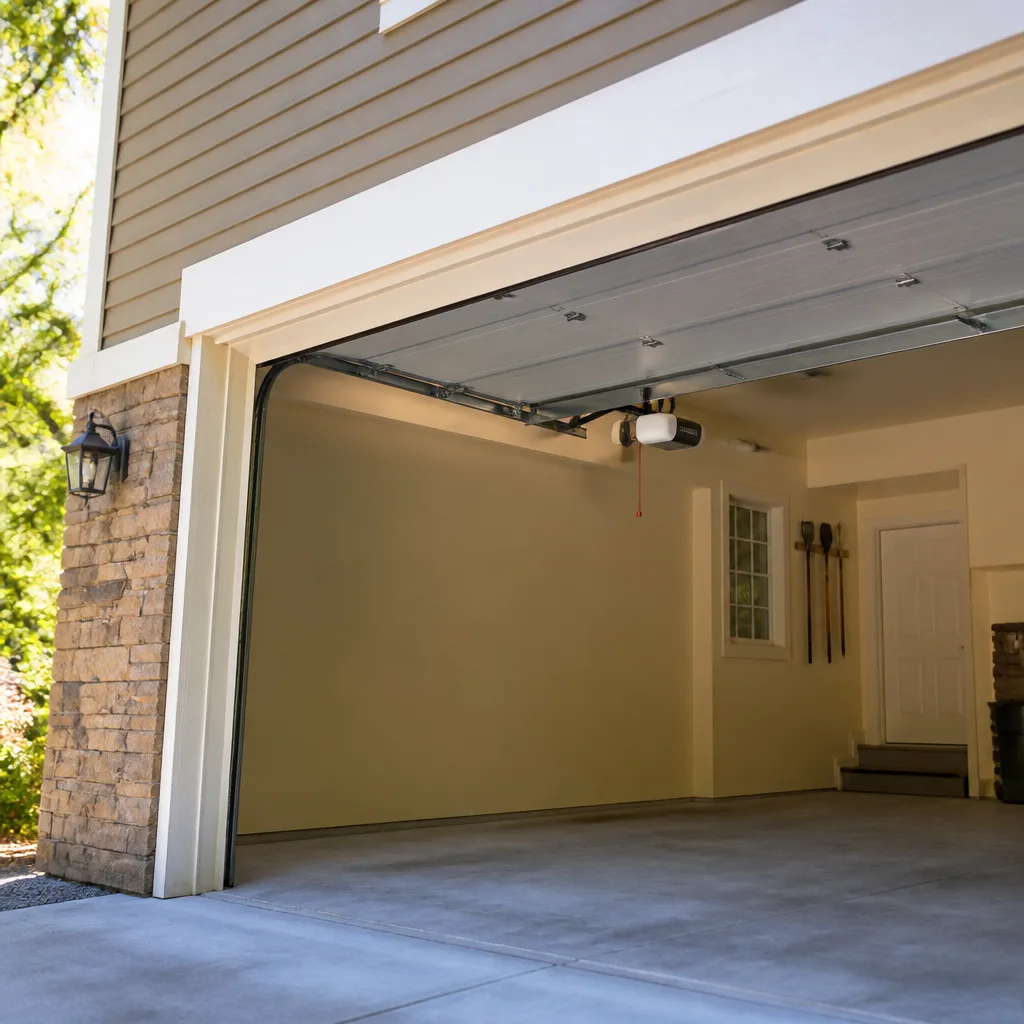
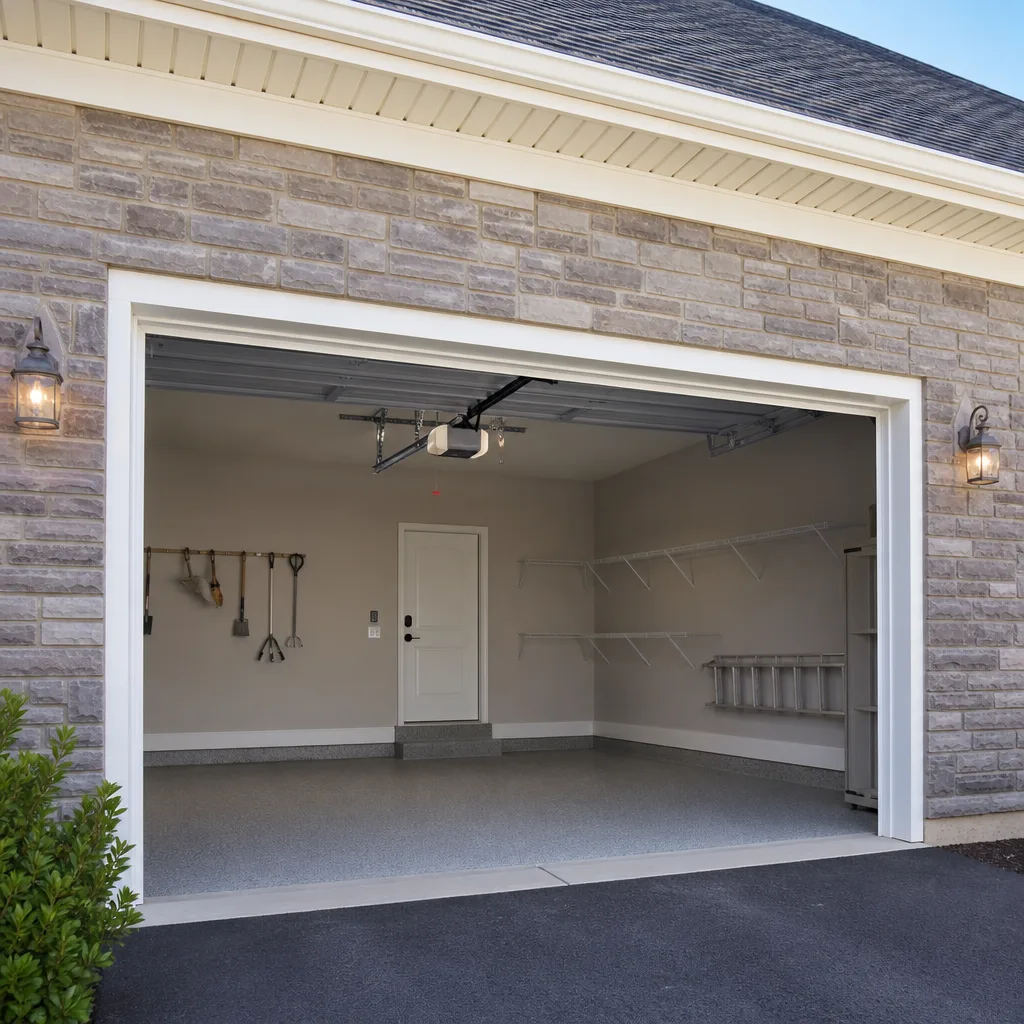
 Before
 After
After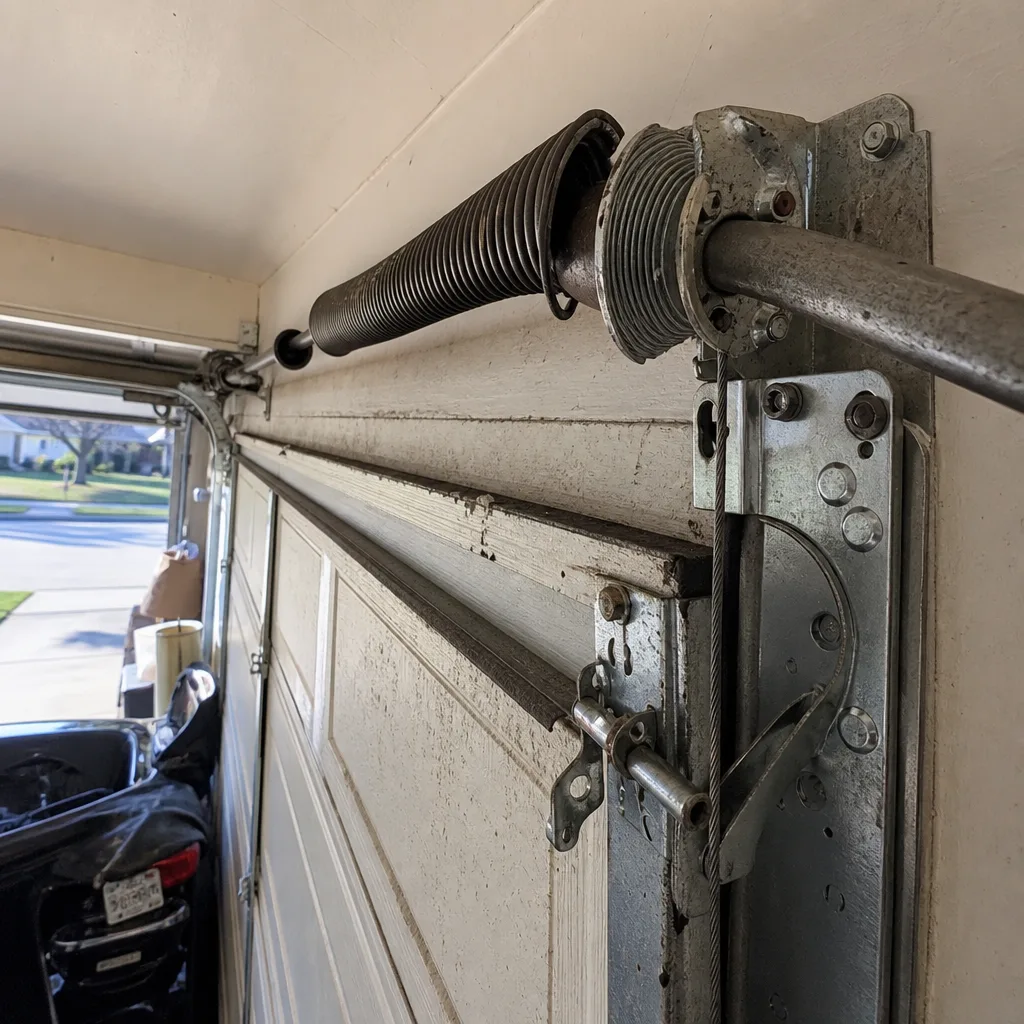 Before
 After
After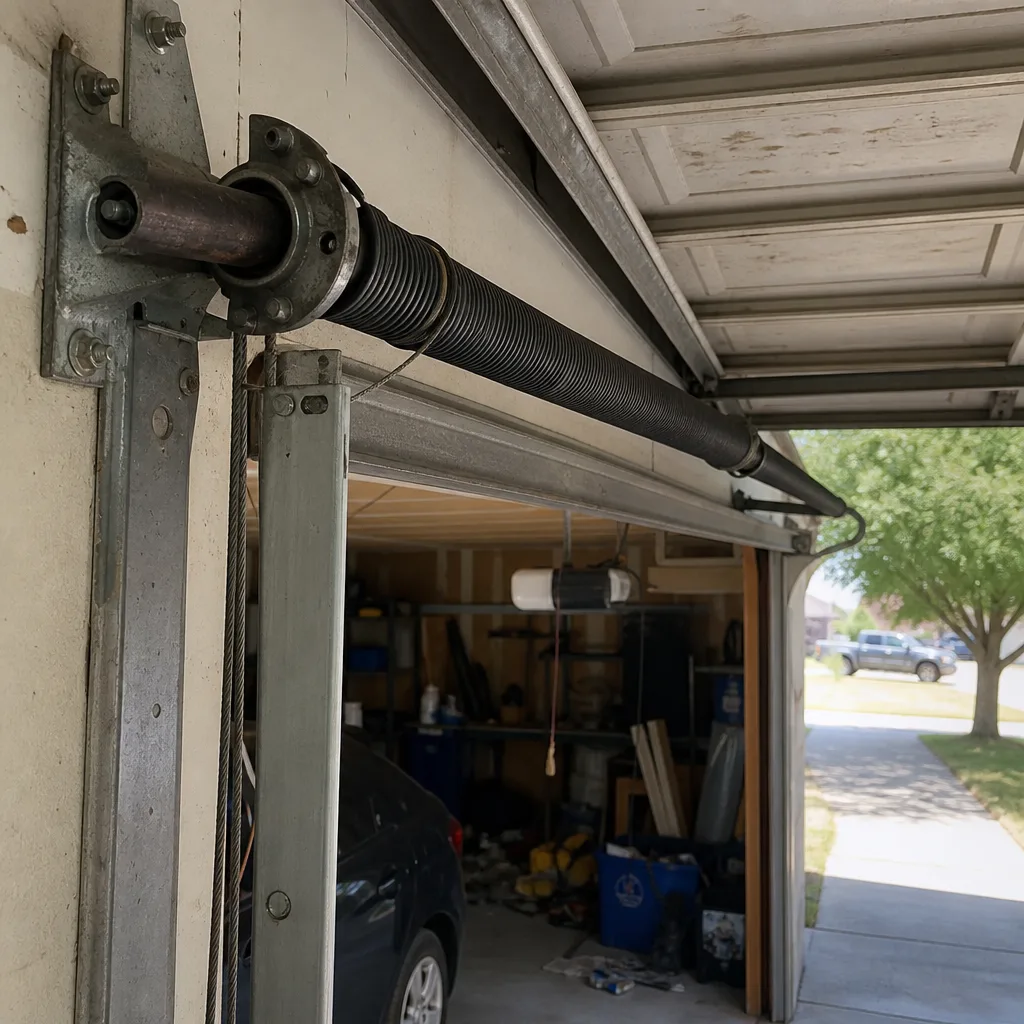 Before
 After
AfterGarage Door Repair Maintenance Checklist for Fulshear Homeowners
The single maintenance item that prevents 60% of emergency service calls in Fulshear takes four minutes and costs less than a dollar. Most homeowners have never done it once. That item is lubricating the torsion spring, and in our 42 years of working on garage doors across Fort Bend County, we’ve seen the same pattern repeat: a dry spring corrodes, binds, and snaps on the hottest day of August or after the first hard freeze in January. This guide is built differently from the Garage Door Warning Signs: A Fulshear Homeowner’s Reference Guide and other generic checklists you’ll find online. Instead of telling you to inspect everything on the first Saturday of each month, we’ve organized every task around the actual conditions that damage garage doors in Fulshear’s specific climate. You’ll learn what to check after a Gulf Coast downpour, how to spot heat damage before it fails, which lubricant goes where, and which jobs are safe to handle yourself versus the ones that can put you in the hospital.
Quick Answer
A proper garage door maintenance routine for Fulshear homeowners includes four core tasks: lubricating the torsion spring and rollers with lithium-based grease every six months, inspecting cables and bottom seal for wear after major weather events, testing door balance and auto-reverse safety features quarterly, and clearing track debris monthly. Leave spring tension adjustments and cable replacements to trained technicians. Most emergency repairs we perform in Fulshear trace back to skipped lubrication or delayed seal replacement after flood-season humidity-issues our Garage Door Repair services address daily.
Table of Contents
- How Fulshear’s Climate Damages Garage Doors
- Condition-Based Triggers: When to Inspect What
- The Right Lubricant for Every Component
- The 90-Second Visual Inspection
- Safe DIY Tasks vs. Leave-It-Alone Jobs
- Seasonal Maintenance Checklist
- Printable Condition Log for Tracking Wear
- Common Mistakes to Avoid
- When to Call a Professional
- Frequently Asked Questions
How Fulshear’s Climate Damages Garage Doors
Fulshear sits at the western edge of the Houston metro, where the Gulf Coast humidity meets the drier air rolling in from the Katy Prairie. That combination creates a specific set of stresses on garage doors that homeowners in drier parts of Texas simply don’t face.
The annual rainfall in Fort Bend County runs between 45 and 50 inches, concentrated in spring and fall storm systems. Water pools at the bottom of garage doors, wicks into wooden frames, and degrades the rubber bottom seal. Once the seal cracks, humidity enters the garage and condenses on cold steel components. We’ve replaced bottom seals in Fulshear homes that were less than two years old because the homeowner didn’t notice the split that formed after a particularly wet March.
Summer heat is the other major factor. From June through September, garage interior temperatures in Fulshear routinely exceed 110 degrees. That heat causes several problems:
- Lithium grease on springs thins and drips onto the door panels, staining them and leaving the spring unprotected
- Plastic roller wheels deform slightly, creating flat spots that produce a rhythmic thumping as the door moves
- Opener motor capacitors fail prematurely from thermal stress, especially in non-insulated garages facing west
- Metal expansion increases friction between track and rollers, accelerating wear
The freeze events, though brief, matter more than people expect. In January 2024, Fulshear saw three consecutive nights below 25 degrees. Homeowners who had skipped fall lubrication found their springs brittle and prone to snapping on the first cold morning. A lubricated spring flexes; a dry spring cracks.
Finally, the soil in this area shifts. Fulshear’s clay-heavy ground expands and contracts with moisture, and we’ve seen garage door frames rack out of square by half an inch or more over a single wet season. That misalignment puts uneven load on the opener and tracks, wearing components on one side faster than the other.
Understanding these specific stresses lets you check the right things at the right times, rather than running through a generic list that ignores your actual conditions.
Condition-Based Triggers: When to Inspect What
Calendar-based maintenance assumes your garage door experiences uniform stress year-round. In Fulshear, it doesn’t. Here’s what to check after specific weather events and seasonal shifts.
After Heavy Rain or Street Flooding
- Inspect the bottom seal for tears, compression, or hardening. Press it with your thumb; it should feel rubbery, not crusty.
- Check for water stains on the interior face of the door, which indicate seal failure.
- Look at the lower six inches of track for mud or debris that washed in from the driveway.
- Operate the door and listen for grinding, which suggests grit in the roller bearings.
In the Cross Creek Ranch and Fulbrook areas, street drainage can back up into driveways during intense storms. We’ve responded to calls where the opener strained because silt had packed into the lower track joints.
After an Extended Heat Streak (5+ Days Above 95°F)
- Touch the torsion spring. If it’s dry to the touch or has black drips on the door below it, re-lubricate.
- Listen for a rhythmic thump or vibration during opening, which usually means heat-deformed rollers.
- Check the opener motor housing for excessive warmth immediately after a cycle. It should be warm, not hot enough to make you pull your hand away.
- Look for gaps where the door meets the frame; heat expansion can shift the header alignment.
After a Hard Freeze (Below 28°F)
- Run the door through a complete cycle and listen for a sharp crack or pop from the spring area.
- Check if the door feels heavier than usual to lift manually, which suggests spring tension loss from metal contraction.
- Inspect the weatherstripping between door sections; it may have hardened and cracked.
- Look for condensation on the opener’s logic board cover, which can cause erratic behavior if it freezes and thaws.
After High Winds or a Storm Front
- Visually inspect all cable strands for fraying, especially where they wrap around the drum.
- Check that the photo-eye sensors haven’t shifted; windblown debris often knocks them misaligned.
- Look for dents in the door panels that could bind in the track.
- Confirm the emergency release cord hangs freely and hasn’t tangled around anything.
This condition-based approach focuses your attention where the risk actually is, when it actually matters. A door that sailed through a mild spring needs less scrutiny than one that just survived a week of 105-degree days or a freeze with driving rain.
The Right Lubricant for Every Component
Using the wrong lubricant is one of the most common and costly mistakes we correct in Fulshear. WD-40, 3-in-1 oil, and silicone spray each have their place, but that place is rarely a garage door.
Torsion Springs: White Lithium Grease
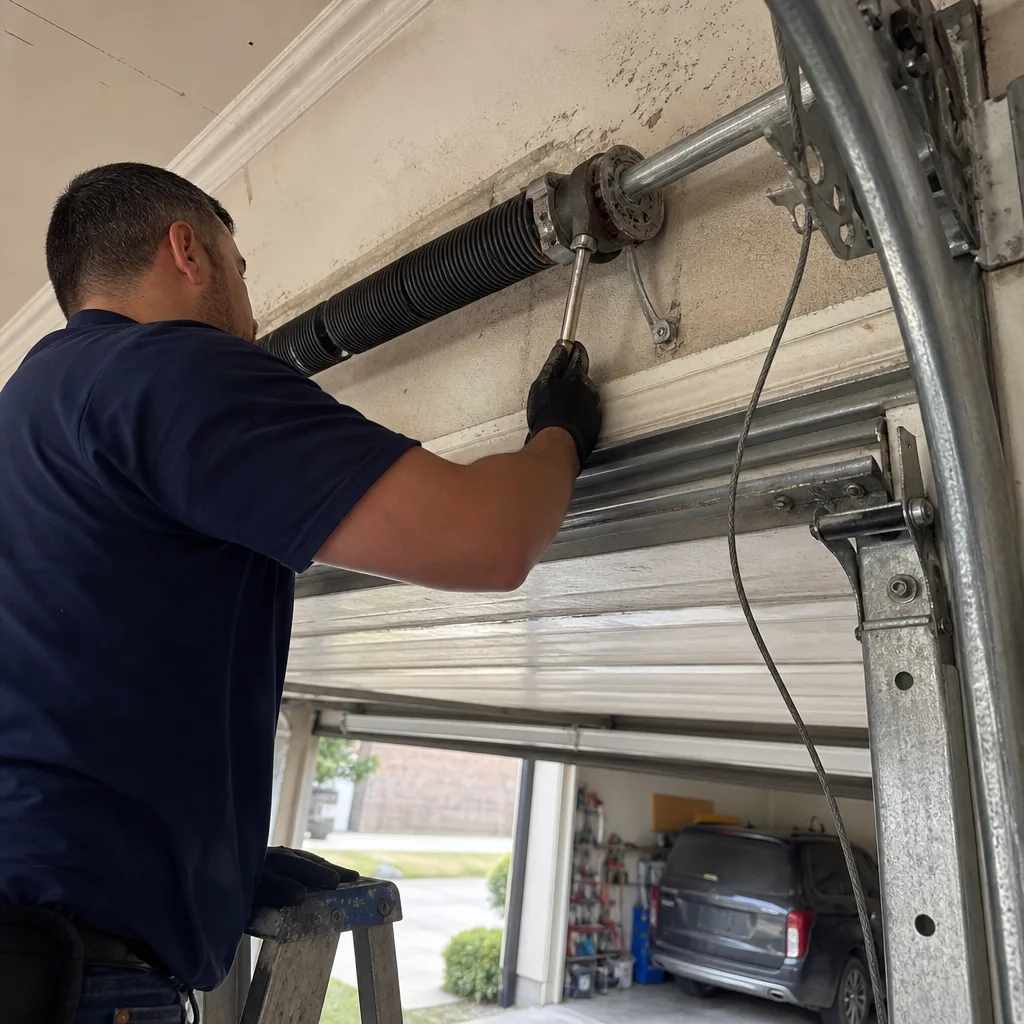
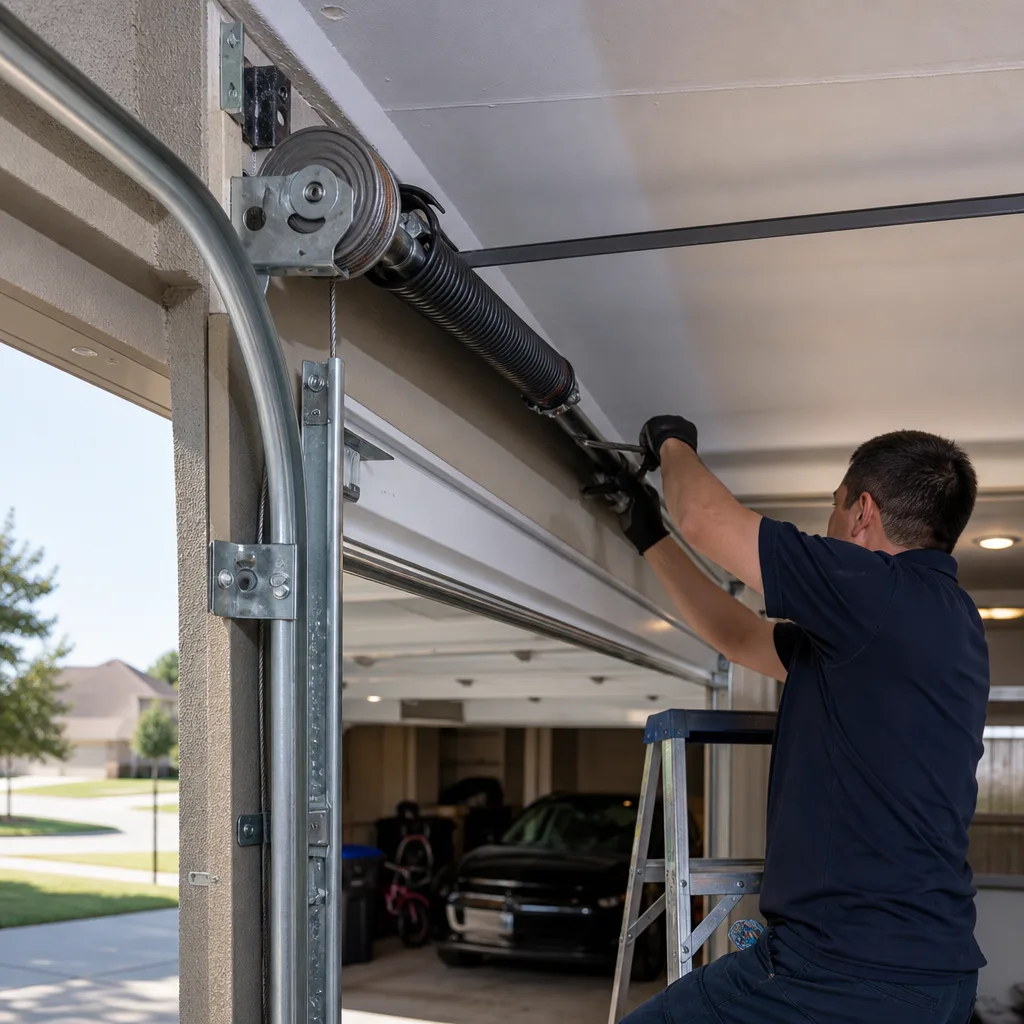
The torsion spring carries the full weight of your door, typically 150 to 250 pounds. It needs a lubricant that stays put through heat cycles, resists water washout, and maintains viscosity when cold. White lithium grease in a spray can meets all three requirements. Apply a light coating along the entire length of the spring, then run the door up and down twice to distribute it. The spring should look slightly shiny, not dripping.
Never use standard WD-40 on springs. It is primarily a solvent and light penetrating oil. It displaces moisture effectively but provides almost no lasting lubrication. Within two weeks of application, a spring treated with WD-40 will be effectively dry again. We’ve seen homeowners in the Weston Lakes area reapply it monthly, never understanding why their springs kept failing prematurely.
Rollers: Lithium Grease (Steel) or No Lubricant (Nylon)
Steel rollers with ball bearings need a small shot of lithium grease into the bearing cavity every year. Nylon rollers, which have become standard on most Clopay and Amarr doors installed since 2015, should not be lubricated at all. The nylon itself is the bearing surface, and grease attracts dust that turns into an abrasive paste. If your nylon rollers are noisy, they are worn and need replacement, not lubrication.
Hinges: Lithium Grease
Apply a thin film to the pivot points where the hinge leaves meet. Work the door through a few cycles to work it in. Avoid over-application; excess grease flings onto the door face and collects dust.
Tracks: No Lubricant
This surprises many homeowners. The rollers are meant to roll, not slide, inside the track. Lubricating the track actually encourages sliding friction, which is higher and less predictable than rolling friction. If your door seems to drag in the track, the problem is alignment, debris, or worn rollers, not lack of lubrication. Clean the track with a dry cloth and check for dents or obstructions.
Chain or Screw Drive Openers: Manufacturer-Specified Lubricant
Genie screw-drive openers require specific silicone-based lubricant available from the manufacturer. Chamberlain chain-drive units need light machine oil on the chain, never grease. Belt-drive openers need no lubrication at all. Check your owner’s manual; using the wrong product voids some warranties and can cause the belt to slip or the screw to bind.
Bottom Seal and Weatherstripping: Silicone Spray
A light mist of silicone spray on rubber seals keeps them pliable and prevents cracking. Do this in fall before the first cold snap, when rubber is most vulnerable to hardening. Wipe excess with a rag; you want conditioning, not a slippery surface that attracts dirt.
| Component | Correct Lubricant | Frequency | Common Wrong Choice |
|---|---|---|---|
| Torsion spring | White lithium grease | Every 6 months | WD-40 |
| Steel rollers | White lithium grease | Annually | 3-in-1 oil (drips off) |
| Nylon rollers | None | N/A | Any lubricant (attracts grit) |
| Hinges | White lithium grease | Annually | Graphite (washes out) |
| Tracks | None; clean only | As needed | Any lubricant (causes sliding) |
| Chain drive opener | Light machine oil | Annually | Grease (attracts debris) |
| Screw drive opener | Manufacturer silicone | Annually | WD-40 (evaporates) |
| Rubber seals | Silicone spray | Fall | Petroleum-based products (degrades rubber) |
The 90-Second Visual Inspection
This inspection catches roughly 80% of developing problems before they require a service call. We teach it to every Fulshear homeowner who asks, and we perform a version of it ourselves on every maintenance visit. It requires no tools and no contact with dangerous components.
Step 1: Cable Tension Check (30 Seconds)
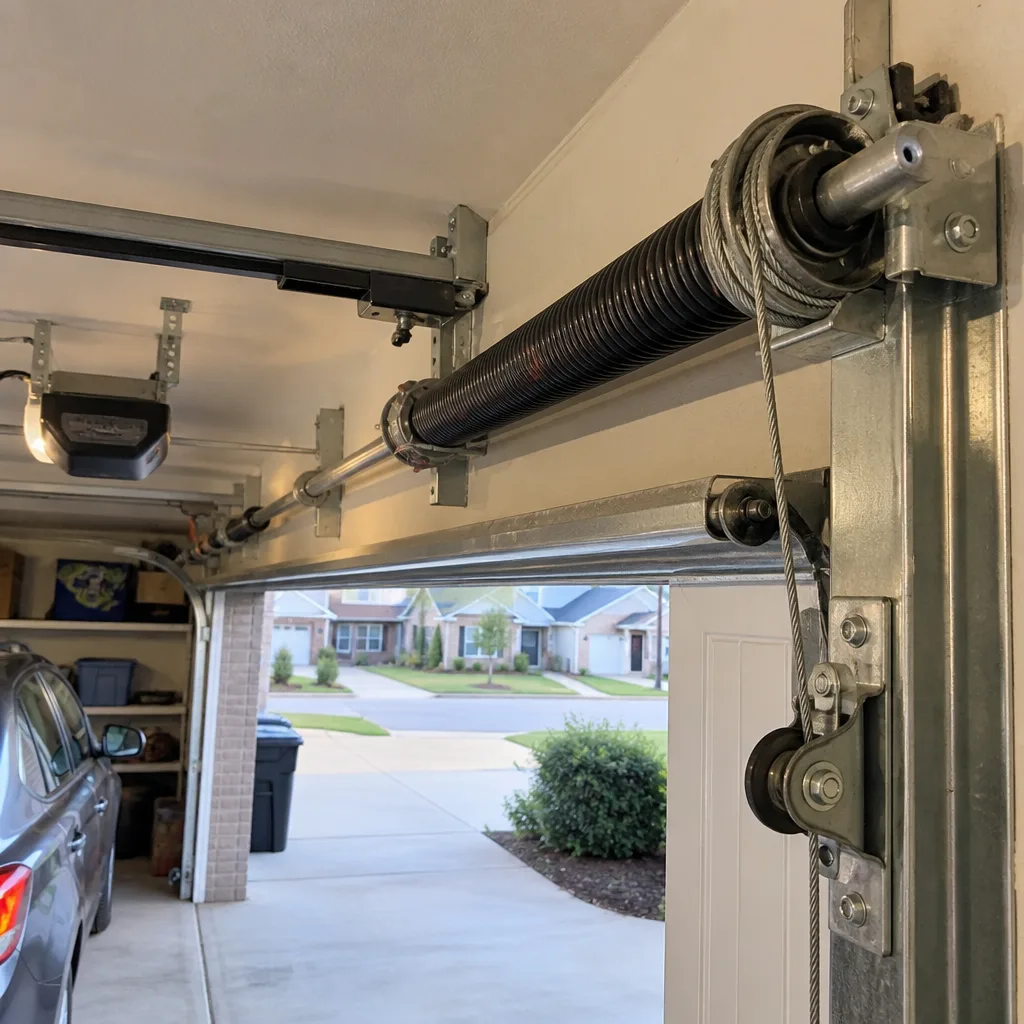
Stand inside the garage with the door closed. Look at the two lift cables, one on each side, running from the bottom bracket up to the drum at the top of the door. They should both be taut with equal tension, running straight without slack or kinking. Look for these warning signs:
- Any fraying or “fuzzy” appearance on the cable surface, even a few strands
- A visible gap between cable wraps on the drum, suggesting uneven winding
- One cable visibly looser than the other
- Rust discoloration, which indicates internal corrosion
If you see any of these, stop using the door and call a technician. Cable failure under load is dangerous and unpredictable.
Step 2: Bottom Seal and Track Base (30 Seconds)
Kneel at the center of the door opening. Look across the bottom seal to the light coming from outside. You should see an even, continuous line of light. Gaps indicate seal compression or damage. Press the seal with your thumb; it should rebound immediately. If it stays compressed or feels rock-hard, replace it.
While kneeling, glance into the bottom of both vertical tracks. You should see clean metal, not leaves, gravel, or dried mud. In Fulshear, live oak catkins and pecan husks are common track obstructions in spring.
Step 3: Door Balance and Alignment (30 Seconds)
Pull the emergency release cord to disconnect the opener. Lift the door manually to waist height and let go. A properly balanced door should stay in place or drift slowly. If it slams down, the springs are weak. If it races upward, the springs are over-tightened. Either condition strains the opener and creates a safety hazard.
While the door is at waist height, step back and sight along the bottom edge. It should be level. A tilted door indicates spring imbalance or track misalignment, both of which worsen with use.
Reconnect the opener by pulling the release cord toward the opener unit while running the motor. If you cannot reconnect it smoothly, the door may be out of the open position where the carriage engages.
Perform this 90-second inspection after any significant weather event and monthly during the heaviest use seasons, which in Fulshear are typically late spring and early fall when homeowners are most active with lawn equipment and holiday storage.
Safe DIY Tasks vs. Leave-It-Alone Jobs
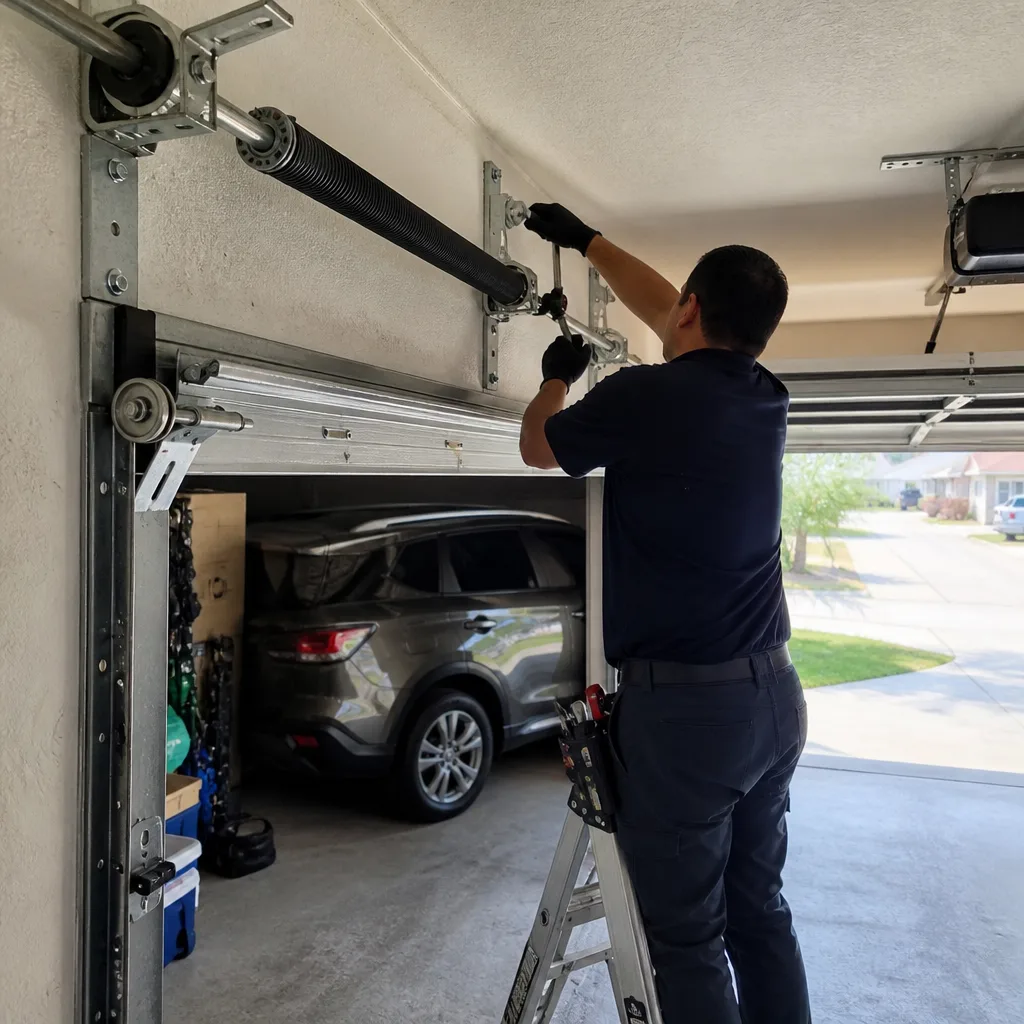
We believe in homeowners understanding their equipment. We also believe in being direct about what can injure or kill you. Garage door springs are under extreme tension, and the energy stored in a torsion system can cause severe lacerations, broken bones, or worse. Carl Dutton has seen the aftermath of DIY spring work gone wrong, and it is not a risk worth taking for any amount of saved money.
Safe for Homeowners
- Lubricating springs, hinges, and steel rollers with the door in the closed position
- Cleaning tracks with a dry cloth or vacuum
- Testing and realigning photo-eye sensors
- Replacing remote batteries and reprogramming remotes
- Replacing weatherstripping and bottom seal (on doors with simple retainer channels)
- Tightening visible lag screws on hinges and track brackets with a socket wrench
- Testing door balance via the emergency release
Leave to Trained Technicians
- Any adjustment to spring tension, including winding or unwinding torsion springs
- Cable replacement or reattachment
- Bottom bracket replacement (these brackets are under spring tension)
- Track realignment or replacement
- Opener mounting bracket work
- Repair of a door that has come off its tracks
The boundary is simple: if releasing the component would cause rapid uncontrolled movement, or if the component is under tension when the door is at rest, it is not a homeowner job. The garage door repair in Fulshear that we perform most often after DIY attempts involves fixing the additional damage caused by the attempt itself, not just the original problem.
Seasonal Maintenance Checklist
This checklist integrates the condition-based triggers with a sensible baseline schedule. Adapt the timing to your specific door age and usage, but do not skip the post-event checks.
Spring (March-May)
- Lubricate torsion spring and steel rollers after the last freeze risk has passed
- Inspect and clear tracks of oak catkins, pollen residue, and storm debris
- Test auto-reverse function: place a 2×4 flat on the threshold and close the door; it should reverse on contact
- Check photo-eye alignment; spring pollen often coats the lenses
- Inspect bottom seal for winter hardening or rodent damage
Summer (June-August)
- Re-lubricate spring if you notice thinning or dripping after heat streaks
- Check opener motor housing temperature after midday operation
- Inspect nylon rollers for flat-spot thumping; replace if deformed
- Clear any vegetation growing near track bottoms; summer growth is rapid in Fulshear’s humidity
- Verify door seals against insects; summer is peak pest entry season
Fall (September-November)
- Condition all rubber seals with silicone spray before first cold snap
- Perform full 90-second inspection after the heaviest rain month (typically October)
- Tighten all visible hardware; thermal expansion cycles loosen fasteners over summer
- Test battery backup on opener if equipped; power outages spike in fall storm season
- Schedule professional tune-up if door is over 10 years old or shows any wear signs
Winter (December-February)
- Listen carefully for spring stress sounds on first cold mornings
- Keep tracks clear of any ice accumulation; never use salt, which corrodes aluminum
- Verify weatherstripping flexibility in cold conditions
- Check garage interior humidity; condensation on cold door surfaces indicates seal failure
- Operate door manually once during a cold snap to verify it hasn’t bound
For homeowners in newer developments like Jordan Ranch or the northern Fulshear expansion areas, your door may still be under builder warranty. Document your maintenance; warranty claims often require proof of reasonable care.
Printable Condition Log for Tracking Wear
One of the most valuable services you can provide any technician is accurate history. “It’s been making that noise since last October” tells us more than “it just started.” A simple log lets you track patterns and catch acceleration in wear.
Here’s a one-page format you can replicate in a notebook or spreadsheet:
| Date | Event/Condition | What You Checked | What You Found | Action Taken | Technician Notes |
|---|---|---|---|---|---|
| Example: 10/15/2024 | Post-Hurricane rain, 6 inches | Bottom seal, track debris, cable tension | Seal compressed on left; minor silt in track | Cleaned track; scheduled seal replacement | Mainspring: seal replaced 10/18, springs lubricated, door rebalanced |
Key entries to make:
- Every lubrication date and product used
- Weather events that prompted inspection and what you found
- Any unusual noises, with description and when they occur (opening, closing, specific point in travel)
- Opener behavior changes: slower operation, new sounds, remote range reduction
- Professional service dates and what was done
Bring this log or photograph it for any service call. It eliminates guesswork and often reduces diagnostic time, which translates to lower labor charges from any honest shop. Our technicians at Mainspring Garage Door Co. home specifically ask for this history, and homeowners who keep logs typically get faster, more precise repairs.
Common Mistakes to Avoid
- Using WD-40 as a lubricant. It is a water displacer and light solvent, not a lasting lubricant. Springs treated with WD-40 dry out within weeks and corrode faster than untreated springs.
- Lubricating nylon rollers or tracks. Nylon rollers self-lubricate; adding grease attracts abrasive grit. Tracks need cleaning, not lubrication; oiled tracks cause rollers to slide rather than roll.
- Ignoring the door after a “successful” DIY fix. Many Fulshear homeowners realign a photo-eye and consider the job done, never noticing the cable fraying that caused the original misalignment. Always complete the full 90-second inspection after any single-issue fix.
- Waiting for total failure before calling. A spring that groans for three months before breaking often damages the opener, cables, or bottom brackets in the process. Early intervention costs less.
- Using the emergency release as a regular operating method. The red cord is for emergencies and power outages, not daily use. Repeated manual operation without opener support wears components unevenly.
- Assuming all brands need the same care. A Chamberlain belt drive and a Genie screw drive have different maintenance requirements. Check your specific manual rather than following generic advice.
- Neglecting the exterior side of the door. Fulshear’s sun exposure fades and cracks paint on south-facing doors, which then allows moisture into wooden frames. Annual washing and touch-up painting extends door life significantly.
When to Call a Professional
Call a technician immediately if you notice any of the following: a loud bang from the spring area, visible cable fraying or separation, the door hanging crooked in its tracks, the opener straining or clicking without moving the door, or any gap between the door and floor that admits light, water, or pests. These conditions worsen with every cycle and can create safety hazards.
For routine concerns, a professional tune-up every two to three years for doors under ten years old, and annually for older systems, catches developing problems before they become emergencies. Mainspring Garage Door Co. offers free estimates in Fulshear. Call (409) 794-4141 to schedule. We’ll assess your door’s condition, review your maintenance log if you keep one, and quote any needed work before we start. Our 90-Day Done Right Promise covers every job in writing: if it’s not right, we return at no charge, no paperwork, no dispute.
Frequently Asked Questions
Lubricate the torsion spring and steel rollers every six months, ideally in April and October, with additional applications after extended heat streaks above 95 degrees. The Gulf Coast humidity and Fulshear’s summer heat degrade lubricant faster than drier climates. If the spring looks dry or you hear squeaking before the six-month mark, reapply early. Call (409) 794-4141 if you’re unsure whether your spring needs attention; estimates are free.
No. Torsion springs store enough energy to cause serious injury or death if mishandled. The winding cones can slip, the bar can kick back, and a breaking spring can lacerate or strike with lethal force. This is not a matter of skill level; it is a matter of specialized tools and training. Our background-checked technicians handle spring work daily under our K.E.Y.S. values code. The cost of professional adjustment is modest compared to an emergency room visit.
Heat-deformed nylon rollers are the most common cause in Fulshear. When garage temperatures exceed 110 degrees for consecutive days, nylon rollers develop flat spots that create a rhythmic thump as each flat spot contacts the track. Steel rollers don’t deform this way but require lubrication to prevent squeaking. Inspect your roller type; if they’re nylon and thumping, replacement is the only fix. We carry replacement rollers on our trucks and can swap them in a single visit.
Our seasonal tune-up is $89 and includes full lubrication, 90-second inspection expansion, safety system testing, hardware tightening, and a written condition report. For repairs over $250, we currently offer $50 off. Seniors and veterans receive a permanent 5% discount on all services. We state every price upfront before work begins, so there are no surprises on the bill. Call (409) 794-4141 to schedule.
Inspect the bottom seal for tears or compression, check the lower track for debris, and operate the door listening for grinding. Floodwater often carries abrasive silt into the track system. If your garage took any water, also check the opener’s electrical components for moisture exposure and test the GFI outlet if equipped. Do not operate the door if you smell burning or see corrosion on electrical connections; call for assessment instead.
No maintenance program prevents all wear, but proper care typically extends component life by 40 to 60 percent and eliminates the majority of emergency calls. Springs still fatigue from cycle count, openers still age electronically, and accidents still happen. What maintenance does is shift you from reactive emergency repairs, often at premium rates and inconvenient times, to planned replacements on your schedule with full information. We’ve maintained doors in Fulshear for over 42 years, and the best-maintained systems reward their owners with predictable, modest costs over decades. Explore more guides & resources to keep your door running smoothly.
The Bottom Line
Effective garage door maintenance in Fulshear is not about obsessive calendar checks. It is about understanding what your specific climate does to your specific door, checking the right components after the events that actually stress them, using the correct products on each part, and knowing precisely where your knowledge ends and danger begins. The four-minute spring lubrication prevents most emergencies. The 90-second inspection catches most problems early. The condition log gives any technician the context to fix things right the first time. Everything else builds from there. Do these things consistently, and your garage door becomes the reliable background feature it should be, not a source of surprise expenses and inconvenient failures.
For homeowners considering an upgrade or replacement, our garage door installation in Fulshear page covers material selection and sizing for our local climate. If your opener is the component showing age, see our garage door opener in Fulshear guide for brand comparisons and smart-feature considerations.
Written by Carl Dutton, Owner at Mainspring Garage Door Co., serving Fulshear since 2016.