
Last updated September 10, 2026
Full 25-point door and opener safety check with every visit - springs, cables, rollers, tracks, and your LiftMaster or Chamberlain opener included
You get a price before we start. It does not change when the truck arrives.
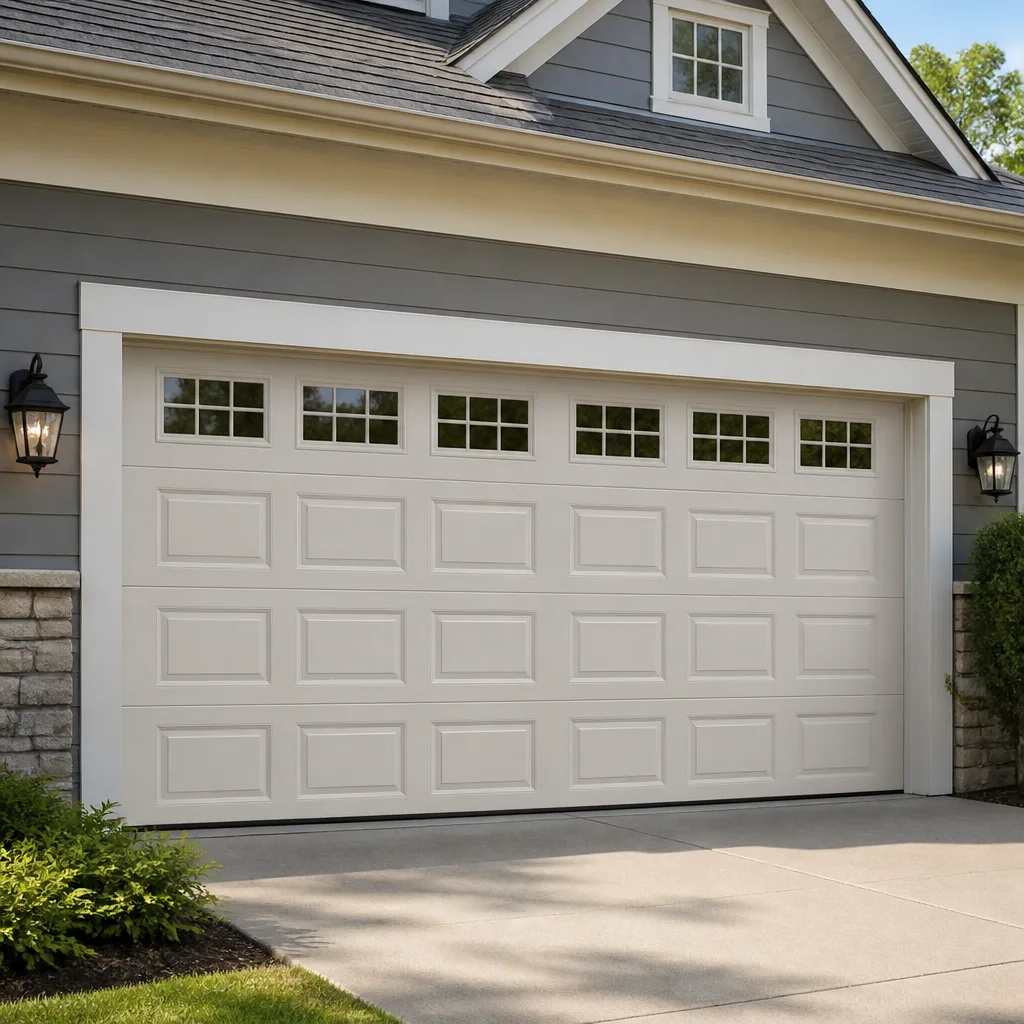
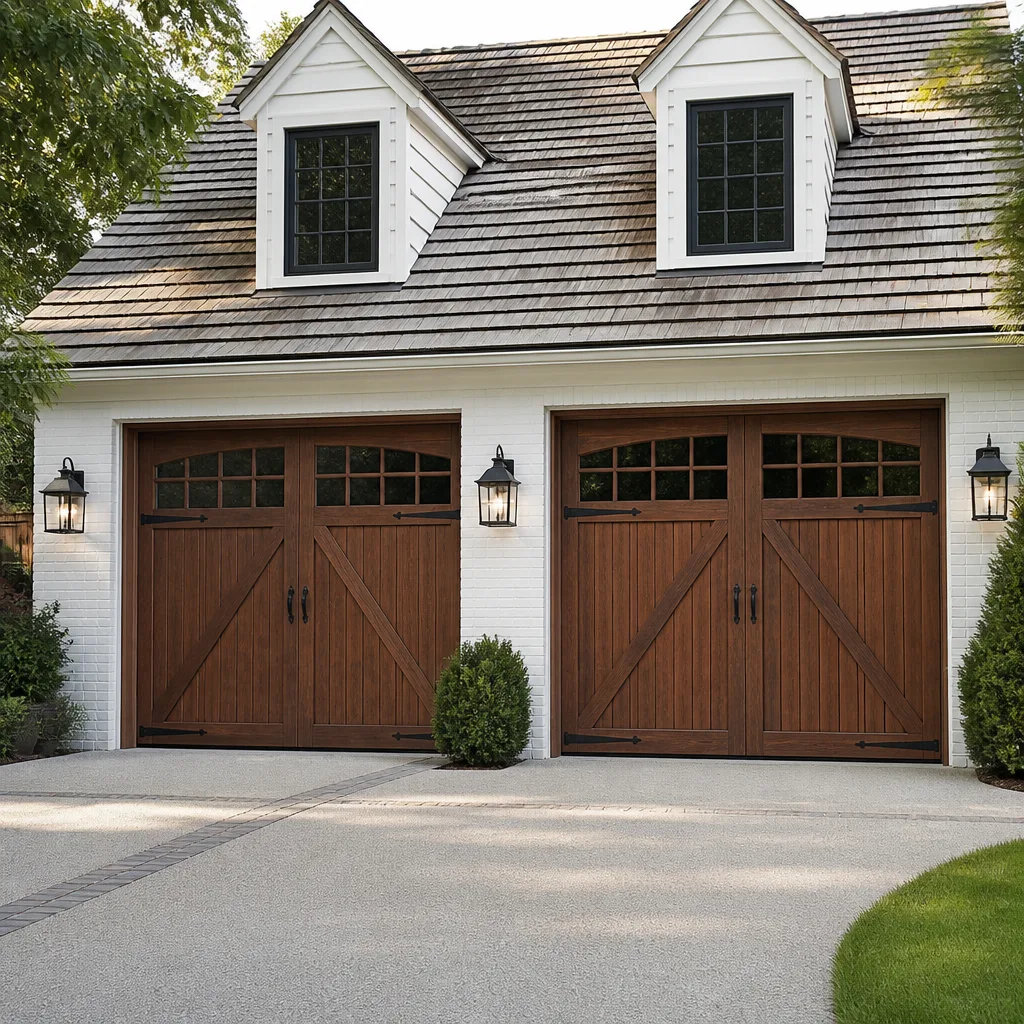
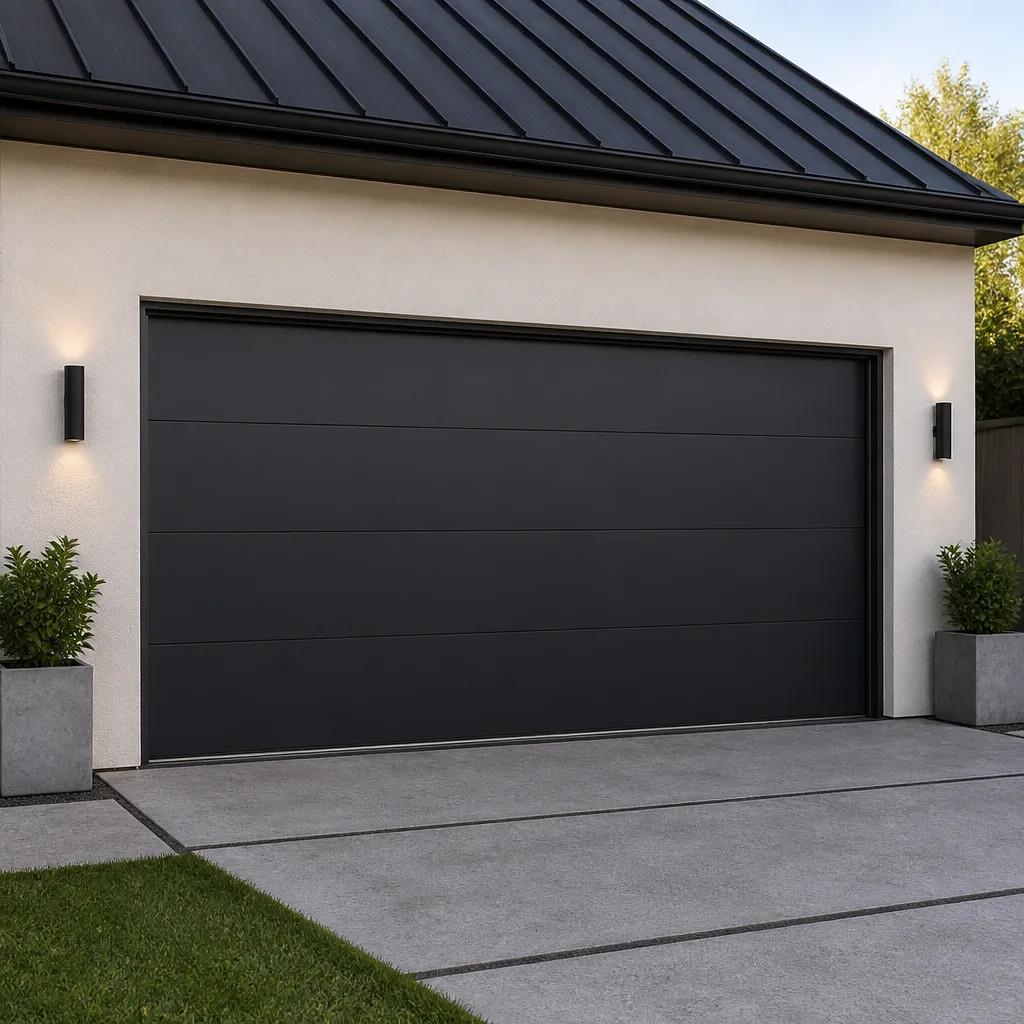
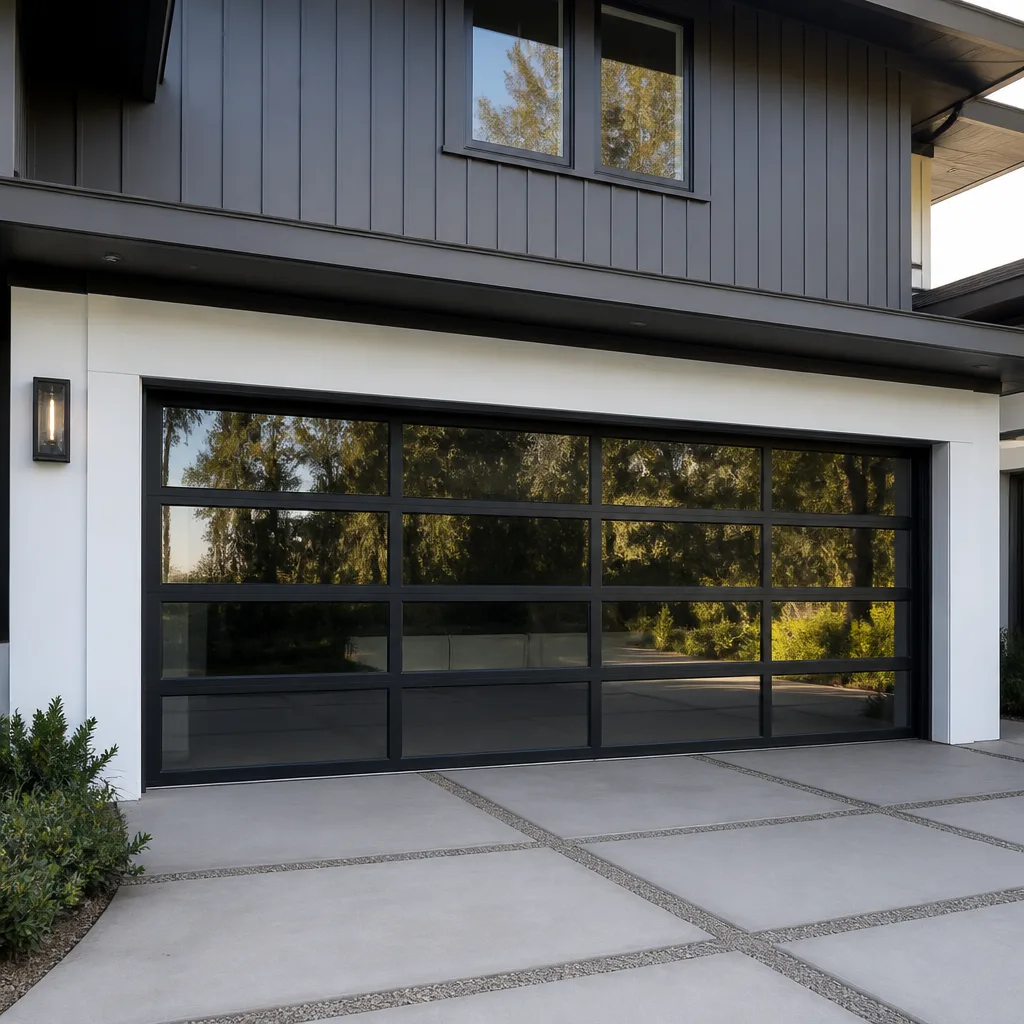
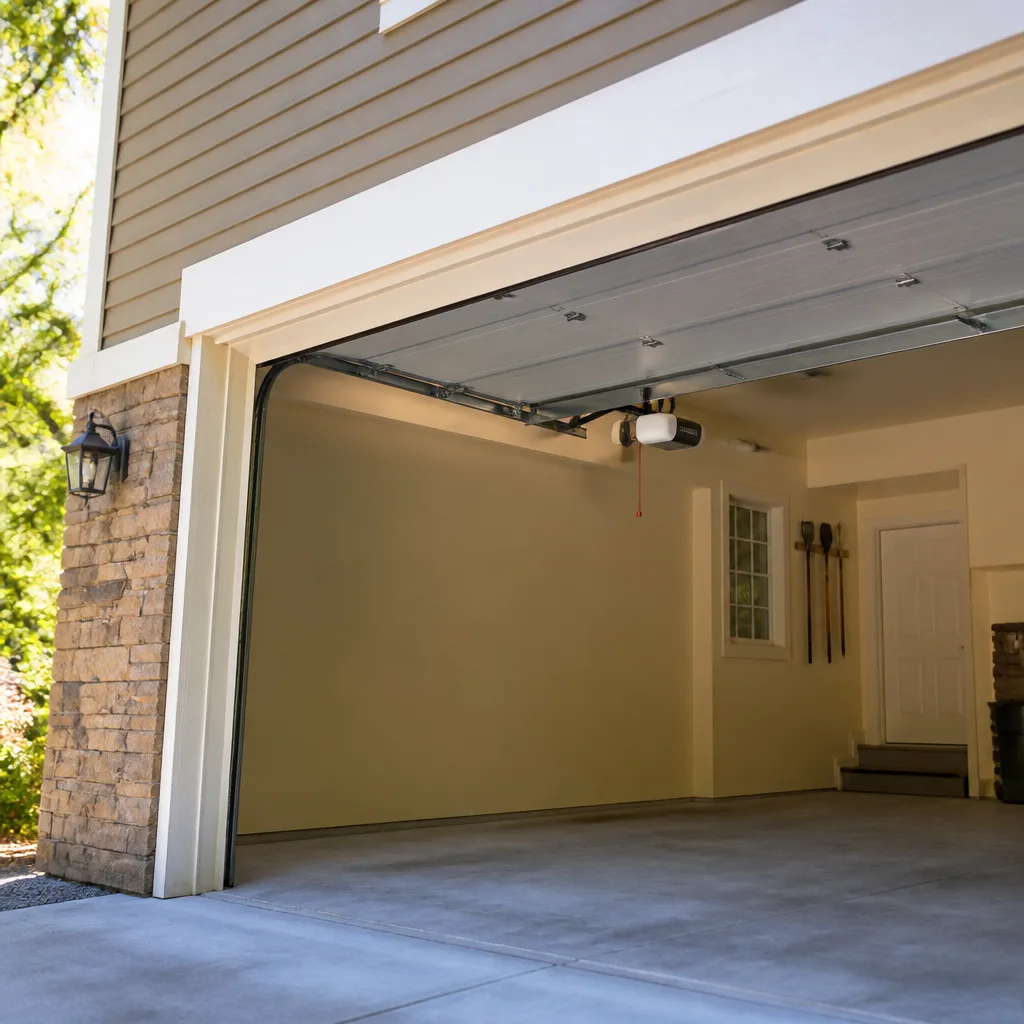
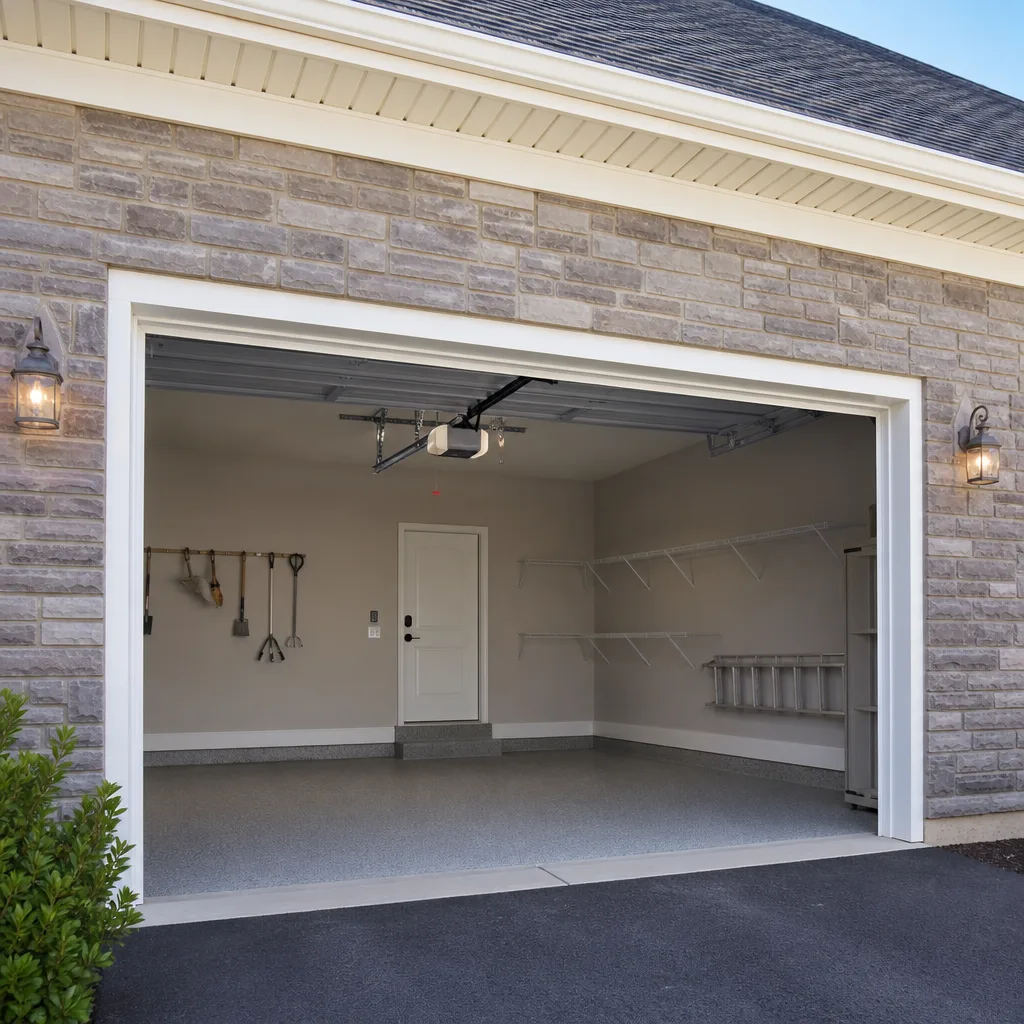
 Before
 After
After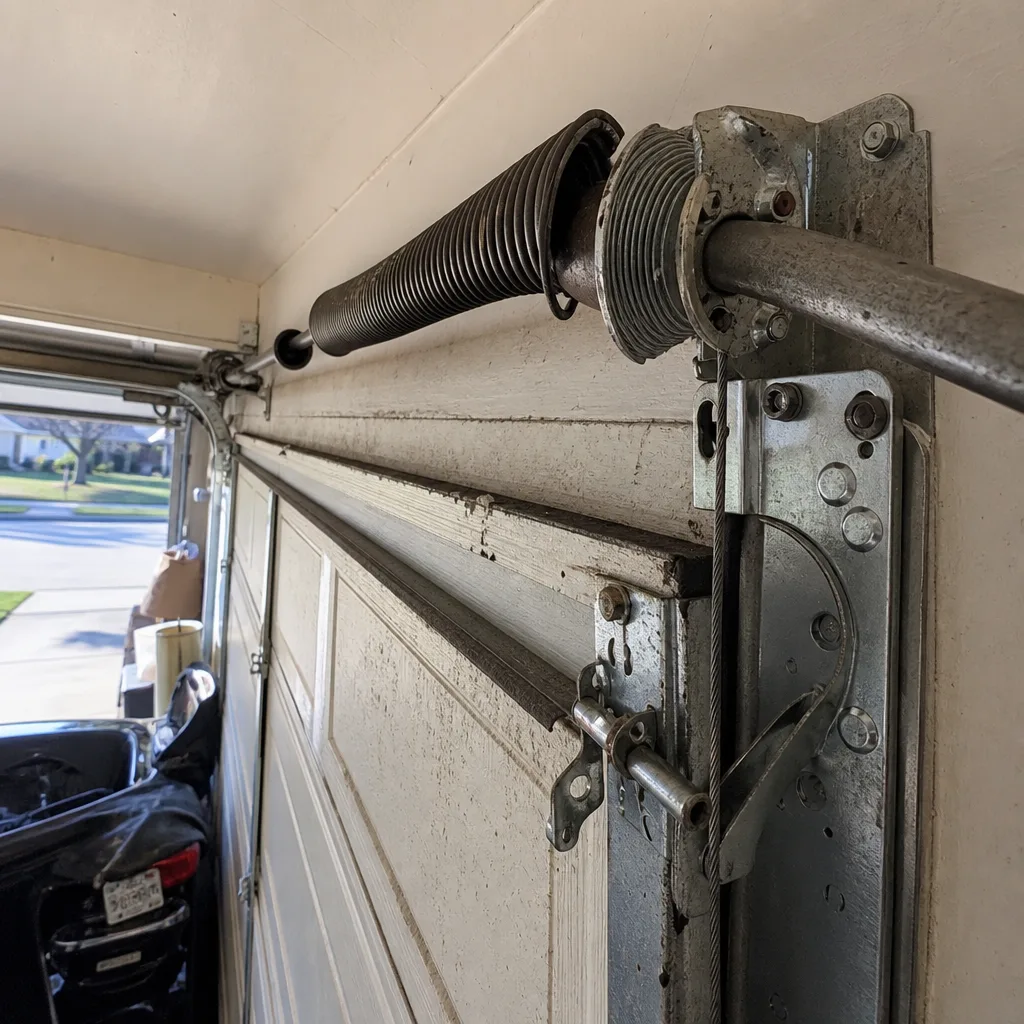 Before
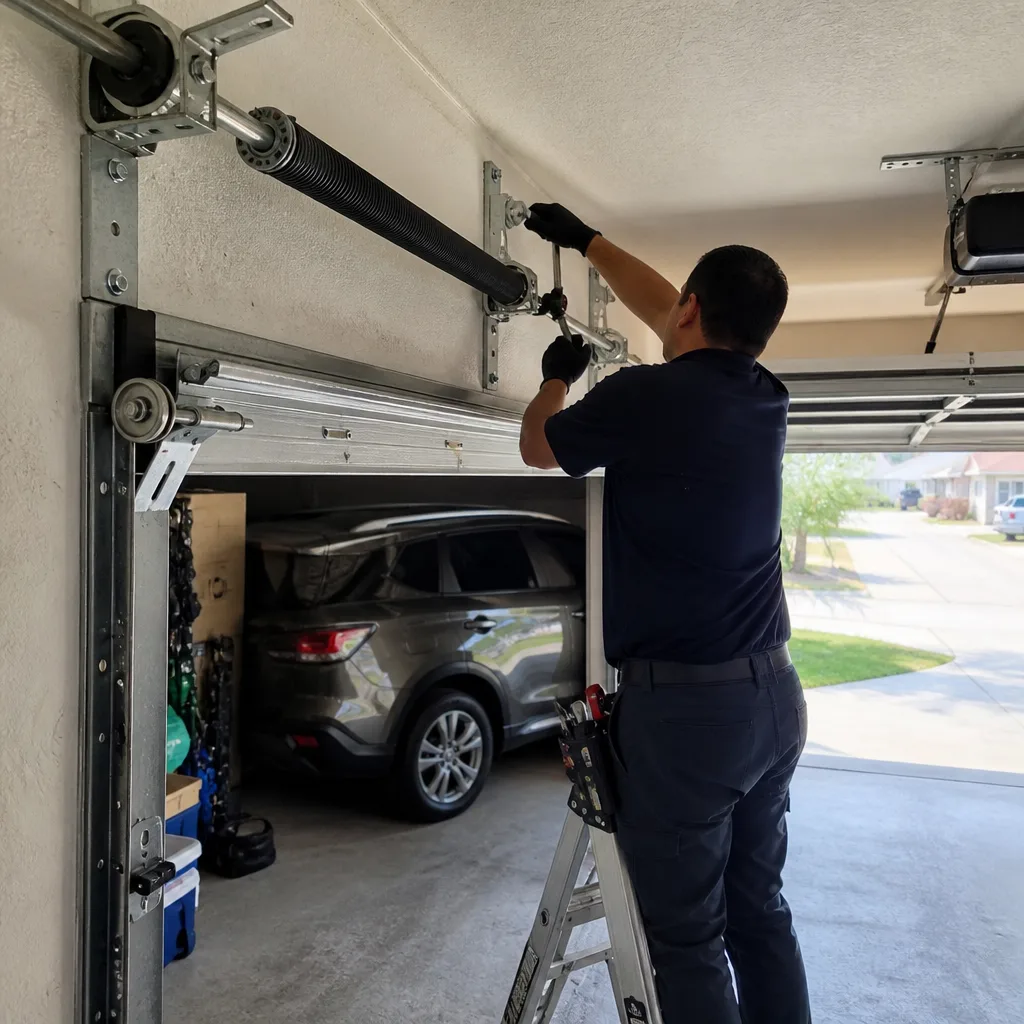 After
After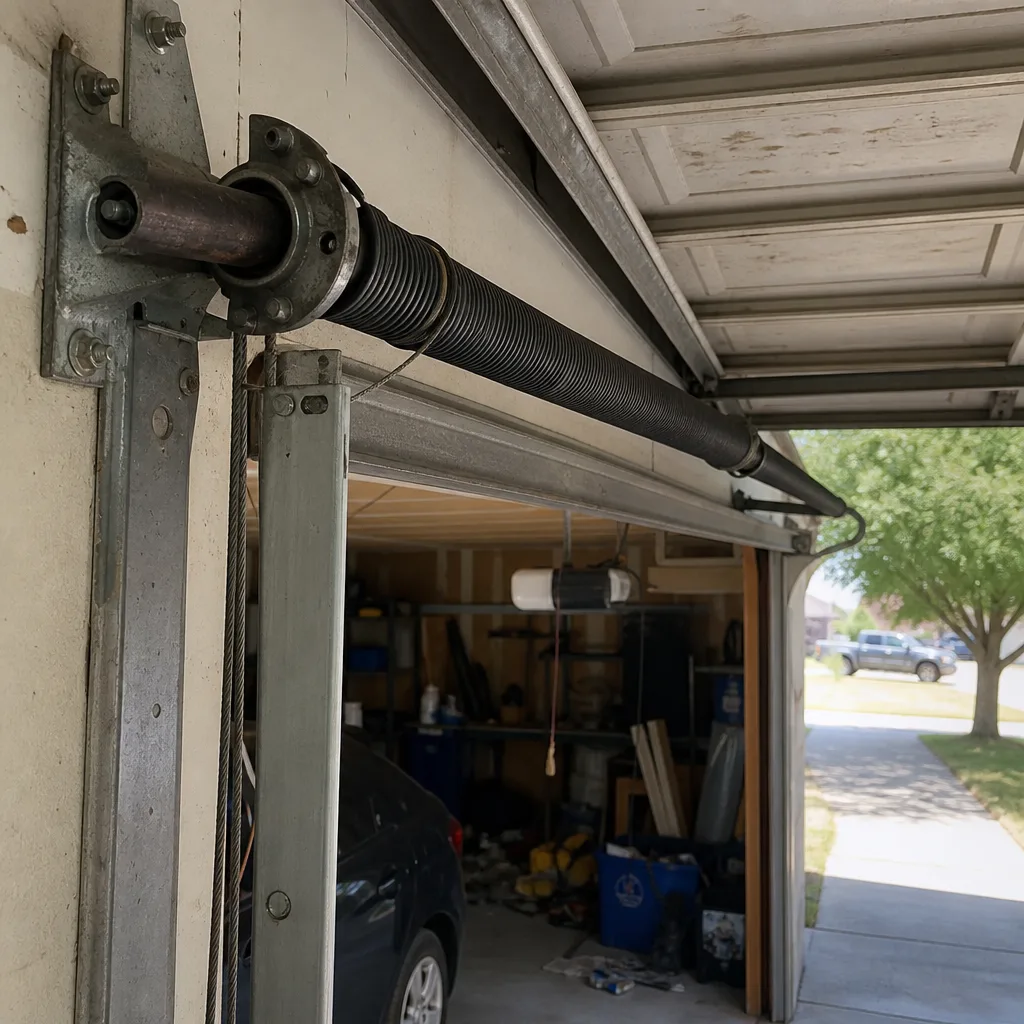 Before
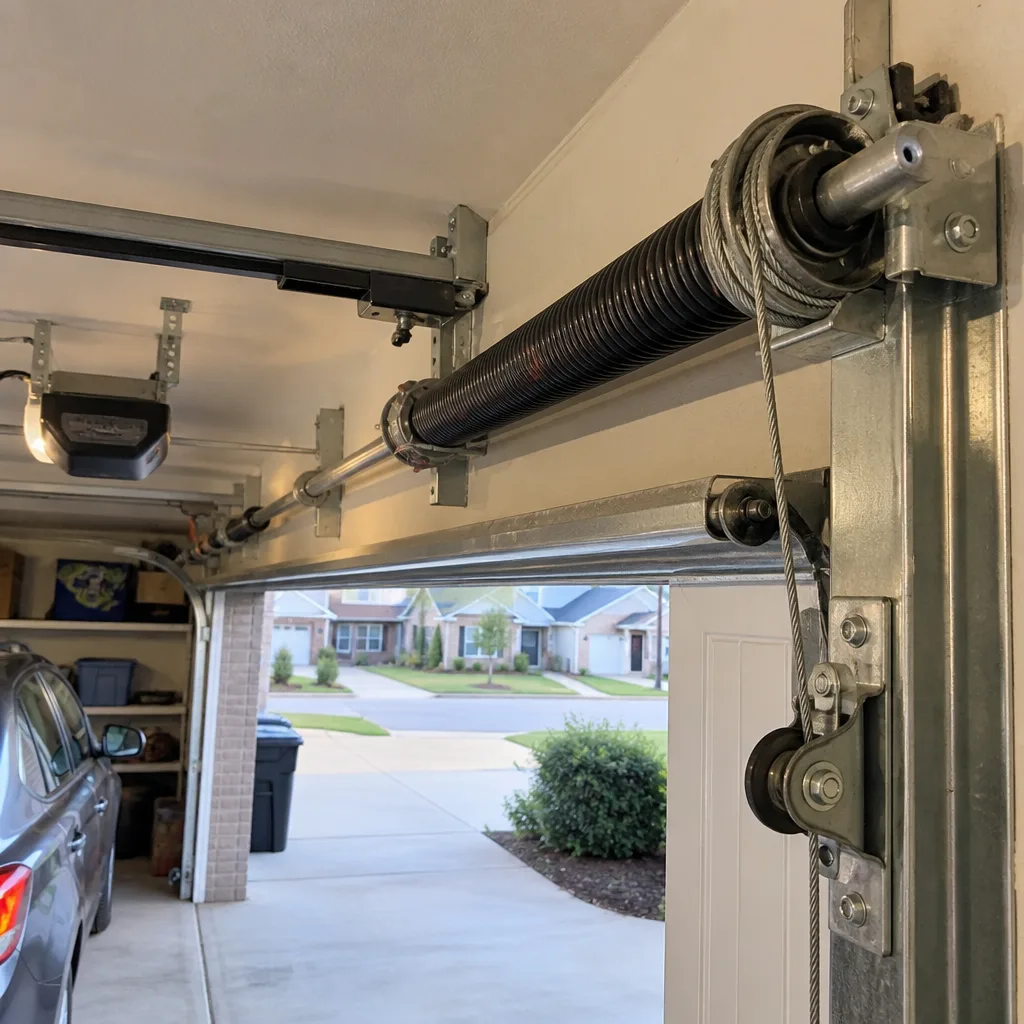 After
AfterDIY vs Professional Garage Door: The Fulshear Homeowner’s Decision Guide
A torsion spring on a standard residential garage door stores roughly the same kinetic energy as a bowling ball dropped from a second-story window. That energy does not care whether you watched a five-minute video or read the manual twice. In Fulshear, where summer humidity swells wooden door panels and winter cold snaps stiffen steel cables, the question of what to fix yourself and what to leave alone carries real stakes. This guide draws a clear line between the two. You will learn which tasks are genuinely safe for a homeowner, what makes spring and cable work categorically different from other home repairs, how to spot a trustworthy tutorial, and how to weigh the true cost of doing it yourself against hiring a professional with the right parts on the truck.
Quick Answer
Most Fulshear homeowners can safely handle weatherstripping, lubrication, photo-eye alignment, and basic panel cleaning. Spring replacement, cable repair, and opener hardware work should be left to trained professionals because the stored mechanical energy in these components can cause serious injury. The cost difference between DIY and professional repair narrows significantly when you factor in parts sourcing time, tool rental, and the price of one mistake.
Table of Contents
- What Is Safe to Do Yourself
- Why Spring and Cable Work Is Different
- The True Cost: DIY vs Professional Repair
- How to Evaluate a Repair Video Before Trusting It
- The Middle Path: Extending Time Between Professional Visits
- How Fulshear’s Climate Affects Your Garage Door
- Tools and Parts: What You Actually Need
- Warranty, Insurance, and the Fine Print
What Is Safe to Do Yourself
There is honest maintenance work a Fulshear homeowner can do without special training. These tasks involve no stored mechanical energy, no overhead weight, and no components under tension. They also happen to be the tasks that, done regularly, prevent the expensive problems that force a service call.
Weatherstripping Replacement
The rubber seal at the bottom of your door and the vinyl or brush seals along the sides and top simply press or slide into channels. Over time, Fulshear’s intense sun hardens rubber, and the occasional hard freeze can crack vinyl. Replacement bottom seals come in standard widths; measure your existing seal, buy the matching profile, and slide the new one into the retainer channel. No tools beyond a utility knife and perhaps a flathead screwdriver are needed. This is a thirty-minute job that pays for itself in reduced dust, pest intrusion, and conditioned air loss.
Lubrication
We see two opposite mistakes in Fulshear neighborhoods like Cross Creek Ranch and Weston Lakes: doors that never get lubricated, and doors drowned in WD-40. The correct approach is specific and sparing.
- Use a silicone-based spray or white lithium grease, never general-purpose penetrating oil.
- Apply to the hinges, rollers (if steel, not nylon), and the bearing plates at each end of the torsion spring shaft.
- Do not lubricate the track itself; the rollers need grip, not slip.
- Wipe away excess. A thin film is enough.
- Cycle the door twice to distribute.
Do this twice yearly, ideally before the summer heat and after the last hard freeze.
Photo-Eye Alignment
Modern openers have two small sensors near the floor, one on each side of the door. If the door reverses for no apparent reason or refuses to close, check these first. Clean the lenses with a soft cloth, verify that both LED indicator lights are steady (not blinking), and adjust the brackets by hand until the beams align. This is diagnostic work, not repair work, and it solves a surprising percentage of “broken” opener calls.
Panel Cleaning and Inspection
Steel doors in Fulshear collect road dust from the Grand Parkway and FM 1093 corridor. Wash with mild detergent, inspect for rust spots (sand and touch up with matching paint), and look for dents that might affect track alignment. Wooden doors need more attention: check for rot at the bottom edge, especially if sprinklers hit the door regularly, and reseal or repaint every few years.
These four tasks share a common trait. If you do them wrong, the worst outcome is a trip to the hardware store or a slightly dirty floor. None can send you to the emergency room.
Why Spring and Cable Work Is Different
This is the section that separates informed homeowners from injured ones. The danger of garage door springs and cables is not about complexity. It is about physics.
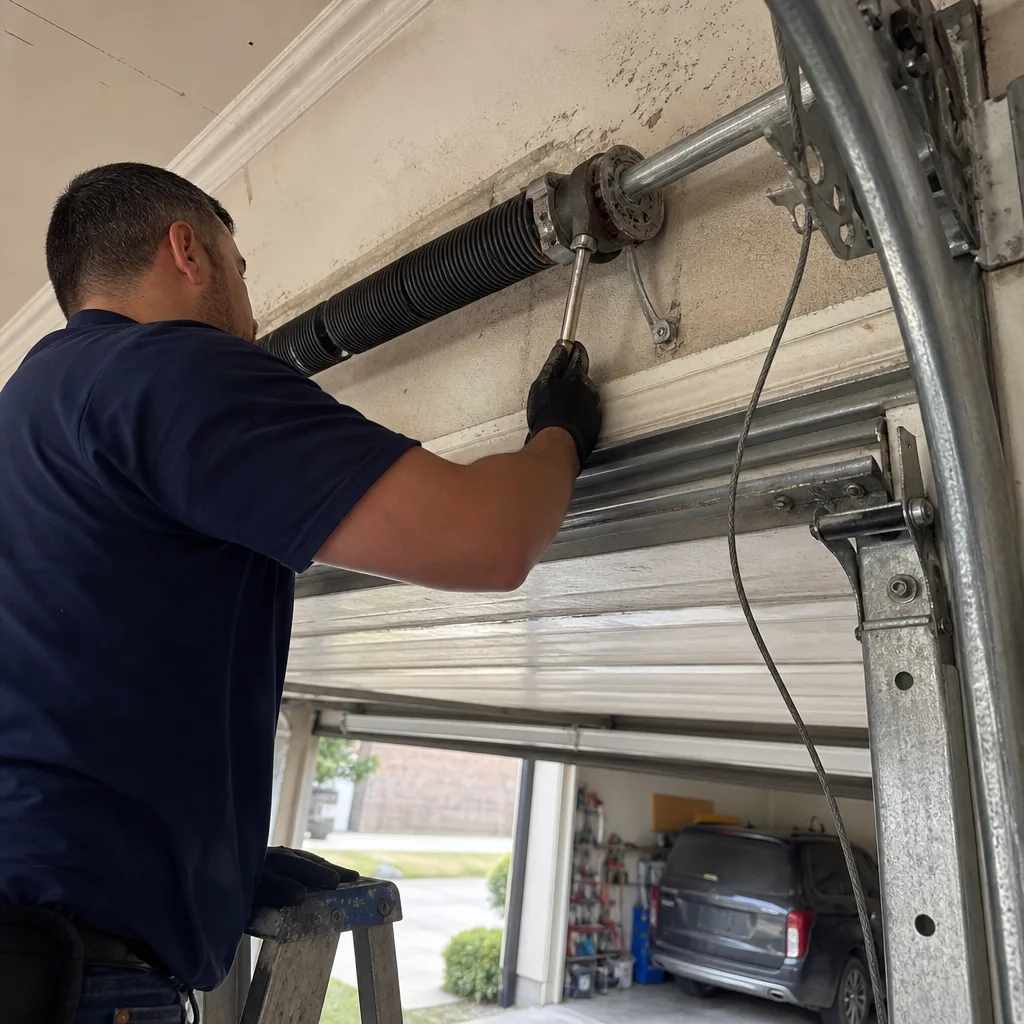
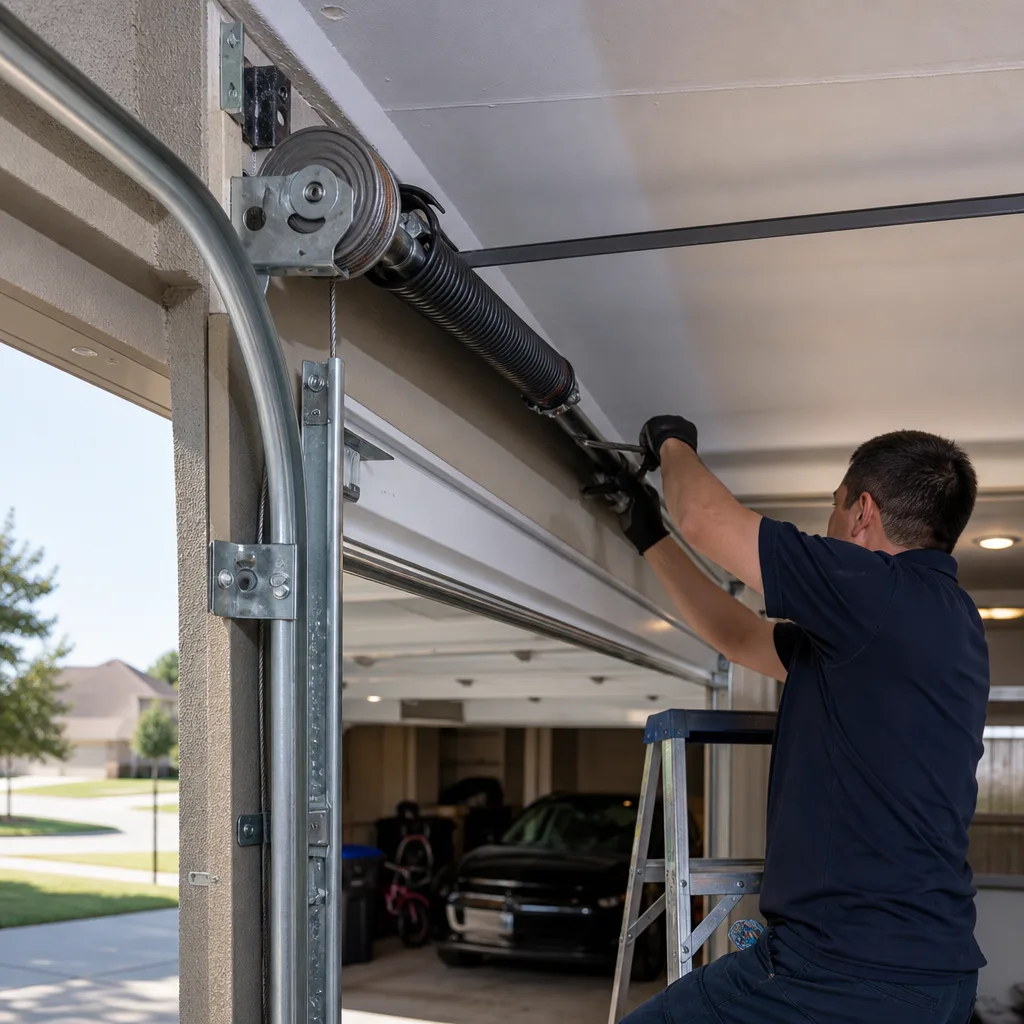
A torsion spring is a steel coil wound tight enough to counterbalance the full weight of your door, typically 150 to 250 pounds. When the door is closed, that spring is under maximum tension. When you open the door, the spring unwinds, transferring energy through cables to lift the panels. The spring does the work; the opener merely guides.
Here is what that means in human terms. A winding bar slipped from a torsion spring cone can strike with enough force to break bone. A cable snapping under load can lash like a whip. These are not hypothetical risks. In our 42 years of service, we have been called to homes where a homeowner’s attempted spring replacement resulted in a garage wall dented by a flying winding bar, a lacerated forearm from a cable snap, or a door crashed down onto a vehicle because the new spring was improperly balanced.
The professional difference is not knowledge of how springs work. That information is available in books and videos. The professional difference is the training to handle the energy safely: how to stand, where to place the body, how to secure the door before releasing tension, how to verify balance after installation, and what to do when a cone cracks or a cable frays unexpectedly. These are not steps you can learn from a paused screen.
Extension springs, the older type that stretch along the horizontal tracks, carry their own hazard. They require safety cables running through the center to contain the spring if it breaks. Many older Fulshear homes, especially in the original neighborhoods near downtown, still have extension spring systems without safety cables. If yours is among them, this is not a DIY upgrade. The door must be secured, the old spring tension released, and the new hardware installed with the door in a controlled position.
We do not write this to frighten you into a service call. We write it because the cost of a professional spring replacement, flat-priced before work begins, is modest compared to an emergency room visit, a damaged vehicle, or a door torn from its hardware and requiring full replacement.
The True Cost: DIY vs Professional Repair
The spreadsheet comparison looks simple at first. A pair of torsion springs costs $60 to $120 online. A professional replacement might run $200 to $350 in the Fulshear market. The gap seems to favor DIY until you account for what the spreadsheet omits.
The Hidden Costs of DIY
- Tool acquisition or rental. Winding bars (solid steel, not improvised substitutes), a quality socket set, locking pliers, and a sturdy ladder. Many homeowners lack one or more of these.
- Parts sourcing time. Springs must match by wire gauge, inner diameter, and length. Order the wrong spec, and you wait three days for the right part while your car sits in the driveway.
- Learning curve time. A first spring replacement, even with a good video, takes two to four hours. A professional completes most in forty-five minutes.
- The error premium. One miscalculated wind, one wrong spring spec, one dropped door, and the cost multiplies. We have replaced doors that were knocked off their tracks by improperly balanced DIY springs. We have replaced openers stripped by doors too heavy for the springs a homeowner installed.
- No warranty on self-work. If the spring fails in six weeks, you buy another. If the door drifts or binds, you troubleshoot alone.
The Professional Quote, Itemized
When Mainspring Garage Door Co. quotes a spring replacement in Fulshear, the price includes:
- Correct spring specification matched to your door weight and cycle life preference
- Winding and unwinding with proper bars and technique
- Door balance verification and track alignment check
- Lubrication of all moving points
- 90-Day Done Right Promise in writing
Most jobs are completed in a single visit because our trucks carry springs for common door sizes. The price is stated before any work begins. There are no surprises on the bill.
For a homeowner who values time, safety, and a guaranteed outcome, the professional route is often the more economical choice when all factors are weighed. For a homeowner with the right tools, ample time, and tolerance for risk, DIY remains an option. This guide’s purpose is to make that choice informed rather than impulsive.
How to Evaluate a Repair Video Before Trusting It
There is no shortage of garage door repair content online. Much of it is produced by skilled tradespeople sharing genuine expertise. Some of it is produced by content farms chasing views. Here is how to tell the difference before you pick up a tool.
Signs of a Credible Tutorial
- The presenter names the specific hazard in the first minute. A video that opens with “First, release the spring tension” without warning about the stored energy is not credible. A video that shows the winding bars, explains why solid steel is mandatory, and demonstrates body positioning respects the risk.
- The door is secured visibly. You should see locking pliers on the track, a ladder supporting the door, or both. Skip any video where the presenter works beneath an unsecured door.
- Tools are specified by type and size. “You’ll need two winding bars” is specific. “You’ll need some tools” is not.
- The presenter mentions door weight and spring specification. Different doors need different springs. A video that treats all doors as interchangeable is dangerous.
- There is a balance test at the end. A proper spring replacement includes verifying that the door stays at half-open without drifting. This step is often skipped in superficial content.
- The channel has depth beyond this one video. A creator with dozens of repair videos, regional trade credentials, or manufacturer training mentions is more likely to be legitimate than a single viral clip.
Red Flags That Should Stop You
- Any suggestion to substitute screwdriver handles, rebar, or other objects for solid steel winding bars
- Instructions to “just cut the old spring” without first releasing tension
- Video edited to skip the tension release or winding sequence
- Comments disabled, which prevents viewers from warning about errors
- No mention of what to do if a cone cracks or cable frays during the job
Even a credible video is not a substitute for hands-on training. It is a supplement, not a curriculum. If you watch three videos and still feel uncertain about any step, that uncertainty is a signal to call a professional.
The Middle Path: Extending Time Between Professional Visits
The most cost-effective garage door strategy is not DIY repair. It is preventive maintenance that reduces how often you need repairs at all. This middle path keeps you safe, extends component life, and catches problems before they become emergencies.
The Seasonal Routine
Twice yearly, in spring and fall, spend thirty minutes on these tasks:
- Visual inspection of springs and cables. Look for gaps in the spring coils, rust, or fraying in the cables. Do not touch; just look. If you see wear, call for a professional inspection in Fulshear.
- Lubrication as described in the safe-DIY section above.
- Balance test. Disconnect the opener by pulling the red release cord. Lift the door manually to waist height. It should stay there without rising or falling. If it drifts, the spring tension is off. This is a professional adjustment.
- Reversal test. With the opener reconnected, place a 2×4 flat on the floor centered under the door. The door should reverse on contact. If it does not, the force setting needs adjustment.
- Photo-eye cleaning and alignment check.
- Weatherstripping inspection. Replace if cracked or gaps are visible.
Environmental Adjustments for Fulshear
Fulshear’s clay soils shift with moisture, and that movement affects garage door alignment over time. Homes in newer developments like Fulbrook and Jordan Ranch may see more settling in the first five years. If your door begins to rub at one corner or the gap at the bottom is uneven, the frame or track may need adjustment. This is not a DIY task; track alignment requires specific measurements and tools to avoid binding.
Similarly, the area’s occasional severe storms can throw debris into tracks or damage bottom panels. After any significant weather event, run the door through a full cycle and listen for grinding, popping, or uneven movement. Catching track damage early prevents opener strain and costly replacement.
This middle path, consistently followed, can extend spring life from seven years to twelve or more. It keeps cables from fraying prematurely. It catches opener issues before they burn out the motor. And it keeps you out of the danger zone entirely.
How Fulshear’s Climate Affects Your Garage Door
Garage door components are engineered for broad temperature ranges, but local conditions create specific wear patterns that a Fulshear homeowner should recognize.
Summer heat and humidity are the dominant stressors. Steel expands in heat, which can tighten clearances and cause binding if tracks are not perfectly aligned. Humidity swells wooden door panels, especially on traditional raised-panel designs popular in Fulshear’s earlier subdivisions. A door that operated smoothly in March may stick in August. The solution is not force; it is checking whether the panels have expanded against the frame or whether the track spacing needs seasonal adjustment.
UV exposure degrades rubber weatherstripping faster here than in cooler climates. The bottom seal that lasts five years in Michigan may need replacement in three in Fulshear. Inspect annually, not on a generic schedule.
Winter cold snaps, though brief, concentrate stress. Steel contracts, lubricants thicken, and batteries in wireless keypads weaken. If your opener struggles on the coldest mornings, the issue may be thickened grease on the screw or chain drive, not motor failure. A seasonal lubrication with low-temperature-rated product prevents this.
Finally, wind. Fulshear sits in a region prone to severe thunderstorms and occasional tropical system remnants. Wind-rated doors are code-required in some coastal Texas counties; while Fort Bend County requirements differ, homeowners in exposed locations or with large door openings should consider wind-load-rated models from manufacturers like Clopay or Amarr when replacement becomes necessary.
Tools and Parts: What You Actually Need
For the safe DIY tasks described earlier, the tool list is short and affordable: silicone spray or white lithium grease, a soft cloth, a utility knife, a flathead screwdriver, and perhaps a step stool. These are household items for most Fulshear homeowners.
For spring or cable work, the required tools escalate significantly:
- Two solid steel winding bars, 18 inches long, 1/2-inch diameter (exact size varies by spring cone)
- Quality socket set with metric and SAE sizes
- Locking pliers (two pairs minimum)
- Sturdy 6-foot stepladder rated for your weight plus tools
- Safety glasses
- Work gloves with grip, not bulky garden gloves
Improvising any of these is where injuries happen. We have seen homeowners use adjustable wrenches that slipped, screwdriver handles that shattered, and ladders that wobbled on uneven garage floors. The right tools are not expensive compared to an emergency room copay, but they are specific and not always available for same-day purchase.
Parts sourcing presents its own challenge. Springs are not returnable once installed, and online sellers do not always verify compatibility. A phone call to a local supplier with your door weight and existing spring measurements is more reliable than guessing from a product photo. Even then, without the training to verify the specification, you risk ordering a spring with insufficient cycle life or incorrect tension.
Warranty, Insurance, and the Fine Print
Before attempting any DIY garage door work, verify two things: your homeowner’s insurance coverage and any existing door or opener warranty.
Most homeowner policies cover accidental damage to the structure, not self-inflicted injury during maintenance. If you damage the door, your deductible applies. If you damage your vehicle, comprehensive coverage might apply, but a claim could affect rates. The financial backstop that exists for professional work, errors and omissions insurance carried by the contractor, does not exist for DIY.
Warranties on doors and openers typically exclude damage from improper maintenance or modification. A Clopay or Wayne Dalton door warranty may be voided if non-factory parts are used or if the door is operated with an unbalanced spring. An opener warranty from LiftMaster or Chamberlain may not cover motor burnout caused by a door that is too heavy due to incorrect spring tension. These exclusions are standard in the industry, not fine-print traps, but they matter when deciding who does the work.
Professional work, by contrast, carries its own guarantee. Our 90-Day Done Right Promise means that if anything about the repair is not correct, we return and make it right at no charge. That promise is in writing on every job, not implied or verbal. For a homeowner who has been burned by contractors before, this kind of explicit commitment matters. We have served Fulshear long enough to know that trust is built by keeping promises, not making them loudly.
Common Mistakes to Avoid
- Using the wrong lubricant. WD-40 is a solvent and light penetrating oil, not a lubricant for moving parts. It attracts dust and gums up in heat. Use silicone spray or white lithium grease on garage door components.
- Ignoring the balance test after any spring work. Even professional technicians verify balance; skipping this step leads to opener strain, premature failure, and safety risks.
- Replacing only one spring on a two-spring door. Springs age together. The old spring will fail soon after, and the imbalance strains the new one. Always replace springs in matched pairs.
- Standing directly in the spring’s path during winding or unwinding. The correct position is offset, with winding bars secured in the cone and body positioned to the side. Videos that show the presenter centered in front of the spring are demonstrating poor safety practice.
- Neglecting track alignment after panel replacement. New panels, even from the same manufacturer, may have slight dimensional differences. Tracks must be checked for parallel and level before the door is operated under power.
- Assuming all garage door problems are opener problems. A door that reverses, stalls, or makes noise often has a mechanical issue, not an electrical one. Replacing an opener on a binding or unbalanced door wastes money and repeats the symptom.
- Waiting for total failure before calling. In Fulshear’s heat, a fraying cable or gap in a spring coil will not heal itself. Early intervention prevents the emergency call, the trapped vehicle, and the after-hours premium.
When to Call a Professional
Call a professional when the task involves stored mechanical energy, overhead weight, or electrical wiring beyond a simple photo-eye adjustment. Specifically: broken or aging torsion or extension springs, frayed or detached cables, doors off their tracks, opener motor or gear replacement, and any situation where the door is stuck in a partially open position.
Also call when you have attempted the safe DIY steps and the problem persists. A door that still reverses after photo-eye cleaning may have a force setting issue, a damaged travel module, or a mechanical binding that requires trained diagnosis.
Mainspring Garage Door Co. offers free estimates in Fulshear. A technician can assess the situation, quote a flat price before any work begins, and complete most repairs in a single visit with parts already on the truck. Call (409) 794-4141 to schedule.
Frequently Asked Questions
Professional torsion spring replacement in the Fulshear market typically ranges from $200 to $350 for a standard residential door, depending on spring size, cycle life rating, and whether one or both springs need replacement. DIY parts alone cost $60 to $120 but do not include tools, time, or the cost of errors. Call (409) 794-4141 for an exact quote on your specific door; estimates are free.
You should not replace just one spring on a two-spring system. Springs installed together age at similar rates, and the remaining old spring will likely fail within months. The imbalance also strains the new spring and the opener. Professional replacement includes matched pairs with verified balance.
Safe homeowner maintenance includes lubrication of hinges and rollers with silicone spray or white lithium grease, cleaning and aligning photo-eye sensors, replacing bottom and side weatherstripping, washing and inspecting panels, and performing the manual balance test. These tasks involve no stored energy or overhead weight.
A trustworthy video names the specific hazard in the first minute, shows the door secured with locking pliers, specifies exact tools including solid steel winding bars, mentions door weight and spring specification, includes a balance test at the end, and comes from a creator with depth of content beyond a single viral clip. Skip any video suggesting tool substitutions or edited to skip tension release.
No. At Mainspring Garage Door Co., the flat price is stated before any work begins. After diagnosis, you receive a written quote. If you approve, that is the price. There are no surprises on the bill, no add-ons discovered mid-job, no pressure to authorize additional work. This is our standard practice on every call in Fulshear.
Yes. Our technicians arrive with springs, cables, rollers, hinges, and openers for common residential door sizes. Most repairs are completed in a single visit. For less common door configurations or specialized opener models, we source quickly and schedule prompt return. Call (409) 794-4141 to discuss your specific door.
The Bottom Line
The DIY versus professional question is not about pride or thrift. It is about matching the right person to the right task. Weatherstripping, lubrication, sensor alignment, and inspection belong to the homeowner. Spring and cable work belong to trained professionals because the energy involved does not forgive mistakes. The true cost comparison favors professional repair when time, tools, error risk, and warranty are honestly tallied. For Fulshear homeowners who want the job done right with no surprises on the bill, a local specialist with 42 years of history and a written promise to stand behind the work is the square deal.
Written by Carl Dutton, Owner at Mainspring Garage Door Co., serving Fulshear since 2016.