
Last updated September 10, 2026
Full 25-point door and opener safety check with every visit - springs, cables, rollers, tracks, and your LiftMaster or Chamberlain opener included
You get a price before we start. It does not change when the truck arrives.
 Before
 After
After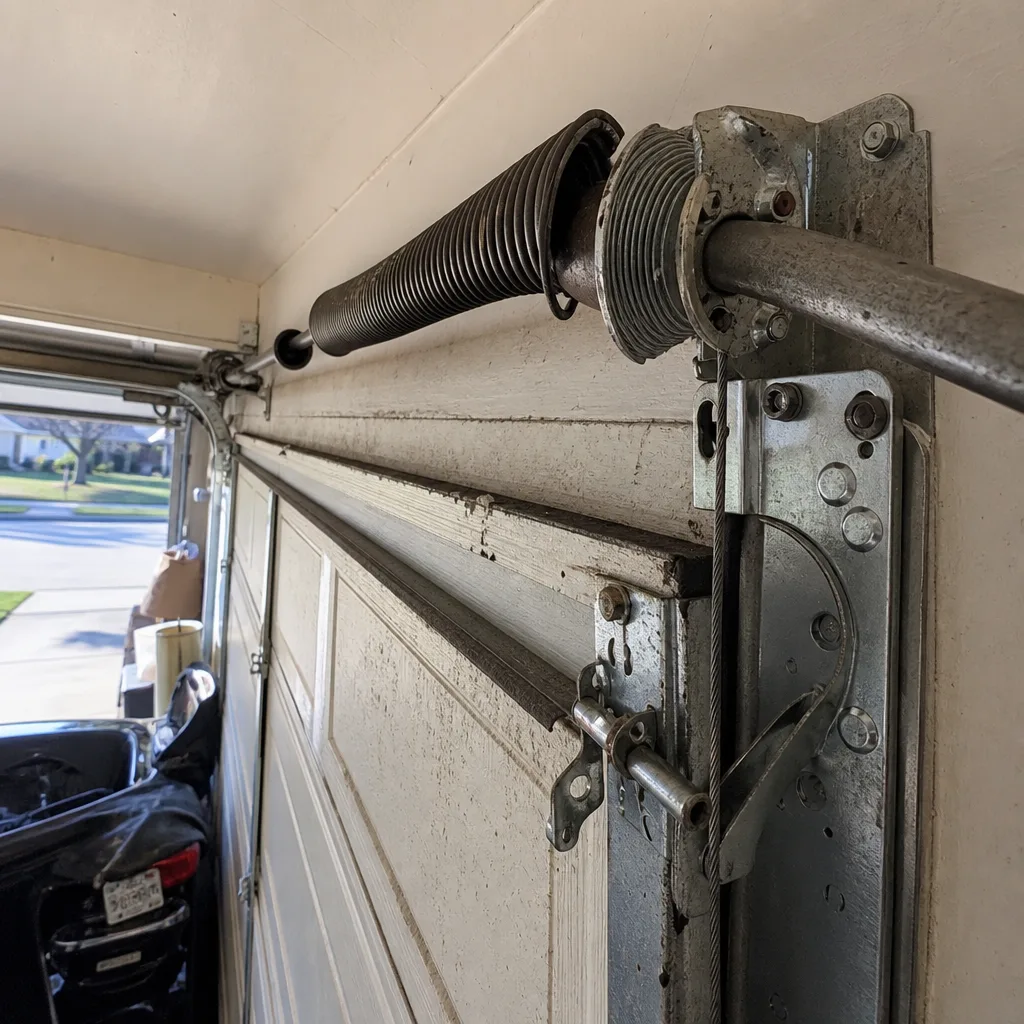 Before
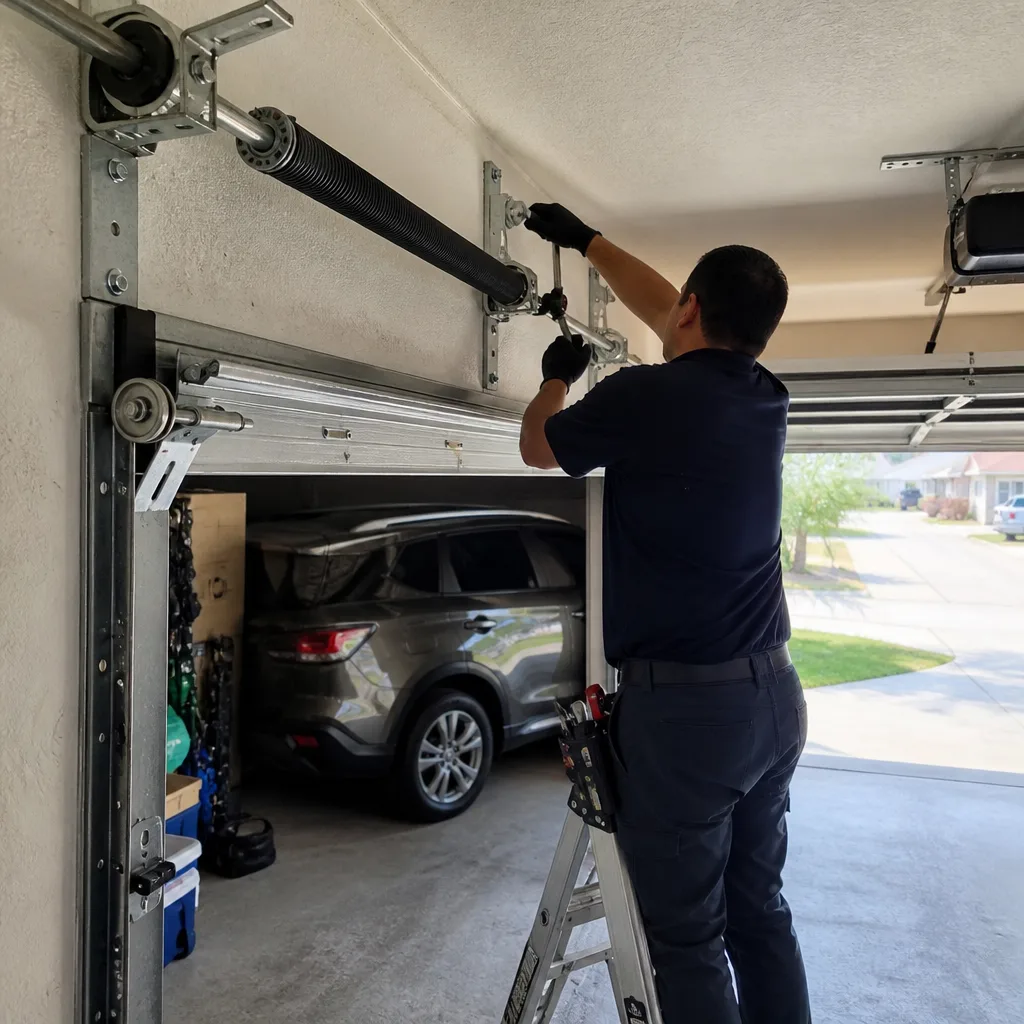 After
After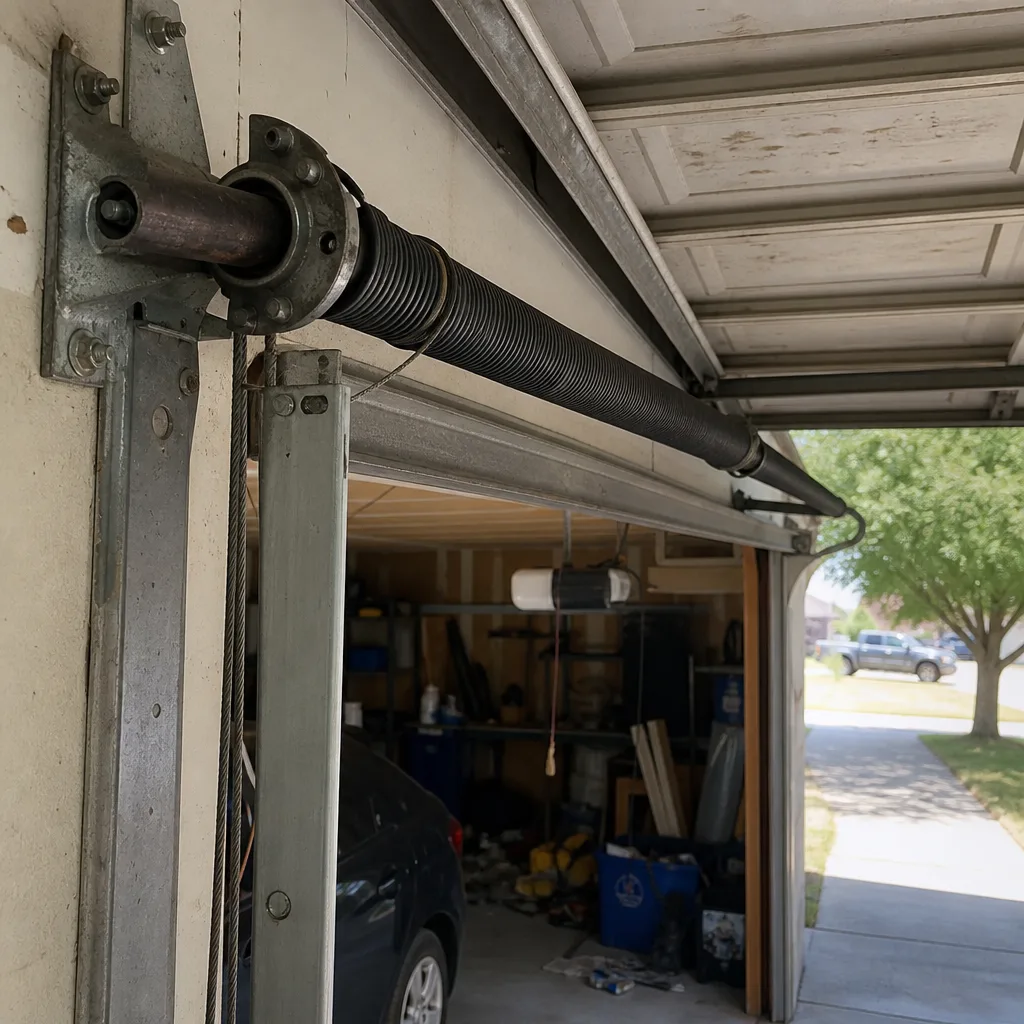 Before
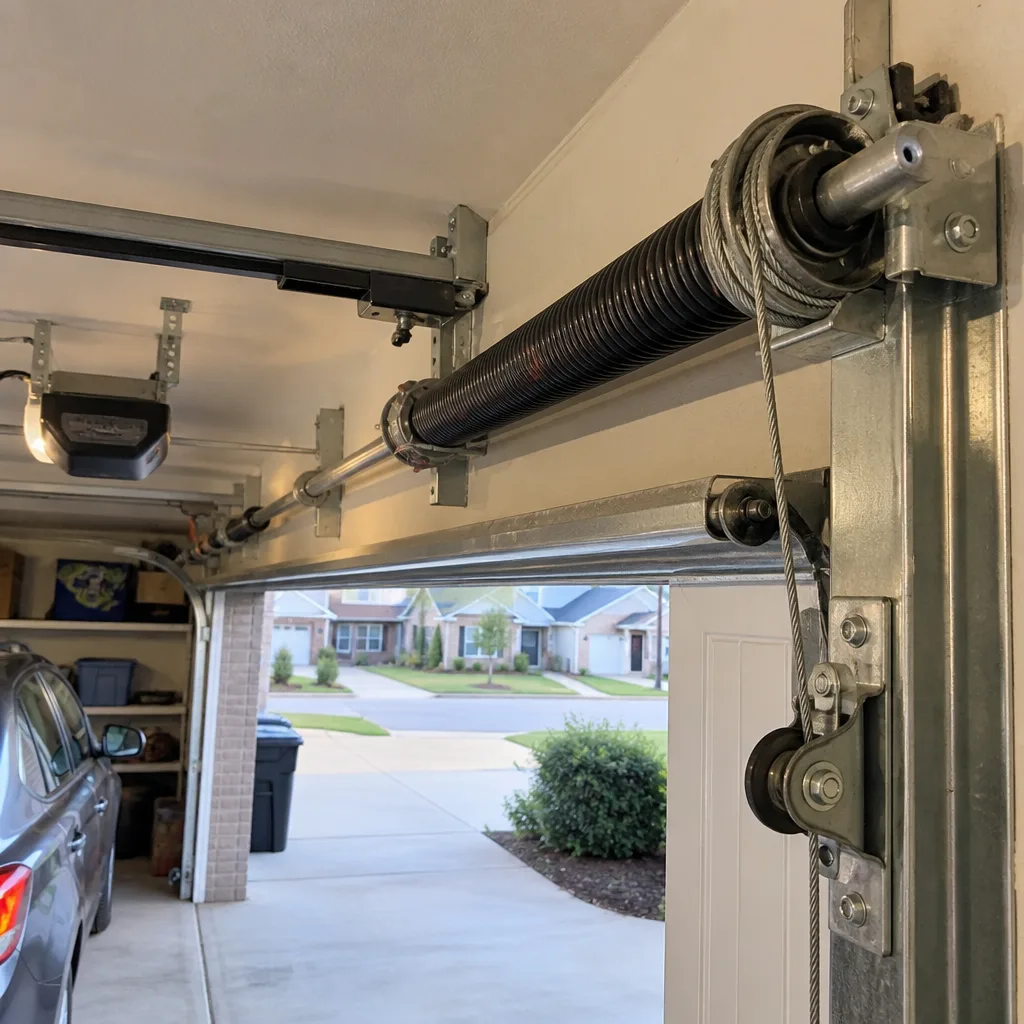 After
AfterSeasonal Garage Door Care for Fulshear: Year-Round Homeowner’s Guide
August afternoons in Fulshear routinely climb past 100°F, and that is when we field the most torsion spring calls of the entire year. Not January. Not the first freeze. The heat-expanded metal is working against peak daily cycles - kids in and out, lawn equipment, the car making its third trip to the grocery. Most garage door guides are written for climates with four equal seasons. Fulshear does not have four equal seasons. It has a long, punishing summer, a brief and sometimes freeze-prone winter, and transition months that bring the storm activity most likely to damage a door. In this guide, we will walk you through a care schedule built around that actual climate, not a generic calendar.
Quick Answer
Garage door care in Fulshear should center on three realities: summer heat stress that weakens springs and overheats openers, a May-through-October storm season that tests seals and panels, and occasional winter cold snaps that freeze bottom seals to concrete. A practical schedule inspects hardware before summer, checks storm damage after every major weather event, and lubricates moving parts every six months - in April and October, when Fulshear temperatures are moderate enough for grease to set properly.
Table of Contents
- How Summer Heat Stress Damages Garage Doors in Fulshear
- Storm Season Prep: May Through October
- Winter Cold Snap Protocol for Fulshear’s Occasional Freezes
- Spring Post-Storm Inspection Sequence
- Year-Round Opener Heat Management
- Pre-Summer Checklist: What to Inspect Before the Heat Arrives
- Lubrication Timing and Product Selection for Fulshear
- Common Mistakes to Avoid
- When to Call a Professional
- Frequently Asked Questions
How Summer Heat Stress Damages Garage Doors in Fulshear
Torsion springs are the muscle of any garage door system. They carry the full weight of the door - sometimes 150 pounds or more - and they cycle every time the door moves. In Fulshear, the problem is not cold contraction. It is heat expansion followed by rapid cooling in the evening, repeated day after day from June through September.
Metal expands when hot. A torsion spring that measures 24 inches at 70°F might stretch an additional eighth-inch at 105°F. That does not sound like much, but springs are engineered to exact tolerances. The added length changes the torque curve. The spring works harder on each lift. Micro-fractures form in the steel. By late August, after three months of this, a spring that tested fine in May can snap without warning.
We see this pattern every year in neighborhoods like Cross Creek Ranch and Fulbrook. The call comes in around 4 p.m., when the garage has been baking since noon and the homeowner is trying to leave for dinner. The door goes halfway up, lists to one side, and stops. One spring has broken. The second spring, now carrying double its designed load, is usually not far behind.
Opener motors suffer too. A garage in Fulshear with no climate control can reach 120°F internally on the worst days. Most opener manufacturers rate their electronics for ambient temperatures up to 120°F, but that rating assumes occasional peaks, not sustained exposure. The logic board, the capacitor, the motor windings - all run hotter than designed. Lifespan shortens. We replace more opener logic boards in September than in any other month.
What to check before summer:
- Spring tension balance: disconnect the opener and lift the door manually. It should stay at waist height without drifting. If it falls or rises, the springs need adjustment.
- Opener ventilation: clear any storage boxes blocking airflow around the motor unit. If your garage has no vents, consider adding a passive vent near the roofline.
- Weatherstripping condition: vinyl and rubber seals soften in sustained heat. Softened seals compress-weld to the track or floor, then tear on the next cold morning.
Our Garage Door Repair in Fulshear team stocks springs for all common door weights and opener parts for major brands including Chamberlain and Genie. Most summer failures are completed in a single visit.
Storm Season Prep: May Through October
Fulshear sits on the western edge of the Houston metro, close enough to the Gulf to catch tropical moisture, far enough inland that storms have time to organize. The National Weather Service places our area in a secondary hail corridor. Hail stones one to two inches in diameter are not rare in May and October. Wind gusts of 60 mph accompany many thunderstorms.
A standard residential garage door is rated for 20 psf (pounds per square foot) of wind load. That sounds technical, but here is what it means in practice: a 16-foot-wide door in a 60 mph wind sees roughly 15 psf of pressure. The margin is thin. If the door has a damaged panel, a compromised bottom seal, or a track that is not perfectly plumb, that margin disappears. The door can buckle inward, tear from the track, or fail completely.
Pre-storm inspection sequence:
- Panel integrity: Walk the exterior and tap each panel section. A hollow sound means the steel is intact. A dull thud suggests the internal foam core has separated from the face, usually from a prior impact. Separated panels have no structural value in wind.
- Track mounting: Check where the vertical track meets the wall. The lag bolts should be tight into solid framing, not stripped into drywall or siding. In Fulshear’s clay soils, foundation settling can loosen track mounts over time.
- Bottom seal and retainer: The aluminum retainer channel should grip the rubber seal firmly. A loose seal can whip in wind, tear free, and leave a gap that pressurizes the garage.
- Wind-load sticker: Look for a label on the inside face of the door or the track. If it says W1 or 20 psf, that is standard residential. If you are in an exposed area near the Brazos River floodplain, consider upgrading to a W2 or W3 door.
After Hurricane Harvey in 2017, we saw dozens of Fulshear garages with doors that failed not from wind directly, but from water pressure against the inside face after the bottom seal tore. A $30 seal, properly retained, would have prevented thousands in inventory and vehicle damage.
If your door is older than 2005, it may predate modern wind-load standards. Our Garage Door Installation in Fulshear page covers replacement options with proper ratings for our storm exposure.
Winter Cold Snap Protocol for Fulshear’s Occasional Freezes
Fulshear winters are mild until they are not. The February 2021 freeze brought single-digit temperatures and power outages across Fort Bend County. More commonly, we see two or three nights each winter in the low 20s, just cold enough to create problems that do not exist in climates with consistent freezing.
The specific issue is the garage floor. Most Fulshear garages are built on slab-on-grade construction with no frost depth requirement. The concrete stays warm from the earth below, but the surface radiates heat rapidly on a clear, still night. When humid Gulf air settles after a front, dew point and surface temperature meet at exactly 32°F. The floor ices from the inside out - not from precipitation, but from condensation freezing on contact.
A rubber bottom seal that has compressed flat against that floor will freeze to it. The homeowner hits the opener button the next morning. The motor strains. The seal tears free in strips. Now there is a gap under the door, and the cycle repeats the next cold night.
Prevention protocol:
- Before the first forecast freeze, apply a thin film of silicone spray to the bottom seal’s contact face. This breaks the water bond without making the seal slippery.
- If the seal is already frozen, do not force the opener. Disconnect the trolley and lift manually, or use a hair dryer to warm the seal before operating.
- Keep the garage floor dry. Wet vehicles, lawn equipment, and even pet water bowls raise humidity enough to trigger freeze bonding at marginal temperatures.
We also see torsion springs fail in cold snaps, but for a different reason than summer. A spring with micro-fractures from heat fatigue finally reaches its limit when cold contraction adds stress. The snap is dramatic. The door slams down. If you are in the garage when it happens, stay clear - a broken torsion spring releases significant energy.
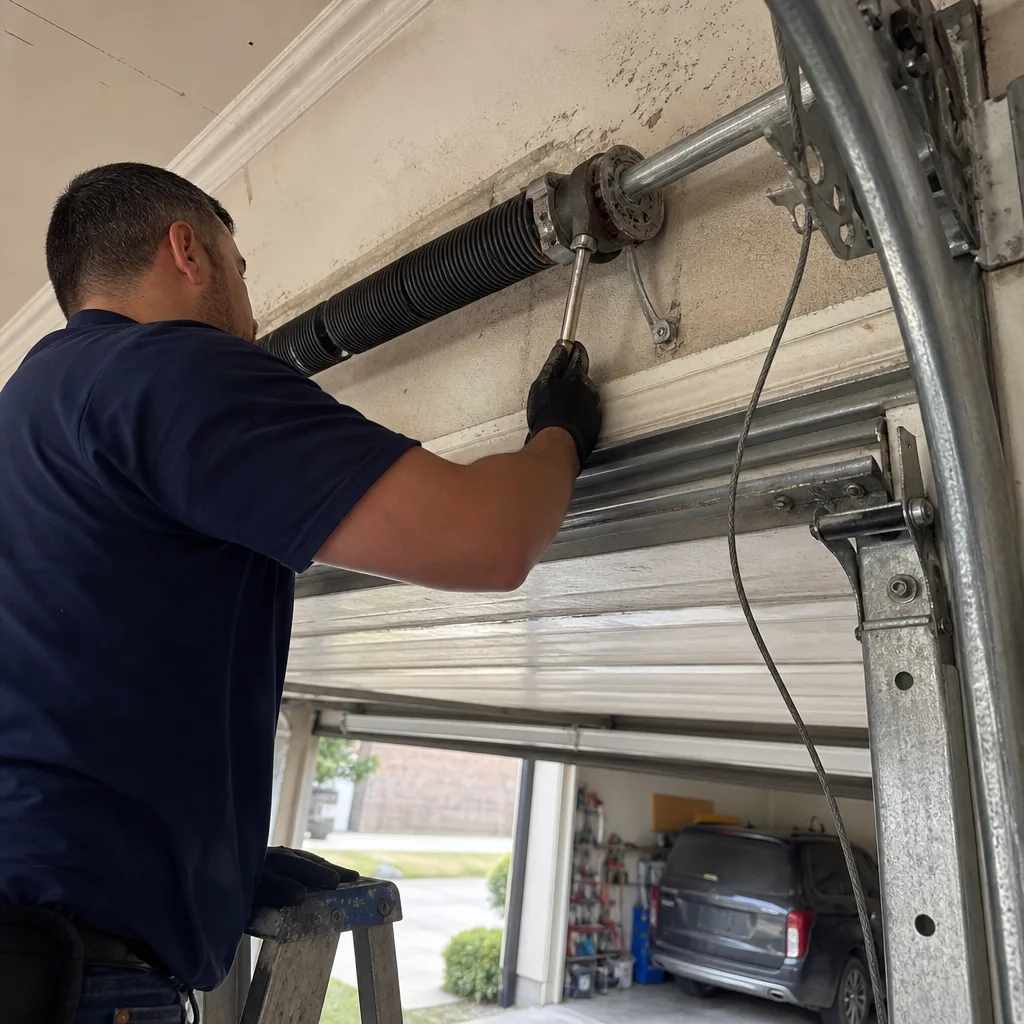
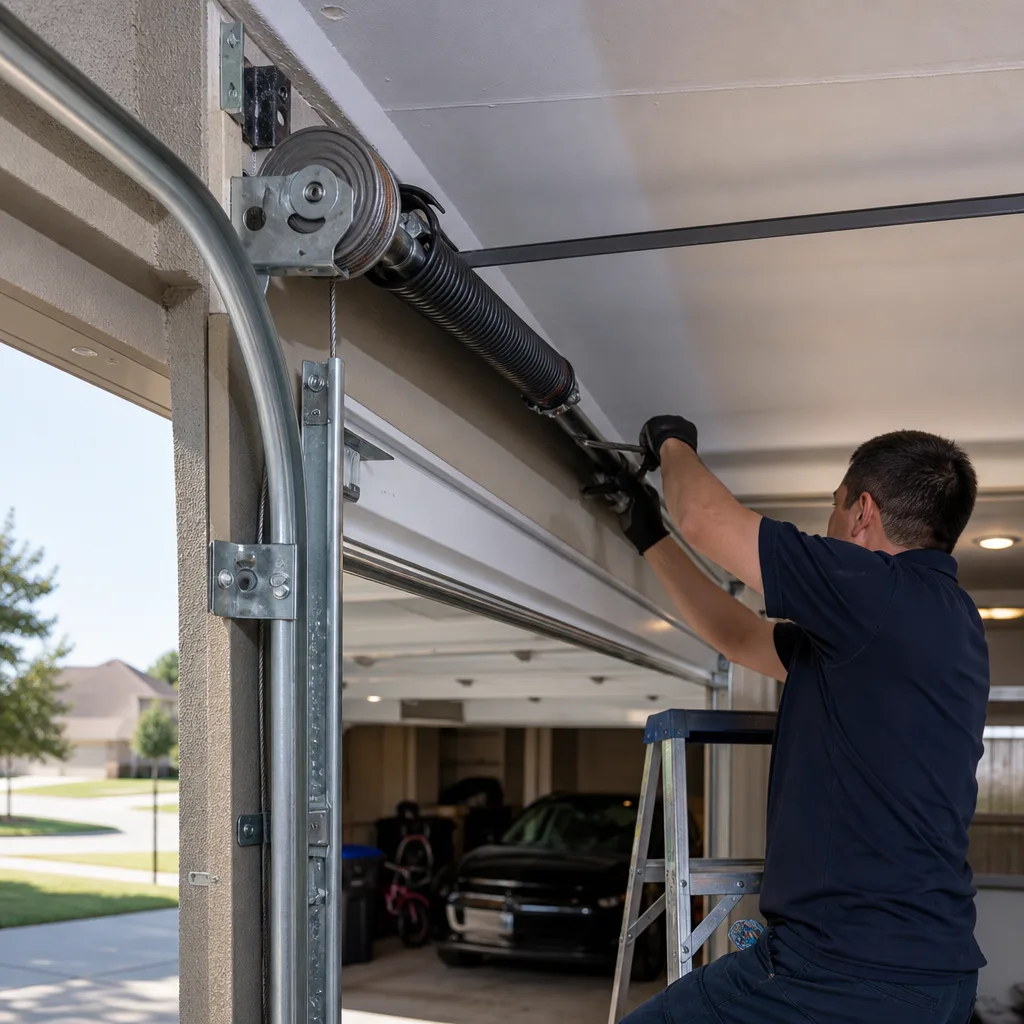
Never attempt to adjust or replace a torsion spring yourself. The spring is under hundreds of pounds of tension. Injury is likely without proper winding bars and training. For help deciding how to proceed, read our DIY vs Professional Garage Door: The Fulshear Homeowner’s Decision Guide, then call a professional.
Spring Post-Storm Inspection Sequence
March and April in Fulshear bring the year’s most violent individual storms. Warm Gulf moisture meets lingering Canadian cold fronts. The result is supercell thunderstorms with large hail, straight-line winds, and occasional tornadoes. Your garage door is the largest opening in your home’s envelope. It takes the hit.
Too many homeowners look at the door after a storm, see it goes up and down, and assume all is well. That assumption costs money later. Hail dimples steel panels in ways that compromise the internal foam bond. Wind flexes tracks microscopically, enough to change roller alignment. Water intrusion rusts cables from the inside.
Post-storm inspection - do this within 48 hours:
- Visual panel scan: Open the door halfway and examine each section at eye level. Hail dimples on the exterior may have cracked the interior paint. Any crack is a moisture path to the foam core. Press gently on dimpled areas. Soft spots mean delamination.
- Track plumb check: Hold a level against the vertical track. It should be perfectly vertical, not leaning in or out. Even a quarter-inch deviation strains rollers and can cause the door to bind.
- Cable inspection: Look at the lift cables where they wrap around the bottom drums. Fraying, rust staining, or flattened sections mean replacement. Do not touch cables under tension.
- Roller and hinge check: Wiggle each roller in its hinge. Excess play means the hinge is wallowing out. A failed hinge drops the door out of alignment.
- Opener force test: Place a 2×4 flat on the floor where the door closes. The door should reverse on contact. If it does not, the force setting may have drifted from storm vibration, or the safety system is compromised.
In Cross Creek Ranch and surrounding Fulshear neighborhoods, we have found hail damage on doors that owners inspected from the driveway and declared fine. The damage was on the top panel, visible only from inside the garage with the door closed. Take the time. A panel replacement is far cheaper than a full door, and far cheaper than the water damage that follows a compromised seal. For typical pricing, see our Garage Door Cost Breakdown: The Fulshear Homeowner’s Reference for 2026.
Year-Round Opener Heat Management
Garage door opener manufacturers publish lifespan estimates based on ideal conditions: 70°F ambient, moderate humidity, ten cycles per day. Fulshear garages violate all three assumptions. The result is that openers here fail earlier than the same models in Minneapolis or Seattle.
The physics are straightforward. Every electric motor generates heat proportional to its load. A 1/2 HP opener lifting a 150-pound door draws roughly 5 amps at 120 volts, or 600 watts. Some of that becomes mechanical work. The rest becomes heat. In a 100°F garage, the motor cannot shed heat to the surrounding air - the air is nearly as hot as the motor surface. The windings run hotter. Insulation degrades faster. The electrolytic capacitor, which stores starting energy, dries out prematurely. Logic boards suffer thermal cycling fatigue.
Manufacturer mean-time-between-failure data assumes a 25°C (77°F) ambient. For every 10°C above that, capacitor life halves. A Fulshear garage at 40°C (104°F) in August reduces capacitor life to roughly one-quarter of specification. The capacitor does not fail immediately. Its capacitance drifts downward. The motor strains harder on startup. Eventually the logic board detects excessive current draw and shuts down, or the motor overheats and trips its thermal protector.
Mitigation strategies that actually work:
- Ventilation: A passive vent near the garage roof peak, or a thermostatically controlled exhaust fan, can reduce peak temperatures by 10-15°F. The investment pays for itself in opener longevity.
- Insulation: If your garage door is uninsulated, adding a radiant barrier kit to the interior face reduces heat transfer into the garage space. This helps the opener indirectly by lowering ambient temperature.
- Load reduction: A properly balanced door reduces opener load significantly. If your door feels heavy to lift manually, the springs are weak and the opener is compensating. Fix the springs first.
- Shade: If your garage faces west, exterior shade - even a simple arbor - reduces afternoon wall and roof temperatures measurably.
We are factory-familiar with all major opener brands, including LiftMaster, Chamberlain, Genie, and Raynor. When we replace an opener in Fulshear, we specify models with higher temperature tolerances and thermal overload protection. Our Garage Door Opener in Fulshear page details current options.
Pre-Summer Checklist: What to Inspect Before the Heat Arrives
The ideal timing for this checklist is mid-April, after the last cold front and before the first sustained 90°F day. In Fulshear, that window is usually two to three weeks long. Use it.
Spring and hardware:
- Test door balance: disconnect opener, lift to waist height, release. The door should remain stationary. Drift indicates spring fatigue.
- Inspect spring coils for gaps. A torsion spring should have tight, uniform coils. Visible gaps mean the spring has taken a set and lost tension.
- Check end cones and stationary cones for cracks. The cast aluminum can crystallize after years of heat cycling.
Opener and controls:
- Test safety reversal with the 2×4 method described above.
- Inspect the photoelectric sensors. Clean lenses. Verify alignment - the LED indicators should be steady, not flickering. Fulshear’s hard water leaves mineral deposits on lenses that scatter the beam.
- Listen to the motor. Grinding or straining indicates worn gears or excessive load.
Weather seals:
- Bottom seal: should be pliable, not cracked or flattened. The vinyl or rubber should rebound when compressed.
- Side and top seals: check for gaps where light shows through. A 1/4-inch gap at the top of a 16-foot door is four square inches of unconditioned air exchange.
Track and rollers:
- Rollers should spin freely, not slide. Nylon rollers wear flat spots. Steel rollers rust in the bearings.
- Track joints should be flush. A lip at the horizontal-to-vertical transition catches rollers and adds load.
Our $89 Seasonal Tune-Up covers all of these points with a written condition report. Most homeowners in Fulshear schedule this in April, before the heat stress begins.
Lubrication Timing and Product Selection for Fulshear
Lubrication is the most misunderstood maintenance task. Too much attracts grit. Too little allows wear. The wrong product turns to gum in heat or washes away in rain.
For Fulshear’s climate, we recommend lithium-based grease on torsion springs and steel hinges. Lithium grease has a dropping point around 380°F, well above any garage temperature. It does not thin out in August. It does not harden in a February freeze. Apply a thin film to the spring coils - not dripping, just a visible sheen. Work the door manually to distribute.
For rollers, use a light machine oil on steel bearings, or no lubricant at all on sealed nylon bearings. Nylon rollers with sealed bearings are maintenance-free. Adding oil attracts dust that abrades the seal.
Never use WD-40 as a lubricant. It is a solvent and water displacer, not a lubricant. It evaporates within days, leaving a sticky residue that collects Fulshear’s fine clay dust. We have replaced hinges that were effectively sandpaper from years of WD-40 misuse.
Timing: Lubricate in April, before summer heat, and in October, after the storm season. These are the moderate windows when grease sets properly and dust is minimal. Lubricating in August means the grease is liquid before it can adhere. Lubricating in January means it may not flow into bearings before the next cold snap.
Common Mistakes to Avoid
- Ignoring the door until it breaks: In Fulshear’s heat, a spring does not fail suddenly - it fatigues over months. The warning signs are there: the door feels heavier, the opener strains, the door drifts when half-open. Waiting for the snap means an emergency call, possible vehicle trapping, and usually replacing both springs instead of one.
- Using the wrong weatherstripping: The black rubber seals sold at hardware stores are often EPDM rated for automotive use, not garage doors. In sustained Fulshear heat, they compress-set permanently. The correct product is a vinyl or silicone-blend seal with a memory property that rebounds after compression.
- Power-washing the door: High-pressure water forces past panel seams, saturates the foam core, and damages the bottom seal adhesive. Use a soft brush and mild detergent. The door is not a driveway.
- DIY spring replacement: We say this without exaggeration: torsion springs can kill. The stored energy is comparable to a loaded firearm. Every year, emergency rooms see injuries from homeowners who watched a video and attempted this themselves. The flat price for professional replacement is far less than a hospital bill.
- Blocking opener ventilation: Storing holiday decorations on the shelf above the opener seems harmless. In a Fulshear summer, it traps heat and shortens motor life. Keep 12 inches of clear space around all sides of the motor unit.
- Assuming storm damage is cosmetic: A hail dimple on a steel panel is not like a dent on a car. The panel is a structural element. The foam core provides rigidity against wind. Once the bond between steel and foam is broken, the panel will buckle under pressure that it previously resisted.
- Neglecting the emergency release: Every garage door opener has a red cord for manual disengagement. Test it quarterly. In a power outage - common in Fulshear storms - a seized release cord means you cannot open the door manually. A drop of lithium grease on the mechanism prevents this.
When to Call a Professional
Call a professional when you encounter any of the following: a broken spring or cable; a door that has come off its track; an opener that reverses randomly or fails to reverse on obstruction; visible panel damage after a storm; or any grinding, popping, or binding that you cannot identify. These are not maintenance tasks. They are safety hazards.
We also recommend professional inspection if your door is more than fifteen years old and has never had a tune-up. The hardware may be obsolete, the springs may be undertensioned for current usage, and the safety systems may predate modern standards.
Mainspring Garage Door Co. offers free estimates in Fulshear. A technician will inspect your door, provide a written condition report, and quote any needed work at a flat price before starting. Call (409) 794-4141 to schedule. Our 90-Day Done Right Promise covers every completed job in writing - if it is not right, we return at no charge.
Frequently Asked Questions
Twice yearly: once in April before summer heat stress, and once in October after storm season. This schedule aligns with Fulshear’s actual climate demands, not a generic calendar. Our $89 Seasonal Tune-Up includes a 20-point inspection with written report. Call (409) 794-4141 to schedule.
Heat expansion, not cold contraction, is the primary stressor in Fulshear. Torsion springs expand in sustained 100°F heat, altering their torque curve and accelerating metal fatigue. By late August, three months of daily heat cycling weakens springs that tested fine in spring. We replace more springs in August than in any other month.
Inspect within 48 hours using the five-step sequence in this guide: panel scan, track plumb check, cable inspection, roller and hinge check, and opener force test. Look for damage visible only from inside the garage. Even if the door operates, compromised panels or tracks reduce wind resistance for the next storm. Schedule professional assessment if you find any anomalies.
Apply silicone spray to the bottom seal’s contact face before the first forecast freeze. Keep the garage floor dry - wet vehicles and equipment raise humidity enough to cause freeze bonding at marginal temperatures. If already frozen, warm the seal with a hair dryer before operating; never force the opener.
No. Mainspring states the flat price before any work begins. The estimate you approve is the amount on the invoice. No surprises, no add-ons discovered mid-job. This is our standard practice on every call in Fulshear.
Yes. Our technicians arrive with springs, cables, rollers, hinges, and opener components for all major brands. Most repairs are completed in a single visit. We do not charge return trip fees for parts we should have had.
The Bottom Line
Fulshear’s climate demands a garage door care schedule built around real conditions: summer heat that fatigues springs and overheats openers, a long storm season that tests structural integrity, and occasional freezes that seize seals to concrete. Inspect before summer, after every major storm, and lubricate in the moderate windows of April and October. Address warning signs early - a heavy-feeling door, a straining opener, a seal that no longer rebounds. These small indicators precede expensive failures.
We have served this area since 1984. We know the specific challenges of Fulshear garages because we work on them daily, from Fulbrook to Cross Creek Ranch to the newer builds along FM 1093. The door over your garage is the largest moving object in your home. It deserves attention matched to the place it lives.
Call (409) 794-4141 for a free estimate, or schedule our $89 Seasonal Tune-Up to have a trained technician walk through every point in this guide with you. For more guides & resources on keeping your door reliable year-round, visit our blog. The price is stated upfront. The work is backed by our 90-Day Done Right Promise in writing. And a live person will answer your call, any hour of any day.
Written by Carl Dutton, Owner at Mainspring Garage Door Co., serving Fulshear since 2016.