
Last updated September 10, 2026
Full 25-point door and opener safety check with every visit - springs, cables, rollers, tracks, and your LiftMaster or Chamberlain opener included
You get a price before we start. It does not change when the truck arrives.
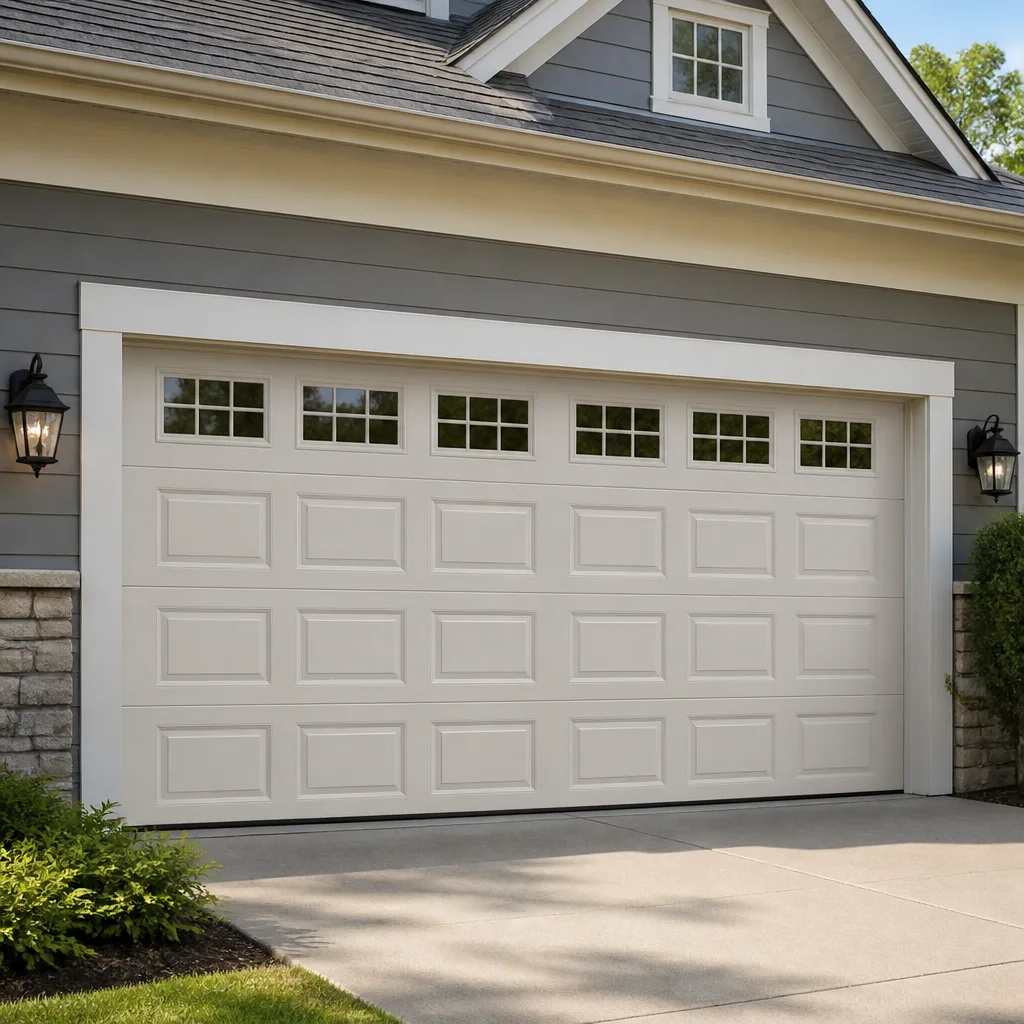
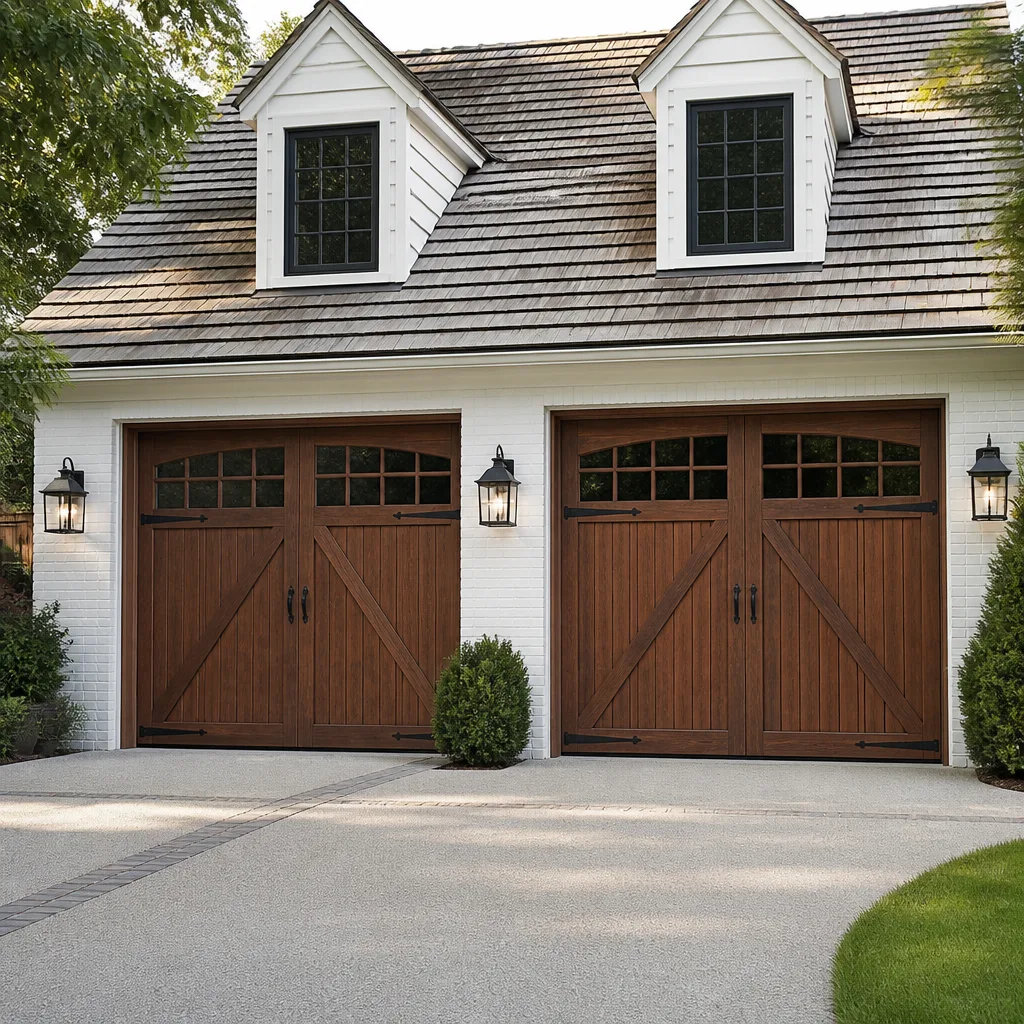
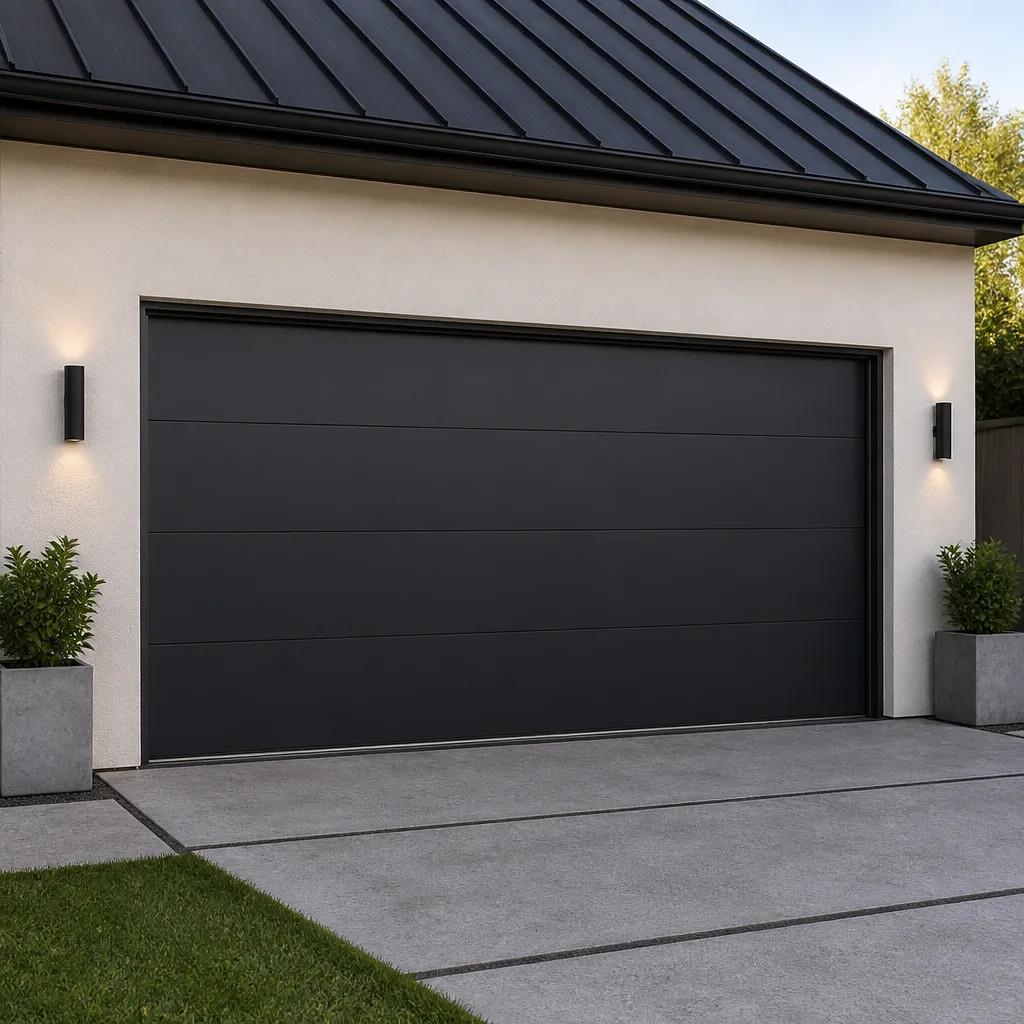
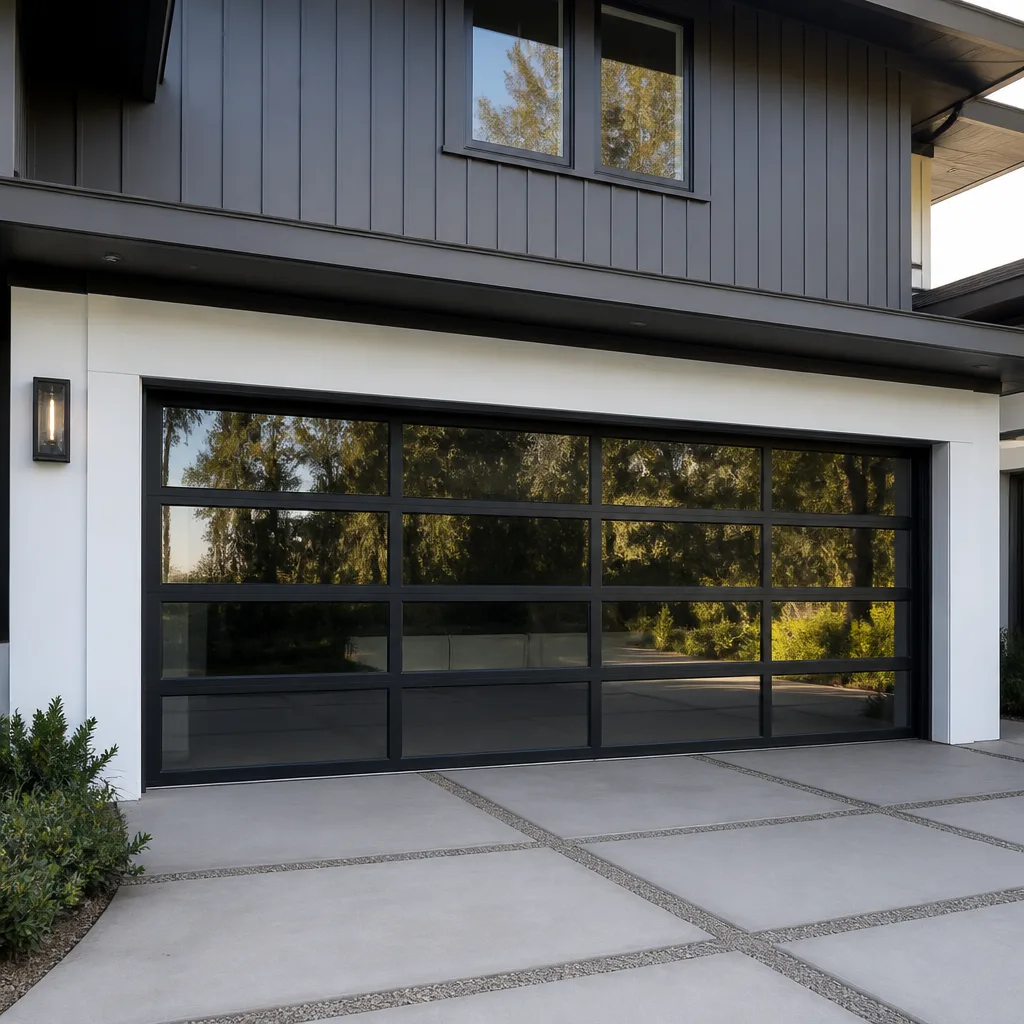
 Before
 After
After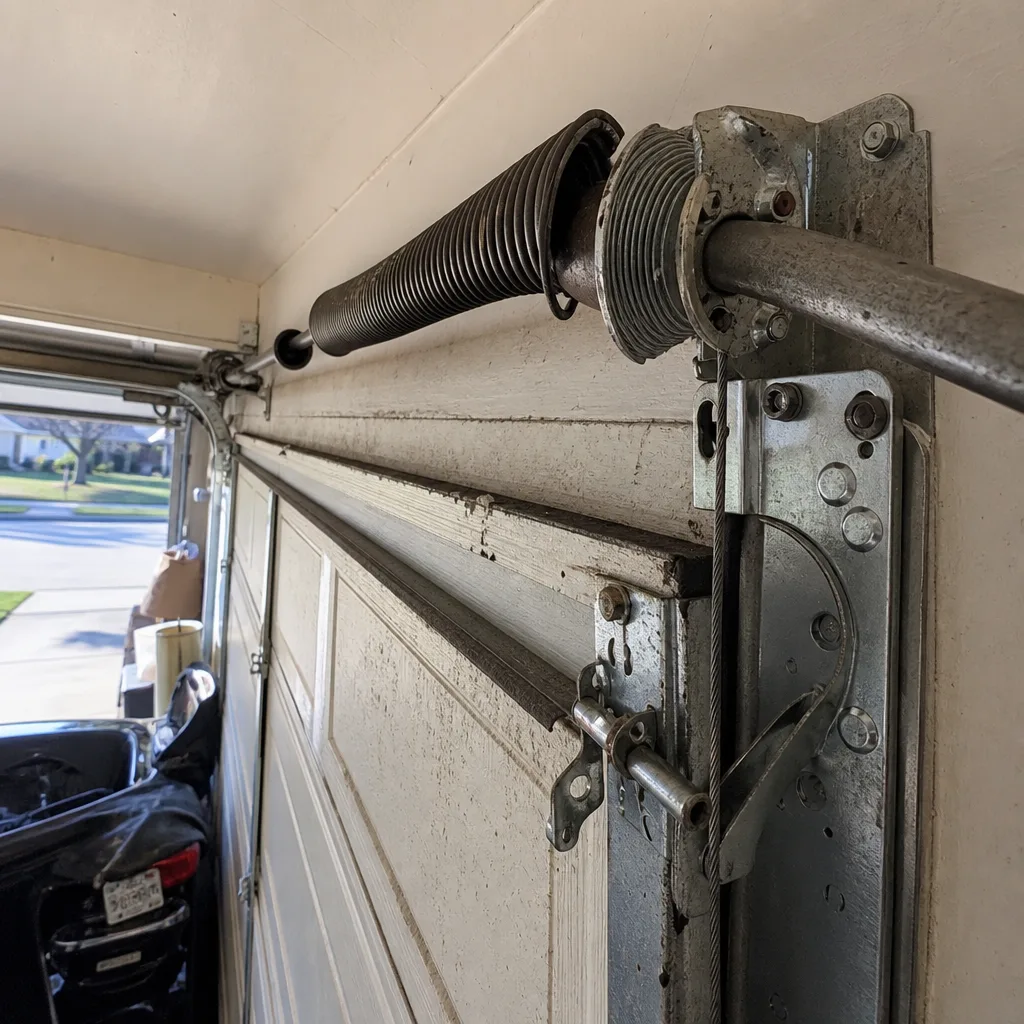 Before
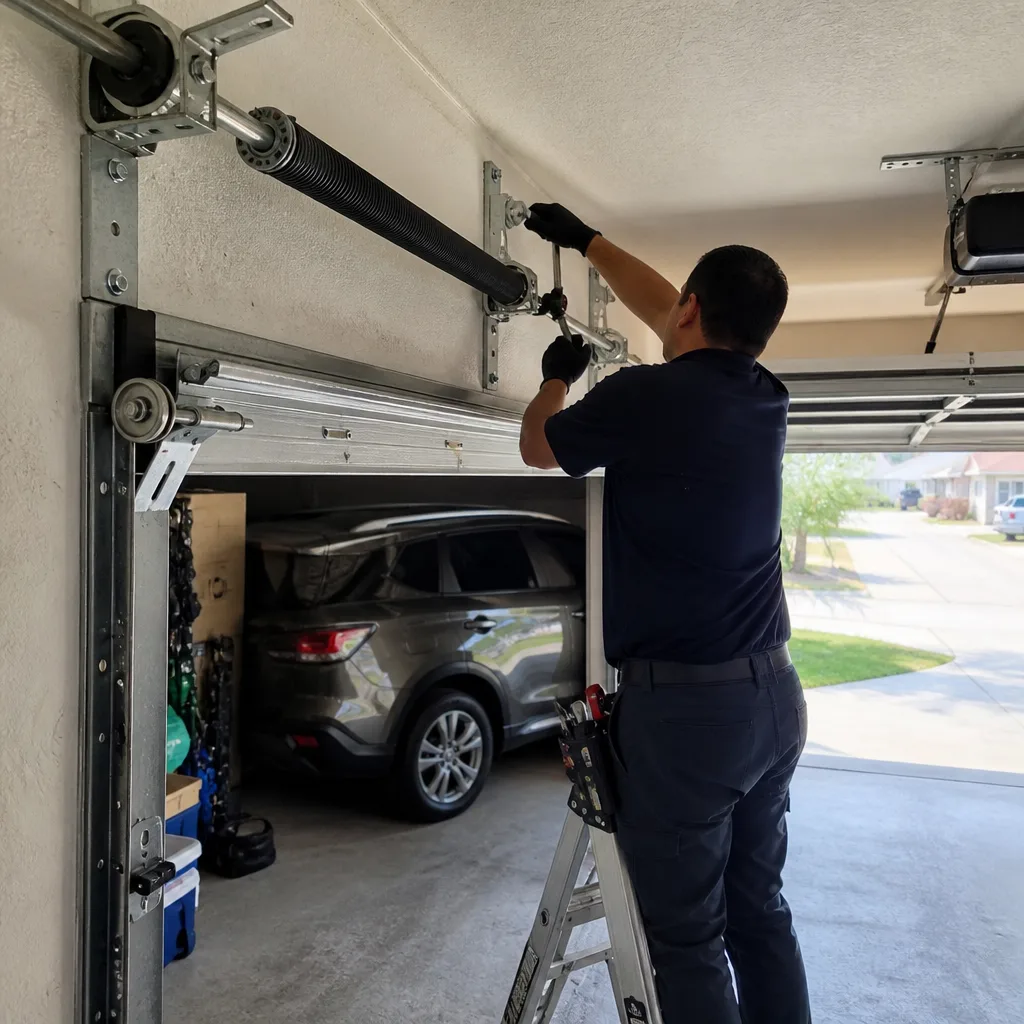 After
After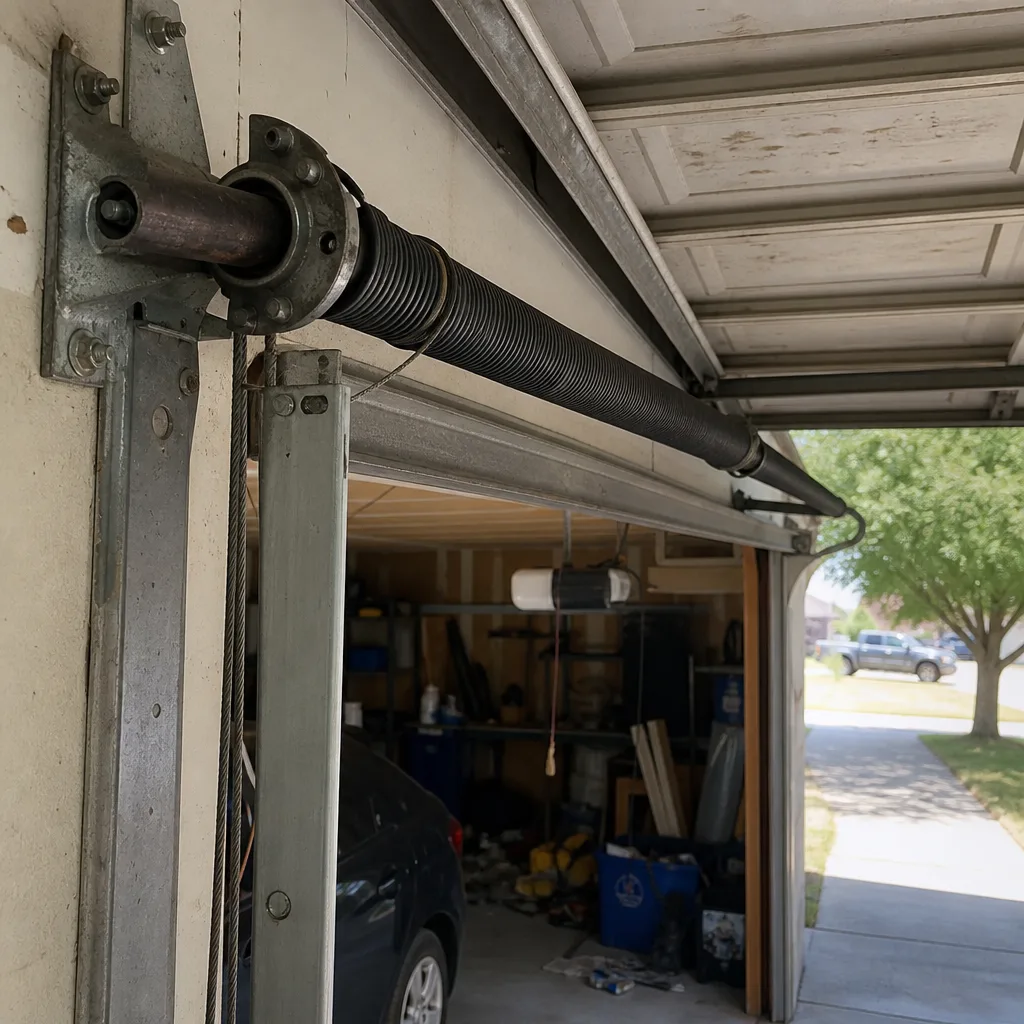 Before
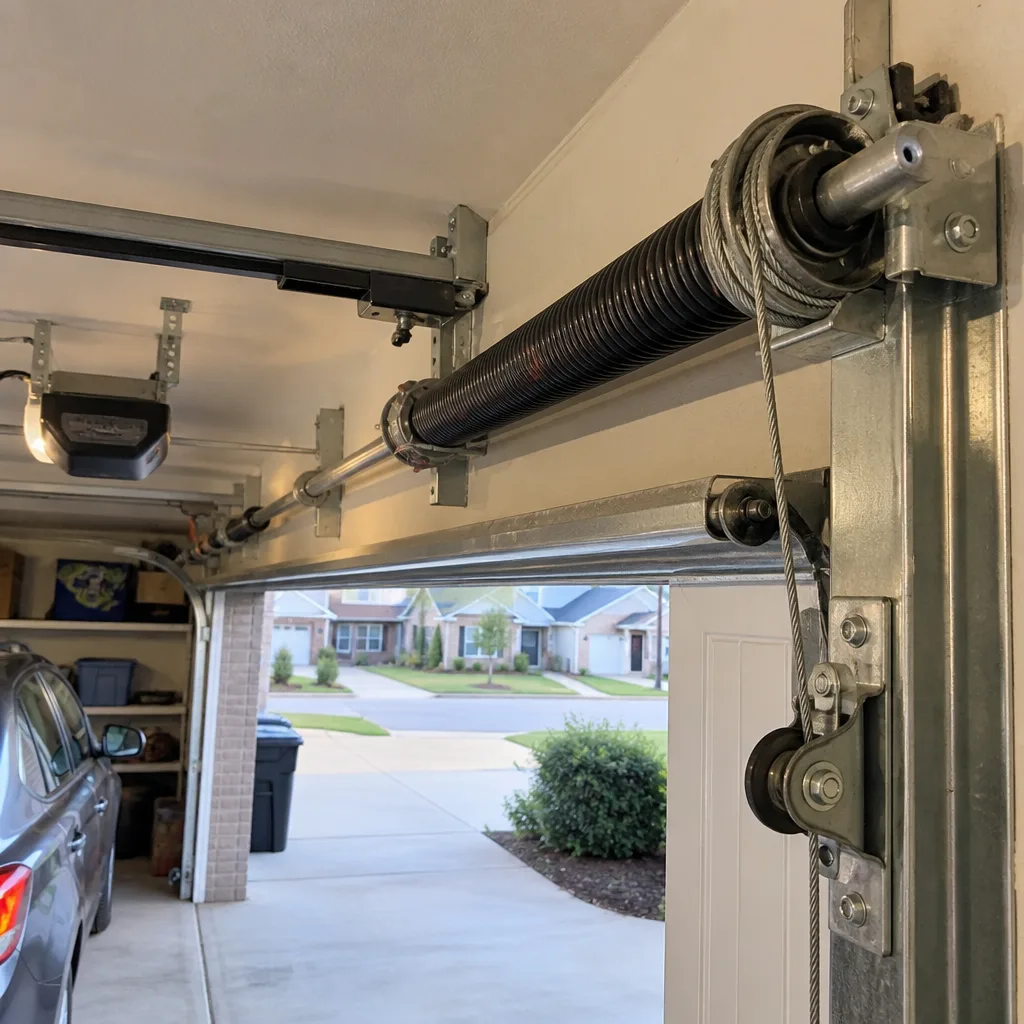 After
AfterThe Complete Guide to Garage Door in Fulshear
Fulshear’s expansive clay soil shifts enough each season to throw a perfectly installed door out of alignment - yet fewer than one in ten homeowners factor soil movement into their door or track selection. After 42 years in this trade, we’ve watched doors in Cross Creek Ranch settle out of plumb within eighteen months while identical hardware on stable ground holds true for a decade. This guide explains what actually matters when you buy, maintain, or repair a garage door in Fulshear: the soil conditions, the humidity, the HOA requirements, and the specifications that keep a door running quiet and square year after year. For DIY vs Professional Garage Door: The Fulshear Homeowner’s Decision Guide, see our dedicated comparison.
Quick Answer
A garage door in Fulshear needs to withstand clay soil movement, Gulf Coast humidity, and often strict HOA design standards. For most homeowners, that means a steel or aluminum door with a reinforced track system, a bottom seal rated for ground contact, and a torsion spring assembly sized to the actual door weight - not just the door dimensions. Proper installation includes a written warranty, level-by-level track adjustment, and hardware that tolerates seasonal settling without binding or premature wear.
Table of Contents
- How Fulshear’s Clay Soil Affects Your Garage Door
- Which Door Materials Hold Up in Gulf Coast Humidity
- HOA and Deed-Restriction Considerations in Fulshear Communities
- Sizing and Spec: Two-Car, Three-Car, and RV Bay Doors
- What a Complete, Properly Spec’d Installation Includes
- Seasonal Maintenance for Fulshear Conditions
- Choosing the Right Opener for Your Door and Lifestyle
- When Repair Ends and Replacement Begins
How Fulshear’s Clay Soil Affects Your Garage Door
The gumbo clay under most of Fulshear swells when wet and shrinks when dry. A single summer can see six inches of vertical soil movement. That movement does not distribute evenly, so one corner of your garage slab may rise while another drops. The door frame, bolted to that slab, follows.
We’ve seen the results in neighborhoods from Cross Creek Ranch to the older builds near FM 1093. A door that hung true in March binds by September. The vertical track tilts. The rollers wear flat on one side. The bottom seal tears where it drags across an uneven threshold. In extreme cases, the door pops out of the track entirely.
The fix starts at installation. A proper Fulshear install includes:
- Slotted jamb brackets that allow fractional track adjustment without unbolting the entire frame
- A reinforced bottom fixture with roller carriers that tolerate slight misalignment without binding
- Track mounted with expansion-compatible fasteners, not masonry nails or standard lag bolts set in rigid epoxy
- Bottom seal in a dual-bulb or oversized T-end design that maintains contact across a slightly wavy threshold
We check and adjust track plumb as part of our garage door repair in Fulshear service calls, because seasonal settlement is not a one-time event. A door installed rigid will fight the slab every season. A door installed with adjustment in mind lasts longer and runs quieter.
One detail homeowners miss: the threshold itself. If your garage floor has no poured curb or if the existing curb has cracked away from the slab, water pools at the door bottom during Fulshear’s spring storms. That accelerates seal rot and gives the clay beneath exactly the moisture swing that causes the worst movement. A replacement threshold or a properly sloped approach reduces both problems.
Which Door Materials Hold Up in Gulf Coast Humidity
Fulshear sits far enough inland to avoid direct salt spray, but the humidity is relentless from April through October. Relative humidity above 85% for weeks at a time attacks certain door materials aggressively. We’ve replaced twenty-year-old wood doors that rotted at the bottom rail in eight years, and steel doors that rusted through at the window corners in six.
Here is what actually lasts in this climate:
Steel with baked-on polyester or fluoropolymer finish: The key is the back side. A door with a bare steel interior surface will sweat in humid weather, and that condensation runs to the bottom panel where it sits against the seal. We specify doors with the same finish front and back, or we apply a corrosion inhibitor to the interior at installation. Clopay and Amarr both make Fulshear-suitable lines with full-coverage finishes. Raynor’s residential steel doors with the DuraFinish coating have held up well in our experience.
Aluminum full-view or frame-and-panel: Aluminum does not rust, which eliminates the condensation concern entirely. The tradeoff is dent susceptibility and lower insulation value. For detached garages or workshop spaces where thermal performance matters less, aluminum is often the longer-lived choice. We install aluminum doors in several Fulshear Lakes homes where the modern aesthetic matches the architecture and the homeowners wanted zero maintenance.
Fiberglass and composite: These materials resist humidity and do not conduct condensation. The limitation is structural: fiberglass doors flex more than steel, so they need heavier track hardware and precise spring sizing. In our experience, fiberglass works best on single doors and two-car openings under 16 feet wide. Wider spans tend to develop sag over time.
Wood and wood-composite: We do not recommend solid wood for Fulshear garages unless the homeowner commits to annual refinishing and maintains positive ventilation. Wood-composite with a moisture-resistant core performs better but still requires more attention than steel or aluminum. The HOA-driven demand for carriage-house styling sometimes overrides practical concerns, and in those cases we specify insulated steel with a wood-grain overlay and a composite bottom rail.
One brand-specific note: LiftMaster and Chamberlain openers include humidity-rated circuit boards as standard, which matters more than most homeowners realize. We’ve replaced opener logic boards in off-brand units that failed from condensation corrosion within three years of Fulshear installation.
HOA and Deed-Restriction Considerations in Fulshear Communities
Master-planned communities dominate Fulshear’s housing stock, and most operate under active HOAs with design review boards. The restrictions vary, but certain patterns repeat. Before starting any project, check Garage Door Permits, Codes & Inspections in TX: What You Need to Know.
Cross Creek Ranch requires pre-approval for any exterior door replacement that changes color, material, or window configuration. The architectural guidelines specify earth-tone palettes and prohibit high-gloss finishes. We’ve had homeowners select a door online, have it delivered, then learn the color does not match the approved scheme. The door sits in the garage while the approval process runs six weeks. Our practice is to submit the manufacturer’s color sample and a photo mockup before ordering anything.
Fulshear Lakes and Fulshear Run have similar requirements with additional detail around window style - divided-light patterns must match the home’s existing windows, and some phases prohibit windows in the top section entirely. For Craftsman-style homes in these communities, we often specify a recessed panel steel door with no windows or with small, vertically-oriented inserts that read as traditional.
Even communities without active design review often carry deed restrictions from original development. A common clause requires garage doors to match the home’s trim color or to maintain a specific percentage of solid panel versus glass. These restrictions run with the land and bind subsequent owners. Before we quote any garage door installation in Fulshear, we ask homeowners to check their deed or HOA documents. It saves everyone time and prevents a costly mismatch.
The practical implication: your replacement door options may be narrower than the manufacturer’s full catalog. A good installer knows which Fulshear communities accept which styles and can guide selection accordingly. We maintain a file of approved color and style palettes for the major Fulshear subdivisions and update it as boards revise their guidelines.
Sizing and Spec: Two-Car, Three-Car, and RV Bay Doors
Door width and height determine the track radius, the spring torque, and the opener horsepower. Get any of these wrong and the door wears prematurely, strains the opener, or simply does not balance.
Standard two-car garage in Fulshear: 16 feet wide by 7 feet high. This is the most common opening we see, from 1990s ranch homes to new construction in Cross Creek Ranch. The specification is straightforward: a 15×7 or 16×7 door, 2-inch diameter torsion springs with 10,000-cycle rating, and a 1/2-horsepower opener with steel-reinforced belt drive. The spring count matters: a 16-foot door needs two torsion springs, not one, to distribute load evenly. Single-spring installations on 16-foot doors are a corner-cut we see too often, and they fail early.
Three-car and tandem garages: These run 18 to 20 feet wide, sometimes with a single oversize door or with a 16-foot and a 9-foot door side by side. The single oversize door requires heavier track - 2-inch verticals and 3-inch horizontals - and higher-cycle springs (15,000 to 25,000 cycles). The opener needs 3/4 horsepower minimum. We see these configurations in newer Fulshear builds where the garage fronts the street and the architect wanted visual symmetry.
RV and tall-bay doors: 10 to 12 feet high, 14 to 16 feet wide. These are specialized installations. The track switches to a low-headroom or vertical-lift configuration depending on ceiling height. Spring torque increases dramatically with door height, and the opener must be a jackshaft (wall-mounted) or a high-lift chain drive rated for the load. Standard trolley openers cannot handle the moment arm of a 10-foot-high door. We’ve retrofitted several Fulshear RV bays where the original builder installed a standard opener that failed within two years.
Ceiling height and headroom: Fulshear homes vary. Older construction near downtown may have 8-foot garage ceilings with minimal headroom above the door. Newer homes in master-planned communities often have 9 or 10-foot ceilings with generous clearance. Headroom below 12 inches requires low-headroom track hardware, which changes the spring geometry and the opener mounting. We measure on every quote because assumptions fail.
The spring specification is where precision matters most. We weigh every door before ordering springs, even on standard sizes. A steel door with insulation and a steel backer weighs substantially more than an uninsulated single-skin door. Using a spring rated for the lighter door on a heavier unit results in early fatigue and poor balance. Our technicians carry a spring inventory sized to the actual doors we encounter in Fulshear, which is why most repairs finish in one visit.
What a Complete, Properly Spec’d Installation Includes
A garage door installation is not just hanging a door. A proper job in Fulshear includes specific components, specific practices, and specific documentation. Here is what to demand and what to compare when you collect quotes, including a look at Garage Door Cost Breakdown: The Fulshear Homeowner’s Reference for 2026.
The door itself: Specified by manufacturer, model, gauge (for steel), insulation R-value, window type, and finish color. The quote should state each of these, not “premium steel door” or equivalent vagueness. We quote Clopay, Amarr, Wayne Dalton, and Raynor by model number so there is no ambiguity.
Track system: 2-inch vertical tracks for doors up to 18 feet wide, 3-inch for wider or heavier doors. Galvanized steel, 14-gauge minimum. Brackets slotted for adjustment, not fixed-hole. Horizontal tracks with proper rear track hangers anchored to structural framing, not just drywall or furring strips.
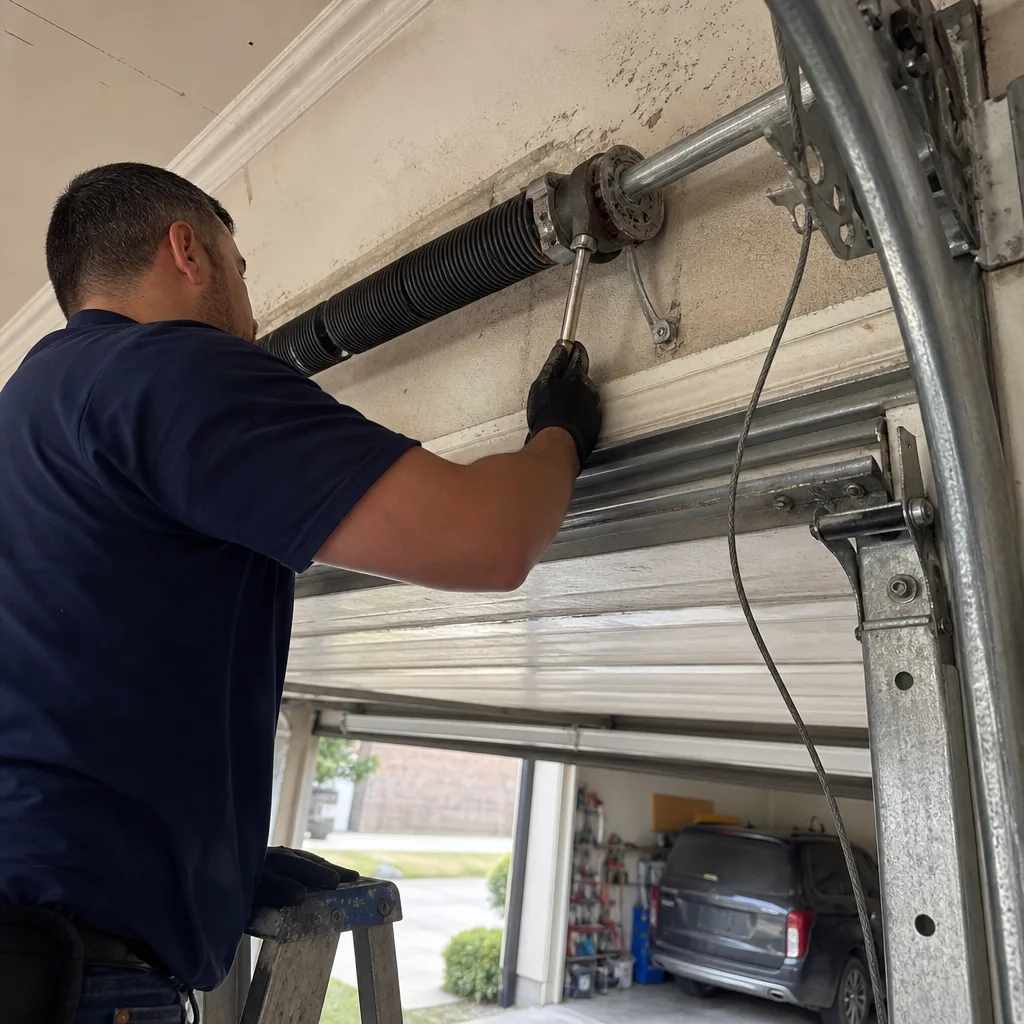
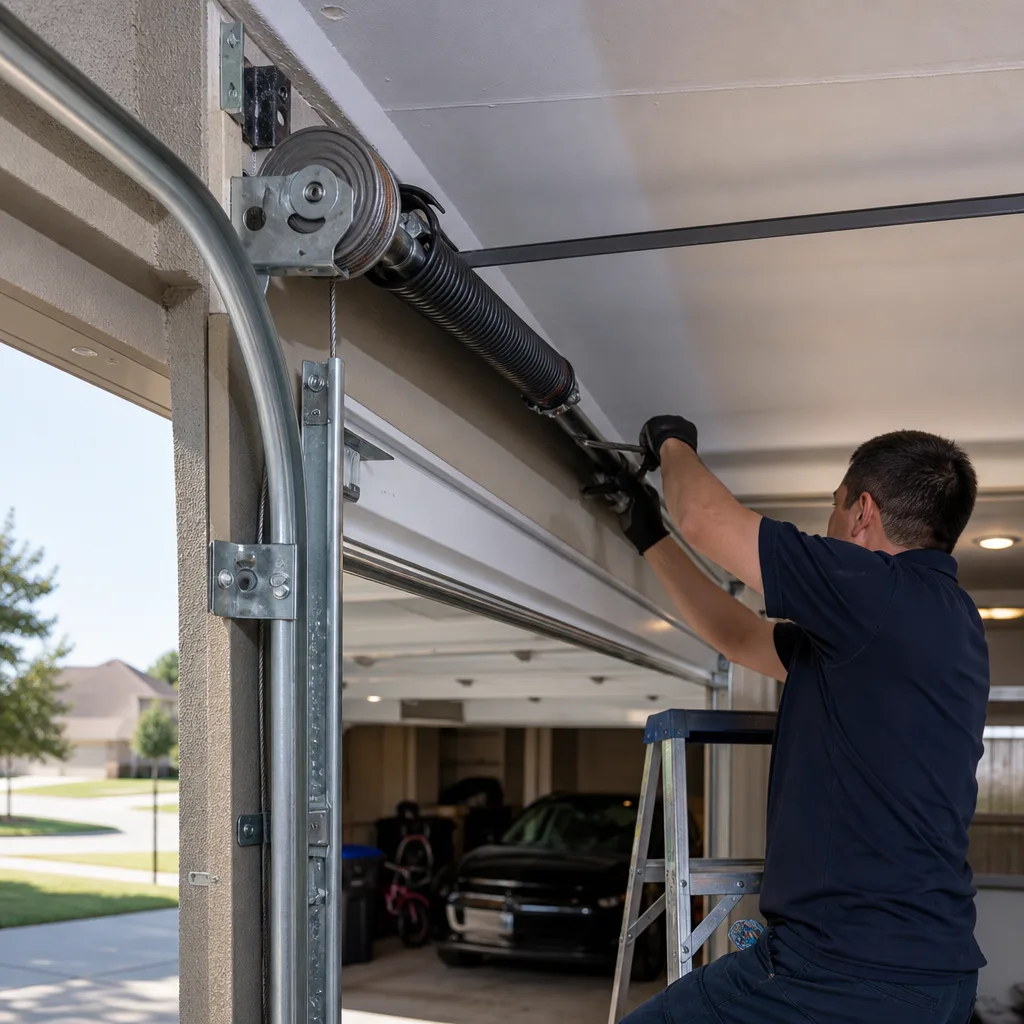
Spring assembly: Torsion springs, not extension springs, for any door over 8 feet wide. Extension springs are obsolete for residential use, dangerous when they fail, and still offered by low-bid installers because they cost less. The torsion tube should be 1-inch solid steel, the springs oil-tempered or powder-coated, and the cycle rating stated in writing. We use 10,000-cycle springs as minimum and 15,000-cycle for heavily used doors.
Hardware kit: Hinges, rollers, cables, and drums. Rollers should be 13-ball nylon or steel with sealed bearings, not the stamped steel rollers that come in builder-grade packages. Cables should be aircraft-grade 7×19 galvanized, properly spooled on the drum with no overlap.
Opener: Specified by brand, horsepower, drive type, and feature set. We install LiftMaster and Chamberlain as our standard lines, with Craftsman available for homeowners who prefer that brand ecosystem. The opener should include safety eyes, force-sensing adjustment, and battery backup if the garage has no other entry door. For Fulshear homes with smart-home integration, we specify models with built-in Wi-Fi and MyQ compatibility.
Weatherseal package: Bottom seal, jamb seals, and header seal. The bottom seal should be an oversized or dual-bulb design for threshold contact on settling slabs. Vinyl or EPDM rubber, not PVC that hardens in cold weather.
Written warranty: Our Mainspring Garage Door Co. home page details our 90-Day Done Right Promise, which covers every completed job. The door itself carries the manufacturer’s warranty, typically 1 year on finish and hardware, longer on certain components. The installation labor should carry its own warranty, separate from the door warranty, so you know who to call if something goes wrong.
Final documentation: We provide a completed installation checklist, spring torque settings, opener force settings, and a maintenance schedule. This documentation belongs in your home file. It speeds future service calls and protects your warranty coverage.
One practice that separates professional installation from quick hangs: we run the door through twenty full cycles after installation, checking balance at each position, listening for rail contact or roller chatter, and verifying the auto-reverse function. A door that sounds right and moves right after twenty cycles will likely stay that way. A door that binds or groans on cycle three will fail. We do not leave until it runs quiet and true.
Seasonal Maintenance for Fulshear Conditions
The climate here creates specific maintenance needs that a generic annual checklist misses. We recommend a seasonal rhythm aligned to Fulshear’s actual weather pattern.
Spring (March-May): Inspect after the last freeze and before summer humidity peaks. Check the bottom seal for winter cracking and spring storm damage. Lubricate rollers, hinges, and the torsion spring with a silicone-based product, not WD-40 which attracts dust. Test the auto-reverse and force settings. This is also when clay soil movement becomes noticeable - check door balance and track plumb, and schedule adjustment if the door drifts or binds.
Summer (June-September): Monitor opener function during peak heat. Garage temperatures in Fulshear exceed 110°F regularly, and opener motors work harder in heat. If your opener stalls or reverses on hot afternoons, the thermal overload may be failing or the door may be out of balance. Check weatherseal for humidity swelling that prevents full closure.
Fall (October-November): Pre-winter inspection. Tighten all hardware that loosened through thermal cycling. Check cable fraying - summer humidity followed by fall dryness accelerates corrosion at the cable fittings. Replace worn rollers before winter, when cold makes brittle rollers more likely to crack.
Winter (December-February): Minimal maintenance, but monitor for freeze-related issues. If your garage is unheated, a wet bottom seal can freeze to the threshold, and opener force may need temporary reduction to prevent motor strain. Never pour hot water on a frozen seal - the thermal shock damages the rubber. Use a hair dryer or wait for natural thawing.
Our $89 Seasonal Tune-Up covers all of this with a written condition report. For homeowners who prefer to handle basics themselves, we provide a maintenance checklist specific to their door model and Fulshear’s conditions at the end of every installation. Visit our more guides & resources for additional maintenance tips.
Choosing the Right Opener for Your Door and Lifestyle
The opener does the work every day, and its specification should match both the door and how you use it. A mismatched opener fails early and works poorly throughout its shortened life.
Horsepower by door size and weight:
- Single-car door, uninsulated steel or aluminum: 1/3 or 1/2 horsepower
- Two-car door, insulated steel: 1/2 horsepower minimum, 3/4 recommended for heavily used doors
- Three-car or RV door: 3/4 horsepower minimum, 1 horsepower for high-lift or vertical-lift configurations
Drive type: Belt drive runs quietest and requires least maintenance. Chain drive costs less and handles heavier doors but needs periodic tension adjustment. Screw drive is largely obsolete - we do not recommend it for Fulshear installations. For bedrooms above or adjacent to the garage, belt drive is worth the modest premium.
Smart features: Wi-Fi connectivity, remote monitoring, and package delivery integration are standard on mid-grade and higher openers now. We install LiftMaster models with built-in camera and two-way audio for homeowners who want visual confirmation of garage status. The Chamberlain line offers similar features at a lower price point with slightly shorter warranty terms.
Safety requirements: Federal law requires auto-reverse and photo-eye sensors on all residential openers manufactured after 1993. If your opener lacks these features, replacement is not optional - it is a safety upgrade. We see pre-1993 openers still running in some older Fulshear homes, and we recommend replacement regardless of mechanical condition.
Battery backup: Required by Texas law for new installations if the garage is the primary home entry. Even where not required, battery backup prevents lockout during Fulshear’s frequent summer power outages. The battery maintains 24 hours of standby and typically 10-20 open/close cycles during an outage.
For garage door opener in Fulshear service, we stock replacement units and repair parts for all major brands, including discontinued models where parts remain available. Our trucks carry LiftMaster, Chamberlain, and Craftsman openers for same-day replacement when the existing unit is beyond repair.
When Repair Ends and Replacement Begins
There is no universal rule, but there are clear signals that repair spending has reached diminishing returns.
Age and cycle count: A standard 10,000-cycle spring on a door used four times daily lasts about seven years. If your springs are original to a 1990s home, they are living on borrowed time regardless of appearance. Replacement springs on an aging door make sense; replacement springs on a door with rotted panels, failing hinges, and a bent track do not.
Panel damage: Individual panel replacement is possible if the manufacturer still produces the style and color. For discontinued doors, especially wood and early fiberglass models, matching is impossible. A single damaged panel on an otherwise sound steel door justifies repair. Multiple damaged panels, or damage to a door with no replacement availability, points toward full replacement.
Structural deterioration: Rust through the bottom section of a steel door, delamination of a fiberglass door, or rot in the frame of a wood door are not repairable conditions. Surface rust can be treated; structural rust cannot. We assess honestly - if we believe repair is throwing good money after failing material, we say so.
Energy efficiency: Uninsulated doors in conditioned garages waste substantial cooling load in Fulshear summers. If you are running a workshop, home gym, or conditioned storage in your garage, upgrading from a non-insulated to an R-12 or R-16 insulated door pays for itself in utility savings. The payback period runs three to five years depending on garage size and cooling habits.
Opener age and parts availability: Openers manufactured before 2010 increasingly lack replacement logic boards, gear assemblies, and safety sensors. We can sometimes source used or aftermarket parts, but we do not recommend investing in repairs where the next failure will leave no options. A 15-year-old opener with a failed circuit board should be replaced, not repaired with a scavenged part.
Our standing offer: Free Second Opinion on any written estimate. If another company has recommended replacement and you are uncertain, we will inspect and give you our assessment with no obligation. We have advised repair when others pushed replacement, and we have recommended replacement when repair would have been a temporary patch. A square deal means the right call, not the profitable call.
Common Mistakes to Avoid
- Ignoring soil conditions in track selection. Standard rigid track hardware on a Fulshear slab will bind within two years. Demand slotted brackets and adjustment-capable fasteners.
- Buying a door online without HOA approval. The color you love may violate your community’s architectural guidelines. Approval first, order second.
- Matching opener horsepower to door size alone. An insulated 16-foot door with windows and a steel backer weighs substantially more than an uninsulated door of the same dimensions. Weight determines spring and opener spec, not just width.
- Accepting extension springs on a wide door. Extension springs are dangerous and obsolete for residential two-car and larger openings. Any installer proposing them is cutting corners on safety.
- Skipping the written warranty. Verbal promises evaporate when problems arise. The warranty should specify coverage period, what is included, and who honors it.
- Neglecting bottom seal condition. A cracked seal admits humidity, accelerates hardware corrosion, and invites pests. It is a $30 part that protects a $2,000 door.
- DIY spring replacement. Torsion springs store lethal energy. The winding process requires specialized tools and training. This is not a homeowner repair.
When to Call a Professional
Call when the door makes noise it did not make before, when it reverses unexpectedly, when one side rises faster than the other, or when you notice frayed cables or cracked springs. These are not cosmetic issues. They are warnings of failure that can damage property or cause injury.
Call before you buy a replacement door, even if you plan to purchase elsewhere. A ten-minute conversation about your slab condition, your HOA requirements, and your actual door weight can save you from an expensive mismatch.
Call if you have a written estimate that seems high, seems low, or does not specify materials by brand and model. Our Free Second Opinion exists for exactly this situation.
Mainspring Garage Door Co. offers free estimates in Fulshear. Carl Dutton answers the phone personally or ensures a live person does, 24 hours a day. Call (409) 794-4141.
Frequently Asked Questions
A standard 16×7 insulated steel door with basic track hardware and a 1/2-horsepower opener typically runs $1,800 to $3,200 installed in Fulshear, depending on brand, insulation level, and window configuration. Premium doors with custom finishes, heavy-duty hardware, or smart openers can reach $4,500 or more. We provide a flat, written price before any work begins, and our $50 Off Any Repair Over $250 offer applies to qualifying replacement projects as well. Call (409) 794-4141 for an exact quote - estimates are free.
Most residential installations complete in four to six hours for a standard two-car door with opener replacement. Oversize doors, RV bays, or jobs requiring structural framing repair may extend to a full day. We schedule installation by appointment, arrive with the door and hardware on the truck, and do not leave until the door runs through twenty test cycles cleanly.
For most repairs - broken springs, failed openers, damaged cables, off-track doors - yes. Our trucks carry a full inventory of springs, cables, rollers, and openers, and we complete most Fulshear repair calls in a single visit. Same-day service depends on call volume and part availability for less common door models. Call (409) 794-4141 and we will give you a straight answer about timing.
No. The price we quote is the price you pay. If our technician discovers conditions not described during the call - structural damage, obsolete hardware, or safety hazards - we stop, explain what we found, and provide a revised quote before proceeding. You approve every dollar before work starts. No surprises on the bill.
Yes. Our trucks stock springs, cables, rollers, hinges, and openers compatible with LiftMaster, Chamberlain, Genie, Clopay, Amarr, Wayne Dalton, Craftsman, and Raynor. For discontinued or specialty hardware, we source from our supplier network with next-day availability in most cases. We are factory-familiar with all major brands and do not guess at compatibility.
First, do not pull the emergency release cord while the door is in motion - that can cause uncontrolled descent. If the door is fully open and will not close, check that nothing blocks the safety sensors and that the opener has power. If the door is partially open, crooked, or a spring is visibly broken, stop and call us. Operating a door with a broken spring strains the opener and risks cable failure. Our emergency line is staffed live at (409) 794-4141.
Yes. We maintain a permanent 5% discount for seniors and veterans, applied to any repair or installation service. Mention your eligibility when you call and we will apply the discount to your written estimate. This is not a limited promotion - it is a standing offer for as long as Mainspring serves Fulshear.
The Bottom Line
A garage door in Fulshear faces clay soil movement, Gulf Coast humidity, and often strict community design standards. The right door, properly specified and installed, runs quiet and lasts decades. The wrong door, or the right door poorly installed, becomes a recurring expense and a daily annoyance. Focus on materials rated for humidity, track hardware that tolerates seasonal settlement, springs sized to actual door weight, and a written warranty from a company that will still answer the phone in five years. Measure twice, specify completely, and demand a flat price before work begins. That is how you buy a door you will never have to think about again.
Written by Carl Dutton, Owner at Mainspring Garage Door Co., serving Fulshear since 2016.