
Last updated September 10, 2026
Full 25-point door and opener safety check with every visit - springs, cables, rollers, tracks, and your LiftMaster or Chamberlain opener included
You get a price before we start. It does not change when the truck arrives.
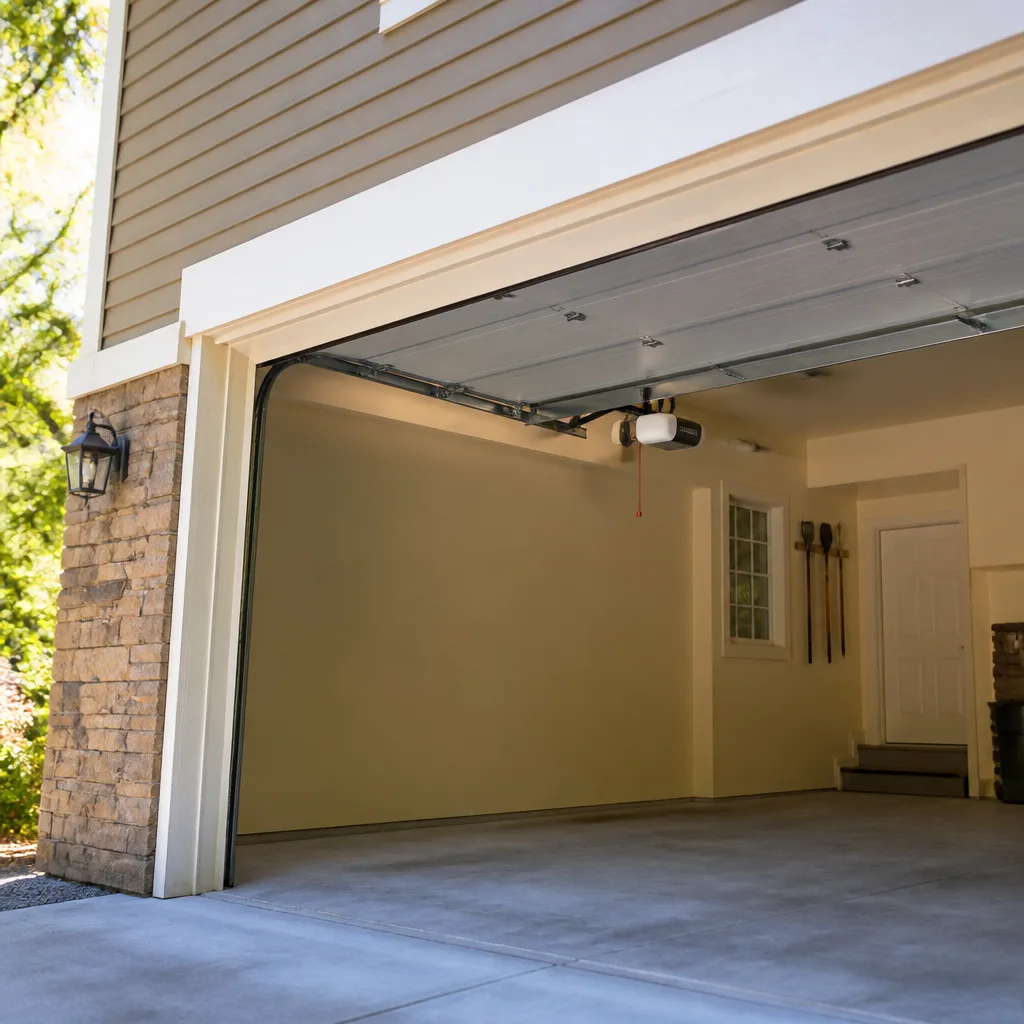
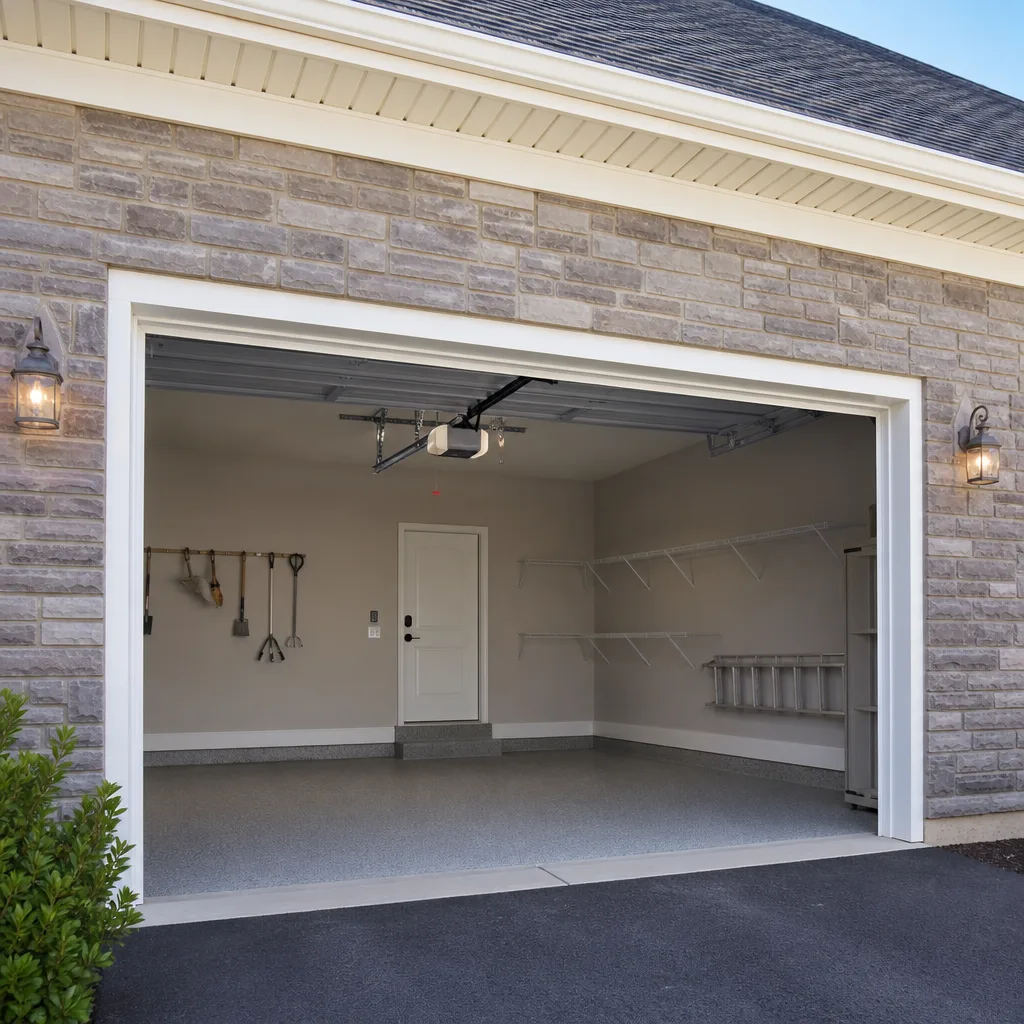
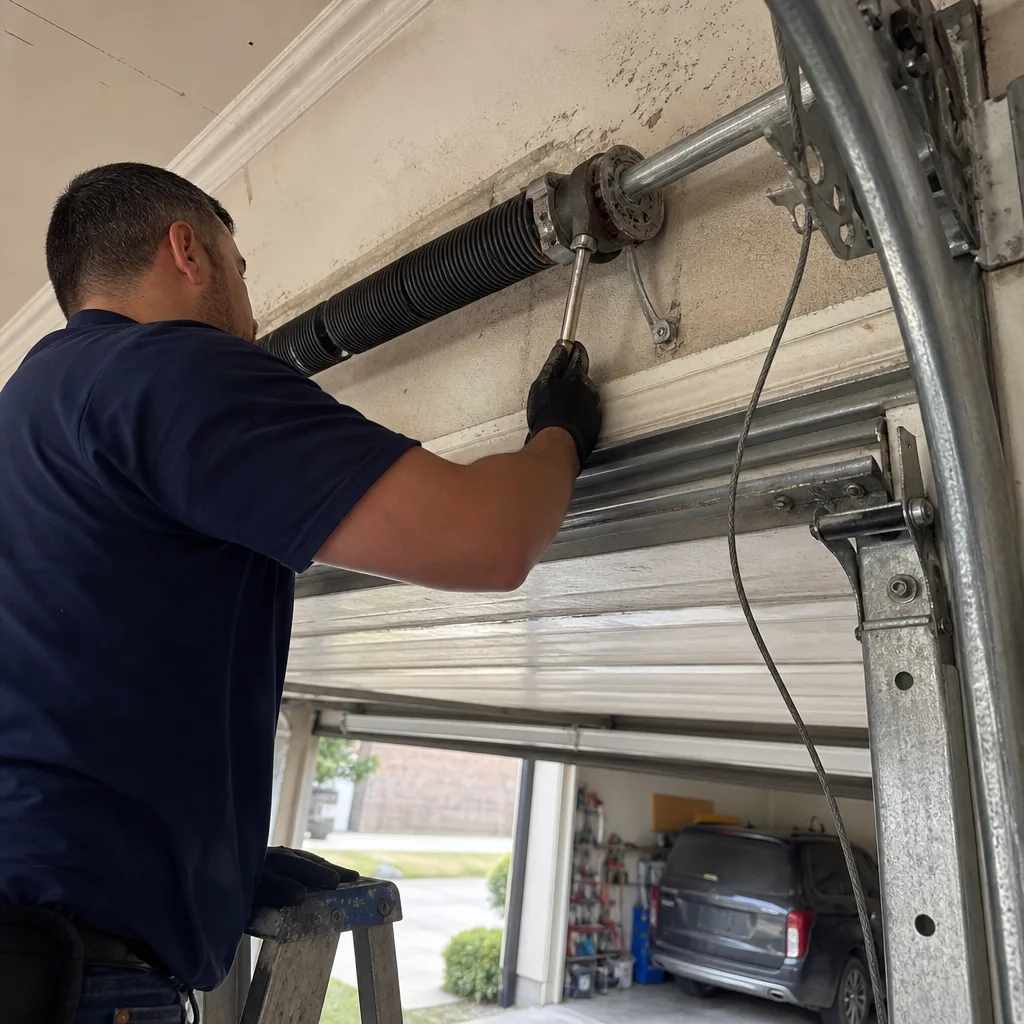 Before
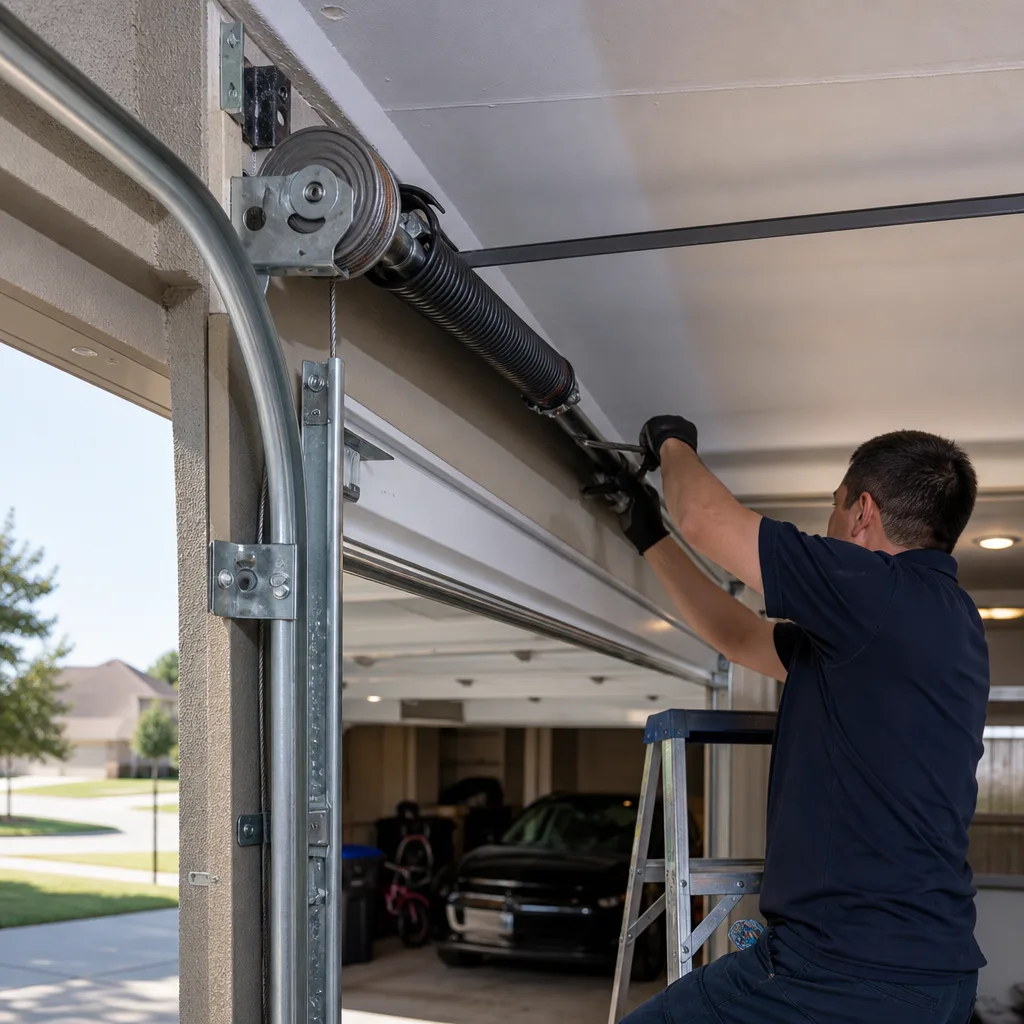 After
After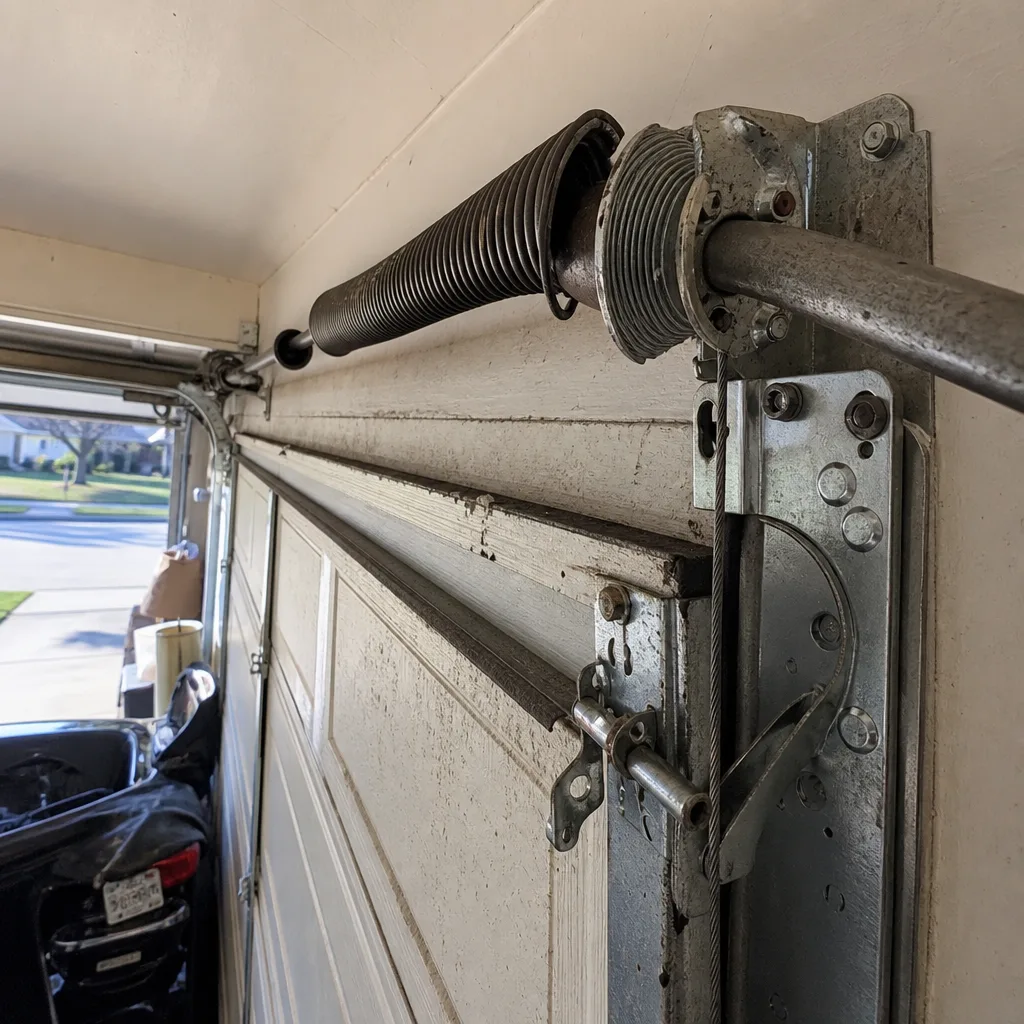 Before
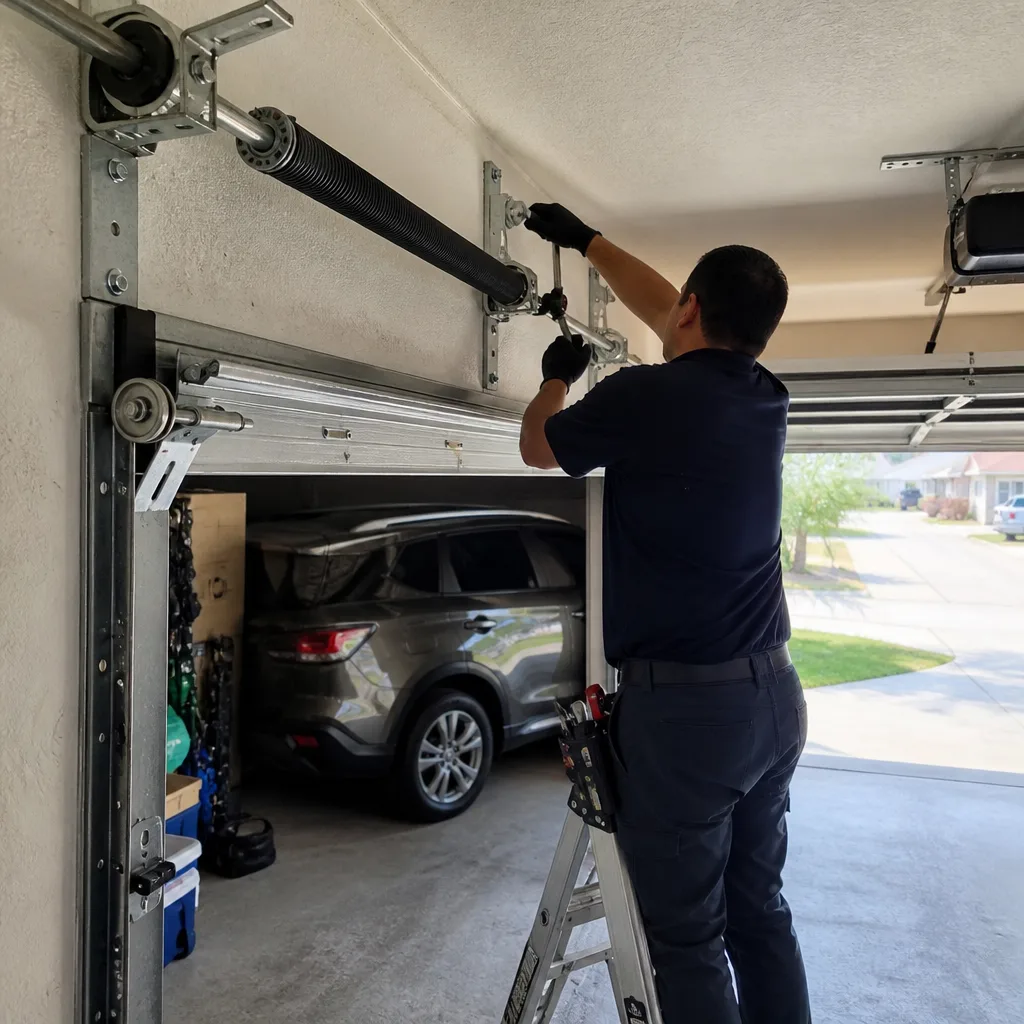 After
After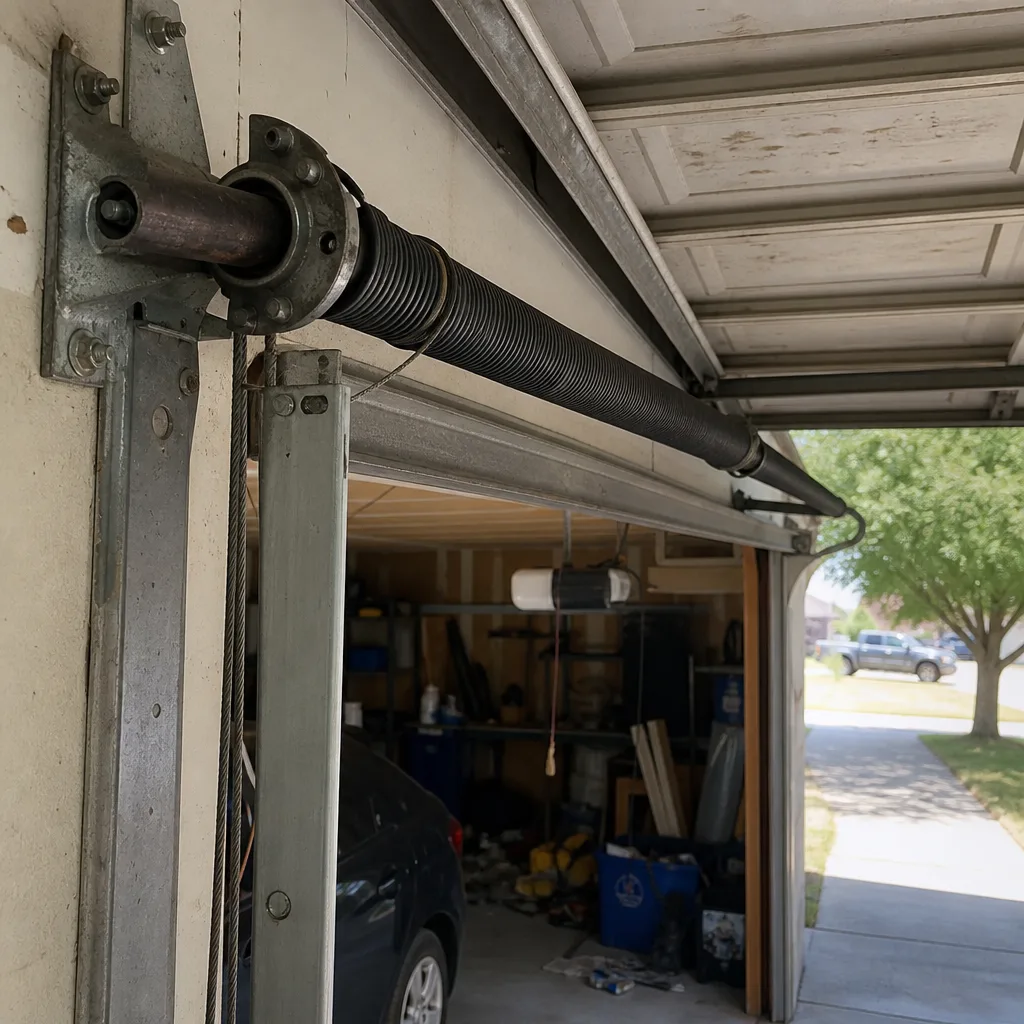 Before
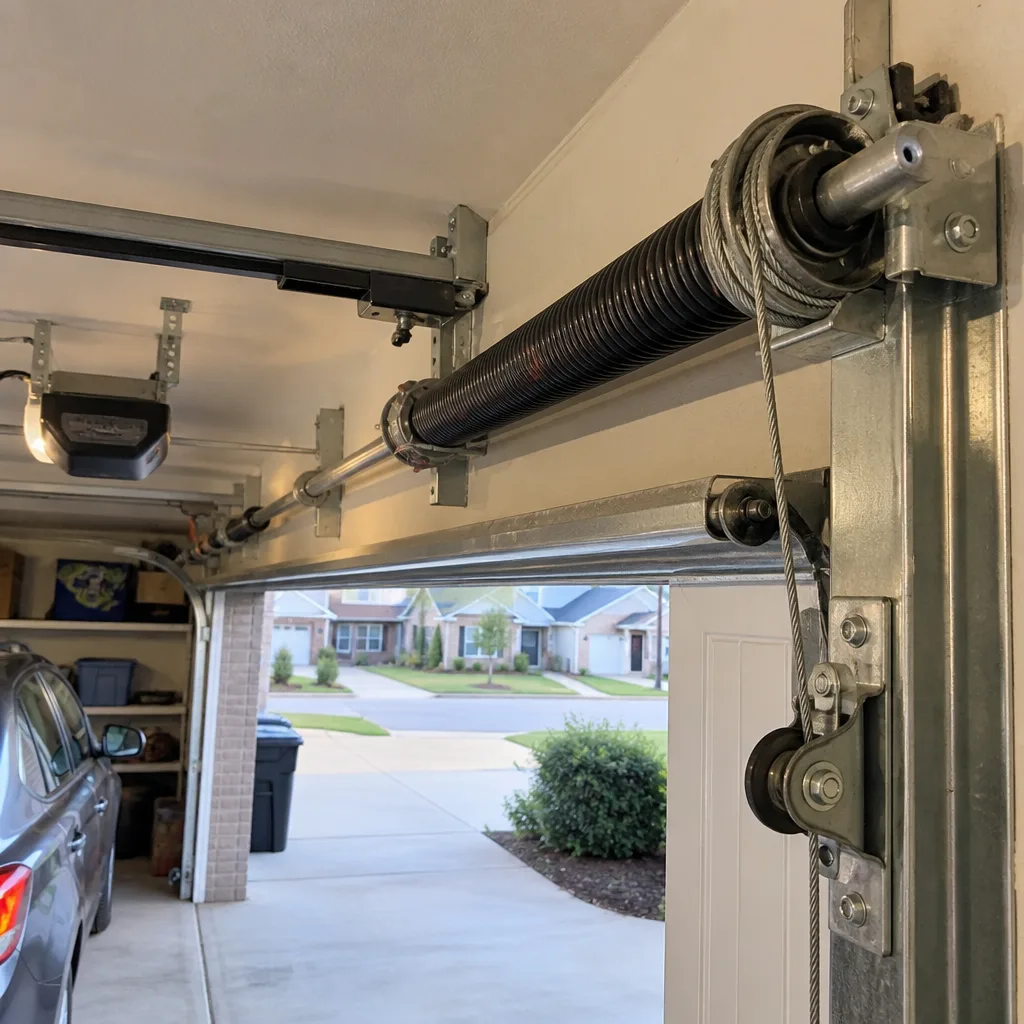 After
AfterGarage Door Warning Signs: A Fulshear Homeowner’s Reference Guide
A garage door that hesitates for half a second before moving is not “just being slow.” In our experience across Fulshear, that half-second delay is a stressed torsion spring communicating that it has fewer than 30 cycles of reliable life left. Most homeowners wait until a door stops moving entirely to call for help, but every catastrophic failure we have seen in Cross Creek Ranch, Fulbrook, and the older ranch-style homes along FM 1093 was preceded by weeks of audible, visual, or behavioral signals that went unheeded. This reference guide identifies those signals, maps each to its specific cause, and tells you plainly how urgent each one is so you can act before your door traps a car, damages property, or fails at the worst possible moment. For a broader overview, see our Complete Guide to Garage Door in Fulshear.
Quick Answer
The most critical garage door warning signs for Fulshear homeowners are: a door that hesitates or reverses before closing, grinding or popping noises during operation, visible gaps or sagging in door sections, frayed or rusted cables, and a door that feels heavy to lift manually or drifts closed when left halfway open. These symptoms indicate specific component failures, torsion spring fatigue, cable deterioration, or opener sensor misalignment, and their urgency ranges from same-day emergency to monitor-for-30-days depending on the symptom.
Table of Contents
- Symptom-to-Cause Reference Table
- Opener Problem or Mechanical Problem?
- Warning Signs by Urgency: Same-Day vs. 30-Day Monitor
- Cable Fraying: The One Sign You Never Ignore
- How Fulshear’s Climate and Soil Create Earlier Warning Signs
- What You Can Check Safely vs. What Requires a Professional
- Common Mistakes to Avoid
- When to Call a Professional
- Frequently Asked Questions
- The Bottom Line
Symptom-to-Cause Reference Table
Most garage door symptoms point to a single failing component. Misdiagnosing the cause leads to unnecessary repairs and continued risk. Below is the mapping we use on every service call in Fulshear.
| Symptom | Component Causing It | What Is Happening |
|---|---|---|
| Grinding noise during open/close | Torsion springs or spring bearings | Spring coils are binding against the shaft or bearings have lost lubrication; metal-on-metal contact indicates imminent spring fracture |
| Popping or snapping sound | Torsion spring | Individual coils are separating and snapping back under tension; this is the sound of a spring counting down its final cycles |
| Door sags in one section when closed | Panel integrity or hinge failure | Internal reinforcement strut has detached or hinge bolts have wallowed out; common in older steel doors after Fulshear heat cycles |
| Uneven gap at floor when closed | Cable length imbalance or worn bottom roller | One cable has stretched or one bottom roller has flattened, causing the door to sit crooked in the opening |
| Door reverses before hitting floor | Opener force limit or safety sensor misalignment | Opener detects excess resistance or interrupted sensor beam; may be mechanical binding or electronic fault |
| Door hesitates 1-2 seconds after button press | Torsion spring torque loss | Spring no longer provides enough assist; opener strains to overcome dead weight, shortening opener lifespan |
| Door feels heavy to lift manually | Torsion spring failure or wrong spring | Spring has lost torque or was incorrectly specified; door weight is now borne by opener or human effort |
| Door drifts closed from halfway open | Torsion spring torque imbalance | One spring has failed or both have lost significant torque; door cannot hold position without opener engaged |
| Squealing or screeching | Roller bearings or hinge pins | Nylon rollers have flattened or steel rollers lack grease; hinge pins have corroded in Fulshear humidity |
| Opener light blinks but door does not move | Opener logic board or limit switch | Diagnostic flash code indicates specific fault; Genie and LiftMaster units use different blink patterns |
In Fulbrook and Cross Creek Ranch, we see sagging section failures more frequently than in other Fulshear neighborhoods because many homes built in the 2010-2015 period received builder-grade steel doors with minimal internal bracing. The daily heat expansion and contraction of our Gulf Coast summers gradually loosen the adhesive bond between door skins and internal struts. By year eight or nine, the center section begins to belly outward. This is not cosmetic. A sagging door section places eccentric load on the torsion system and accelerates spring fatigue.
The grinding noise deserves particular attention. Homeowners often describe it as “the opener is working too hard.” In roughly sixty percent of cases, the noise originates at the torsion spring bearings, not the opener. The distinction matters because replacing an opener will not fix a grinding spring system, and a grinding spring left in service will fracture, often with enough force to damage the door or the opener rail.
Opener Problem or Mechanical Problem?
Opener failures and mechanical door failures produce overlapping symptoms. A door that reverses before closing could indicate a safety sensor fault in the opener or a binding roller in the door track. A door that moves slowly could be an opener force setting or a torsion spring that has lost torque. Distinguishing the two saves you from paying for the wrong repair.
Three Tests to Isolate the Cause
- Disconnect the opener and operate manually. Pull the red emergency release cord when the door is closed. Lift the door by hand to waist height and release. A properly balanced door will stay in place. If it falls, the torsion spring system is at fault, not the opener. If it is difficult to lift smoothly, check for binding in the tracks or worn rollers before blaming the opener.
- Listen to the opener motor without the door attached. After disconnecting the door, run the opener through a complete cycle using the wall button. A healthy opener produces steady motor hum and smooth trolley travel. Grinding, clicking, or straining noises from the opener itself indicate internal gear wear or logic board issues.
- Check the safety sensors independently. The two photo-eye sensors at floor level should glow steady (amber on sending eye, green on receiving eye on most LiftMaster and Chamberlain units). A flickering or dark receiving eye indicates misalignment, wiring fault, or debris. Clean the lenses with a dry cloth and verify alignment. If the door operates normally with sensors temporarily bypassed (only for testing), the mechanical system is sound.
Here is a practical rule we have developed over four decades: if the door operates smoothly by hand but poorly with the opener attached, suspect the opener or its settings. If the door operates poorly by hand, the mechanical system needs attention first. Installing a new opener on a door with failed springs is like putting a new engine in a car with flat tires. The opener will fail prematurely because it is doing work the springs were designed to handle.
In Fulshear’s newer construction, we encounter a specific scenario. Homes built after 2018 often have garage door openers in Fulshear with battery backup and Wi-Fi connectivity. These features draw additional standby power and can mask low-torque spring conditions because the motor control software compensates with higher current draw. The door appears to operate normally until the opener’s thermal protection trips or the logic board fails. If your smart opener app shows increasing “effort” readings or frequent thermal events, have the torsion system inspected before the opener suffers permanent damage.
Warning Signs by Urgency: Same-Day vs. 30-Day Monitor
Not every warning sign demands immediate emergency response. Some conditions allow measured scheduling. Others require stopping use of the door until repair. The wrong response in either direction costs money or creates hazard.
Same-Day Emergency: Stop Using the Door, Call for Service
- Visible cable fraying or broken cable strand. A frayed garage door cable is under extreme tension and can snap without warning. We address this in detail in the next section.
- Door hangs crooked in the opening or one cable is slack. This indicates a failed cable or cable drum slip. Operating the door in this condition will cause it to bind in the tracks, damage rollers, or pull the door off its hardware.
- Loud bang from the garage, followed by door that will not open. Torsion spring fracture. The door is now dead weight. Attempting to operate it with the opener will strip gears or burn the motor.
- Door falls rapidly when closing or drifts down from open position. Complete or near-complete spring failure. The safety risk is severe, especially if the opener’s force limit does not detect the uncontrolled descent.
- Broken spring visible as a gap in the coil. Even if the door still moves, it is operating on residual torque and one remaining spring in a dual-spring system. The second spring is now overloaded and will fail soon.
Schedule Within One Week: Monitor Closely, Limit Cycles
- Door hesitates 1-2 seconds before moving. Spring torque is declining. Reduce non-essential door cycles and schedule inspection. This condition can persist for several weeks but degrades unpredictably.
- Grinding noise from spring area. Bearings or spring coils are binding. Lubrication may temporarily reduce noise but will not restore worn components. Schedule before noise worsens to popping.
- Opener light blinks and door reverses intermittently. Likely sensor or force setting issue. Safe to operate with visual confirmation that door path is clear, but do not leave unattended during cycle.
- Squealing from rollers during travel. Nylon rollers have flattened or steel rollers need lubrication. Not immediately dangerous but increases load on opener and will lead to roller failure.
Monitor for 30 Days: Cosmetic or Early-Stage Conditions
- Minor paint peeling or surface rust on door panels. Address before rust penetrates the steel, but does not affect operation. Common in Fulshear’s humid Gulf Coast climate.
- Slight weatherstrip hardening or cracking at bottom of door. Reduces energy efficiency and pest exclusion. Schedule with next maintenance visit.
- Remote control range gradually decreasing. Often battery or antenna issue in opener. Test with fresh batteries and wall button operation before calling for service.
- Cosmetic dent in door section with no panel deformation. Does not affect structural integrity unless dent is deep enough to compromise internal reinforcement.
The 30-day monitor category assumes normal residential use of 3-4 cycles daily. If you operate a home business with frequent deliveries, or if the door serves as primary home access with 10+ daily cycles, compress all timelines by half. In Fulshear’s Cross Creek Ranch and Fulbrook communities, where many homeowners work from home and receive multiple daily deliveries, we see accelerated wear patterns that outpace manufacturer maintenance schedules. Our Seasonal Garage Door Care for Fulshear: Year-Round Homeowner’s Guide explains how to adjust maintenance intervals for local conditions.
Cable Fraying: The One Sign You Never Ignore
Of all warning signs, cable fraying is the most dangerous to operate through and the most commonly underestimated by homeowners. We have responded to emergency calls in Fulshear where a frayed cable snapped during morning departure, sending the door crashing onto a vehicle hood or trapping a family member inside the garage.
What Frayed Cables Look Like
Garage door cables are braided steel wire, typically 7×19 construction (seven strands of nineteen wires each). Healthy cables show tight, uniform braiding with no visible separation. Fraying appears as:
- Individual wires protruding from the braid like whiskers
- Flattened or kinked sections where the cable has rubbed against track edges or drum flanges
- Rust staining that indicates internal corrosion, particularly at the bottom loop fitting
- A “bird-caging” effect where the braid has loosened and expanded locally
Even a single broken wire in a cable assembly reduces its rated strength disproportionately. Cables do not fail gradually. They fray, then they snap, often at the moment of highest load when the door is starting its upward travel and the cable is pulling against the full weight of the door plus acceleration force.
Why Cable Replacement Is Never DIY
Cables are under tension set by the torsion spring system. A typical residential garage door cable carries 150-250 pounds of static tension, with dynamic spikes to 400+ pounds during operation. Releasing a cable without proper winding bars and knowledge of spring torque is comparable to handling a loaded rat trap the size of a bicycle wheel.
Additionally, cable replacement requires simultaneous inspection of the cable drum, bottom bracket, and spring torque balance. Installing a new cable on a drum with worn grooves, or pairing a new cable with a stretched companion cable, creates the same hazard within months. Our technicians at garage door repair in Fulshear arrive with matched cable sets and verify drum condition and spring balance before declaring the repair complete.
If you see any cable fraying, stop using the door immediately. Disconnect the opener if you can do so safely from inside the garage with the door closed. Do not attempt to open or close the door manually. Call for same-day service. This is not overcaution. It is the specific judgment we apply in our own homes.
How Fulshear’s Climate and Soil Create Earlier Warning Signs
Manufacturer maintenance schedules assume moderate climates and stable foundations. Fulshear’s conditions deviate from both assumptions, producing warning signs that appear years earlier than national averages suggest.
Humidity and Corrosion Acceleration
Fulshear’s average annual humidity exceeds 75%, with summer months regularly above 85%. This moisture penetrates garage environments even in air-conditioned homes because garage HVAC is typically minimal and door seals are imperfect. The result is accelerated corrosion of steel components that manufacturers rate for ten-year service lives.
We see rusted bottom brackets in Fulshear homes at six to eight years, where the same component in arid climates lasts fifteen. Rusted bottom brackets create binding that mimics spring failure, and the bracket itself can fracture under load. Hinge pins corrode in place, making routine maintenance impossible without drilling and replacement. Cable corrosion begins internally, invisible until the cable fails.
Clay Soil Shift and Foundation Movement
Fulshear sits on expansive gumbo clay that swells with moisture and contracts during dry periods. This soil movement transfers to garage slab foundations, particularly in older homes and in areas with mature trees drawing significant groundwater. A garage slab that tilts or cracks changes the geometry of the door opening.
The warning signs of foundation-related door problems are distinct from component wear:
- Door contacts the frame on one side before fully closed, creating a visible rub mark on the jamb
- Header gap is uneven left-to-right, indicating slab tilt or header settlement
- Track mounting brackets show stress cracks or pulled fasteners
- Door operates normally in dry months but binds after heavy rain
In the Fulbrook and Cross Creek Ranch areas, we have tracked a pattern. Homes built during the 2011-2013 drought period were constructed on contracted clay. Subsequent normal and wet years produced slab heave that appeared as door binding three to five years after construction. Homeowners who interpreted this as normal “settling” and forced the door to operate caused track deformation and roller damage that compounded the original problem.
Heat Cycles and Material Fatigue
Fulshear summer temperatures routinely reach 95-100°F, with garage interiors 10-15 degrees higher. Daily temperature swings of 30+ degrees between afternoon peak and morning low create thermal cycling stress in metal components. Torsion springs are particularly susceptible. Each heat cycle slightly relaxes the spring material; each cooling cycle restores partial tension. Over thousands of cycles, this thermal fatigue accelerates the normal metal fatigue from load cycling.
Manufacturer spring cycle ratings, typically 10,000 cycles, assume moderate temperature variation. In Fulshear’s heat, we observe meaningful torque loss beginning at 6,000-7,000 cycles, with complete failure often occurring before the rated cycle count. The warning sign is the hesitation and heavy-lift symptoms described earlier, appearing two to three years sooner than a homeowner in Minnesota might experience.
For homeowners in Fulshear considering garage door installation in Fulshear, we specify components rated for high-humidity, high-heat service: galvanized or stainless hardware, nylon rollers with sealed bearings rather than exposed steel, and extended-life torsion springs with additional active coils to reduce stress per coil.
What You Can Check Safely vs. What Requires a Professional
There is a narrow zone of homeowner inspection that is genuinely useful and safe. Crossing into DIY repair of tensioned components is where injuries occur. We want you in the safe zone.
Safe Homeowner Checks
- Visual cable inspection from a safe distance. With the door closed, stand to the side and examine the cable run from drum to bottom bracket. Use a flashlight. Look for the fraying indicators described above. Do not touch the cable.
- Manual balance test. With door closed, pull red emergency release. Lift door to waist height and release. Note whether it stays, rises, or falls. This single test reveals more than most homeowners realize about spring condition.
- Sensor alignment and cleaning. Verify steady indicator lights on both sensors. Clean lenses with dry cloth. Check for cobwebs or debris blocking the beam path. Do not bypass sensors for normal operation.
- Track fastener inspection. Visually check that track mounting brackets are secured to wall framing with no pulled or missing fasteners. Do not attempt to retension or reposition tracks.
- Remote battery and range test. Replace batteries annually. Test range from driveway and from inside vehicle. Decreasing range often precedes complete remote failure.
Never Attempt Without Training
- Torsion spring adjustment or replacement. The stored energy in a residential torsion spring can cause severe laceration, amputation, or death. This is not hyperbole. We have seen the emergency room outcomes.
- Cable replacement or drum adjustment. Cables are under full spring tension and can whip unpredictably when released.
- Bottom bracket removal or roller replacement in the bottom fixture. These brackets connect directly to the cable system.
- Track realignment or vertical track adjustment. Improper track geometry causes door drop or derailment.
- Opener rail modification or chain/belt tensioning. Misadjusted drive components create entanglement or crushing hazards.
The Mainspring Garage Door Co. home page includes our full service description, but the principle is simple: if the component stores energy or supports the door’s weight, leave it to trained technicians. Our journeymen carry the specific winding bars, cable pullers, and torque measuring tools that make these operations controlled and predictable.
Common Mistakes to Avoid
- Ignoring a “slow” door as normal aging. In Fulshear’s heat, a door that takes three extra seconds to open is not normal aging. It is a spring delivering 30% less torque than specified, forcing the opener to compensate. The opener fails next, and the repair doubles in cost.
- Applying WD-40 to all moving parts. WD-40 is a solvent and light lubricant, not a garage door lubricant. It attracts dust in Fulshear’s windy conditions and forms abrasive paste in roller bearings. Use silicone-based lubricant on metal-to-metal contacts, or call us for the $89 Seasonal Tune-Up that includes proper lubrication of all components.
- Replacing the opener when the door is the problem. We see this several times yearly in Fulshear. A homeowner buys a new Genie or LiftMaster unit, pays for installation, and discovers the door still operates poorly because the springs were failing. Always test manual operation before authorizing opener replacement.
- Operating with one broken spring in a dual-spring system. Many wide doors have two torsion springs. When one breaks, the door may still move, especially with opener assistance. This overloads the remaining spring, damages the opener, and creates unbalanced door travel that bends tracks and wears rollers asymmetrically.
- Waiting for “both sides to fail” on a dual-spring door. Related to the above. Springs are matched sets. When one fails, both require replacement to restore proper torque balance. Replacing one spring guarantees the other fails within months, often at higher cost due to secondary damage.
- Dismissing weather-related binding as temporary. Fulshear’s clay soil movement produces seasonal binding that homeowners attribute to “the recent rain.” Repeated forced operation through binding deforms tracks and damages door sections. Address the underlying geometry issue.
- Accepting the lowest bid without verifying scope. In our market, some competitors quote spring replacement without including cable inspection, roller condition check, or door balance verification. The low price covers the minimum, not the complete repair. Our flat price is stated before work begins and includes full system inspection.
When to Call a Professional
Call for same-day service if you observe cable fraying, a broken spring, a door that falls or drifts, or a door that hangs crooked in the opening. These conditions present immediate safety risk to people and property. Call within one week for grinding noises, hesitation, intermittent reversing, or squealing rollers. These conditions are progressing and will not self-resolve.
For homeowners who have lived in their Fulshear residence for fifteen or twenty years and cannot recall when the torsion springs were last inspected, schedule a preventive inspection. Springs have finite cycle lives, and an inspection after 7-10 years of use identifies degradation before failure.
Mainspring Garage Door Co. offers free estimates in Fulshear. A technician will inspect your door system, identify active and emerging issues, and provide a flat price for any needed work before beginning repairs. Call (409) 794-4141. Our phones are answered by a live person at any hour, including nights, weekends, and holidays.
Frequently Asked Questions
Garage door spring replacement in Fulshear typically ranges from $180 to $340 for a standard residential torsion spring, depending on door size, spring type, and whether one or both springs in a dual-spring system require replacement. Our flat price includes the spring, labor, full system inspection, and adjustment. We state the exact price before any work begins, and there are no surprises on the bill. Call (409) 794-4141 for a free estimate.
A door with one broken spring in a dual-spring system may still operate with opener assistance, but it should not be used. The remaining spring is overloaded, the opener is strained beyond its design limits, and the door travels unevenly, causing track and roller damage. Continuing to operate in this condition typically converts a $250 spring replacement into a $600+ repair involving opener damage, bent tracks, and failed rollers.
Disconnect the opener using the red emergency release cord and operate the door manually. If it lifts smoothly and stays at waist height when released, the mechanical system is sound and the opener needs attention. If it is heavy, binds, or drifts, the door mechanism needs repair before any opener work is considered. This test takes thirty seconds and prevents unnecessary opener replacement.
A broken torsion spring typically produces a loud bang or pop, comparable to a firecracker or gunshot, as the stored energy releases instantaneously. After the sound, the door will not open, or it will rise a few inches and stop. The opener may strain or the door may appear to lift unevenly with one side higher than the other. If you hear this sound, do not attempt to operate the door. Disconnect the opener if accessible and call for emergency service.
In Fulshear’s high-humidity, high-heat environment, we recommend professional inspection and maintenance every 12 to 18 months, or every 5,000 cycles of operation. This interval is shorter than manufacturer recommendations for moderate climates because our conditions accelerate corrosion and material fatigue. The $89 Seasonal Tune-Up includes spring torque verification, cable inspection, roller and hinge condition check, track alignment verification, opener force and safety sensor testing, and proper lubrication of all moving parts.
No. Our flat price is stated before any work begins and does not change based on what we find. If additional issues are discovered during inspection, we explain them and provide a separate price for that work. You approve every dollar before it is spent. This is our no-surprises commitment, and it is stated in writing on every job through our 90-Day Done Right Promise.
Yes. Our technicians arrive with torsion springs in common wire sizes and lengths, cable sets, rollers, hinges, bottom brackets, and opener components for major brands including Genie, Clopay, Amarr, and Wayne Dalton. Most repairs are completed in a single visit. If your door requires a specialty part, we order it and schedule return installation, but this is uncommon for standard residential systems.
Yes. We maintain a permanent 5% discount for seniors and veterans, applied to any repair or installation service. This is not a limited promotion. It is a standing offer for the homeowners who built the communities we serve. Mention eligibility when scheduling your appointment.
The Bottom Line
Every garage door failure announces itself in advance. The half-second hesitation, the new grinding note, the whisker of steel protruding from a cable braid, the door that no longer stays at half-mast, these are not quirks of aging machinery. They are specific communications from components under stress, and they appear weeks or months before the failure that traps a vehicle or strands a homeowner.
In Fulshear’s demanding climate of humidity, heat cycles, and clay soil movement, these warning signs arrive earlier than manufacturer timelines suggest. The homeowner who learns to read them, who distinguishes same-day emergency from scheduled maintenance, and who respects the energy stored in tensioned components, avoids the emergency service call, the damaged property, and the repair that compounds because it was delayed too long. If you are planning a larger project, read How to Hire a Garage Door Contractor in Fulshear: A Step-by-Step Guide.
We have served this area since 1984. We have seen the patterns repeat across neighborhoods and decades. The door that hesitates today will fail tomorrow. The question is whether tomorrow arrives at your convenience or at the worst possible moment.
Call (409) 794-4141 for a free estimate. A live person will answer, day or night, and we will be there when we say.
Written by Carl Dutton, Owner at Mainspring Garage Door Co., serving Fulshear since 2016.